


Crossing Bridges
Schedules that change without warning, radios that crackle, tides that steal a foot of clearance. A working guide to the most underestimated obstacle in American inland boating.
A bridge is one of the few obstacles in boating that is both perfectly visible and constantly negotiable. You see it from a mile out. You also have to ask it to move. Between sighting and passage lie tides, schedules, radio protocols, gusts, currents, and the patience of the operator on the other end. Crossing a bridge well is mostly a matter of doing small things before they become urgent.
Plan around the structure, not against it. Along the Atlantic Intracoastal Waterway alone there are more than eighty operable bridges between Hampton Roads and Biscayne Bay, the majority of them in Florida. Some are fixed and tall. Others rise on schedule. A handful sit closed during rush hour and open only on the half-hour, the quarter-hour, or at twenty and forty past. Treat every passage as a small piece of planning. Cruisers who arrive blind almost always wait, and the waiting is where things go wrong.
Schedules also change. A bridge that opened on request last season may now hold for a posted window. Restrictions on commute hours, holidays, and maintenance windows are published by the U.S. Coast Guard in the Local Notice to Mariners, the authoritative source for active deviations from the standard regulation. The same notices flag bridges undergoing repair, span outages, and temporary operating reductions. Cross-check the LNM against your chart, then verify locally on the day of transit. Phone numbers for individual bridge tenders are routinely posted in marinas and in current cruising guides.
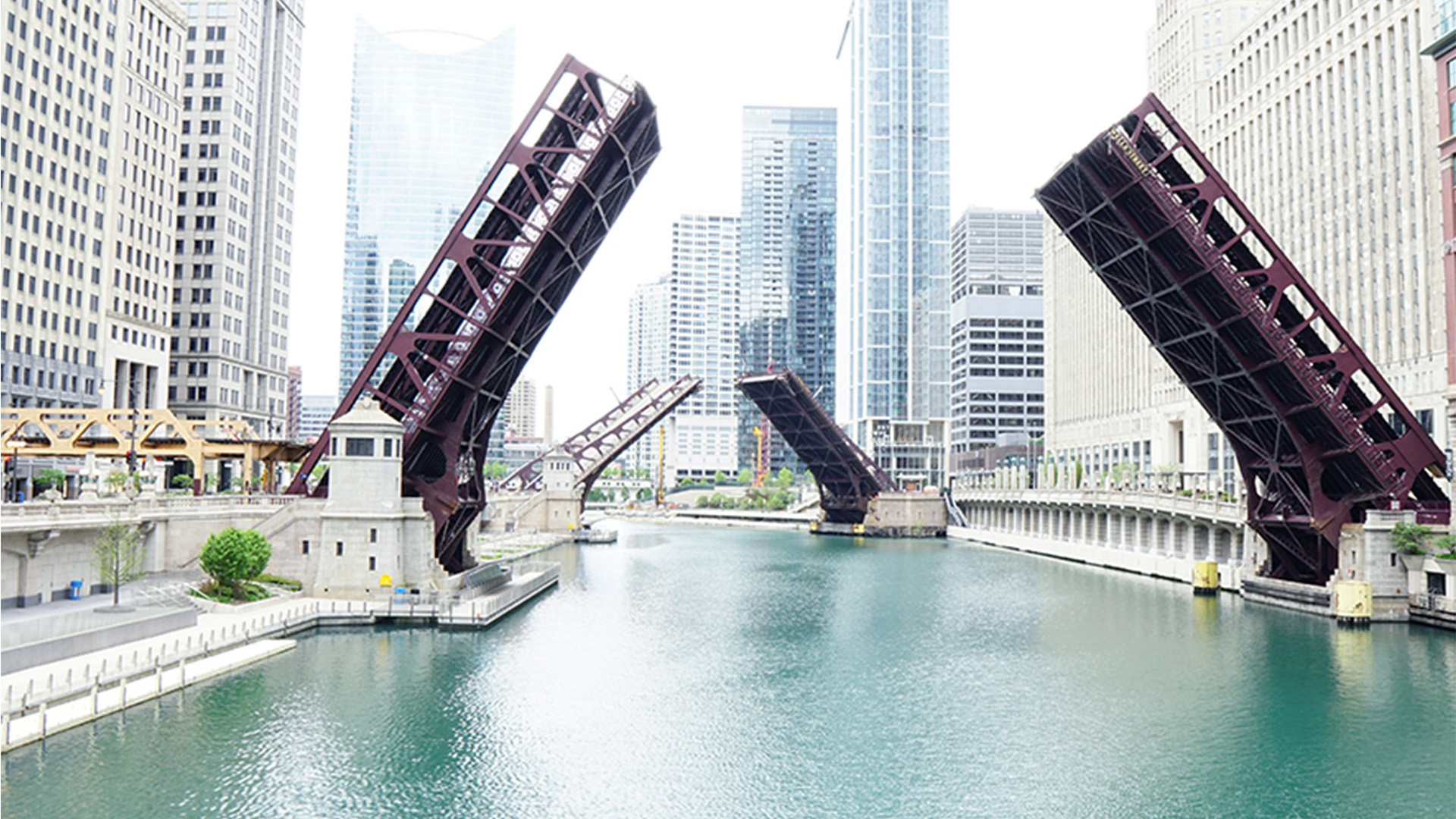
Before you get there
Planning a bridge transit starts at the chart table, not at the throttle. Mark every operable span on the day's route. Note its operating regulation: on demand, restricted hours, or scheduled openings. For each span, record the VHF working channel and the official name as it appears on the chart, since neighborhoods sometimes use a different one. North Landing Bridge, Barefoot Landing Bridge, Venetian Causeway Bridge: the radio call has to match the bridge, or the wrong operator may begin a sequence for a vessel that is not there.
The other part of preparation belongs to the boat itself. Confirm air draft from the highest fixed point of the vessel, antenna included, to the waterline at the lightest expected condition. Cross-reference that figure with the published vertical clearance of every fixed span on the route. Then add a margin for the tide: a king tide, an extended rainfall, or a storm surge can shave more than a foot off a published clearance. The federal benchmark for AICW fixed bridges is mean high water, and a tide above that benchmark reduces what you have.
Active bridge regulations and deviations are published weekly by the U.S. Coast Guard in the Local Notice to Mariners, available through the USCG Navigation Center. The Bridge Administrator in each Coast Guard district maintains the working schedules under 33 CFR Part 117.
Arches deserve their own line of attention. On bowed structures, the listed clearance is almost always measured at the lowest point of the span, not the center. In practice, the center of the channel often sits a foot or more higher than the figure on the chart, and some bridges post a sign indicating the additional clearance in the middle. Read the signage. If it does not specify the center, assume the published figure applies edge to edge and stay conservative.
Calling the bridge
Some bridges still respond to sound signals, the classic long-short-long sequence inherited from a pre-radio era. Most do not. The right tool today is a VHF radio, and the call goes to the bridge by name, on the working channel for the region. Along most of the U.S. East Coast and Florida, bridges monitor Channel 9. Along stretches of the Gulf and inland waterways, Channel 13. Cruising guides list the working channel for every operable span. Confirm before the approach, not during it.
Use the proper name on the air. Venetian Causeway Bridge, this is the vessel astern requesting your next opening, not a generic call to "the bridge." Two or three bridges can sit within radio range of each other, and an unspecific call wakes up the wrong operator. Even if the boat ahead of you has already asked for an opening, make your own request. The operator counts vessels. A silent boat behind a vocal one has sometimes been closed on, simply because nobody knew it was there. From a raised drawspan, the tender's visibility down to the water is partial at best.
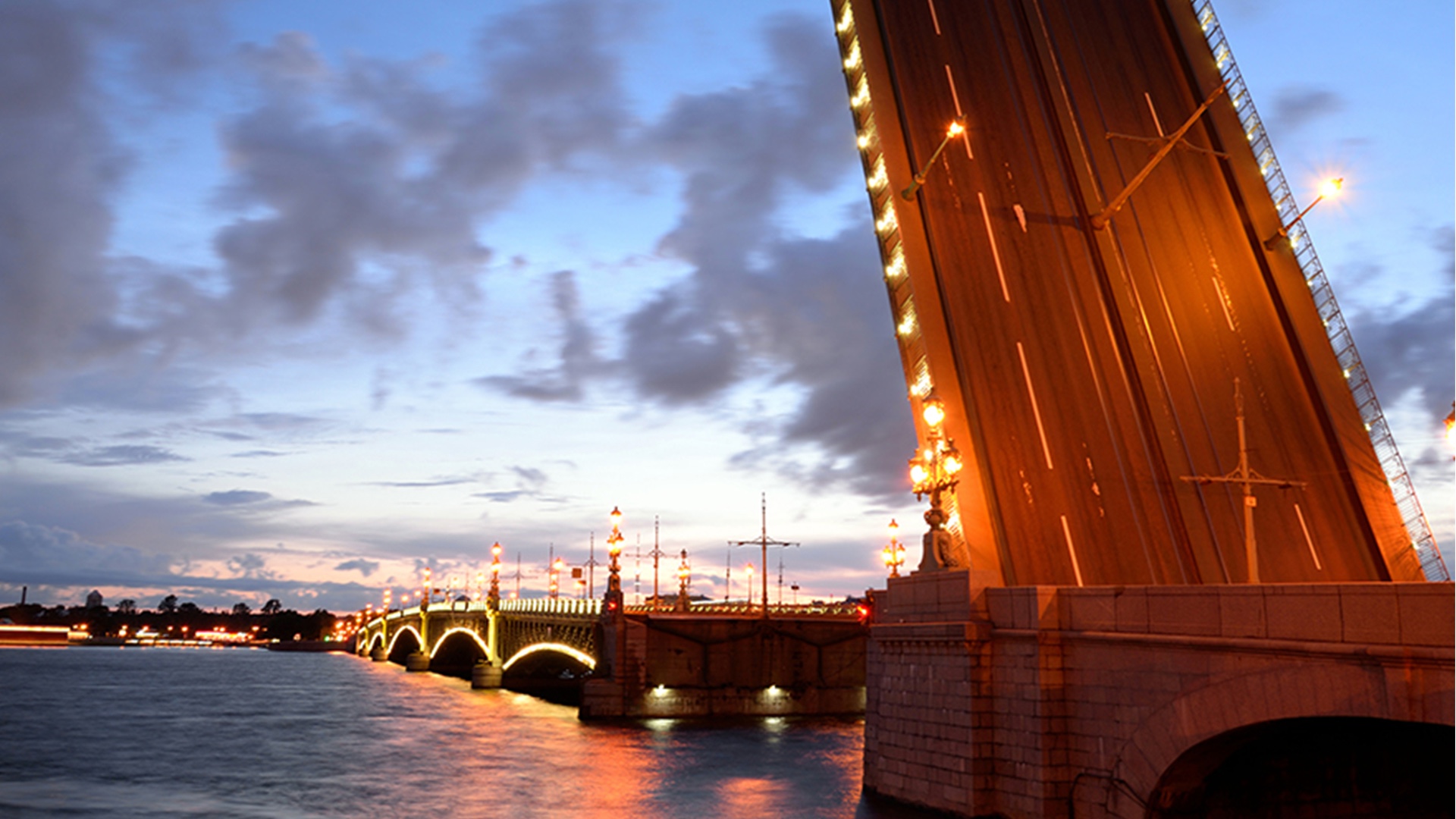
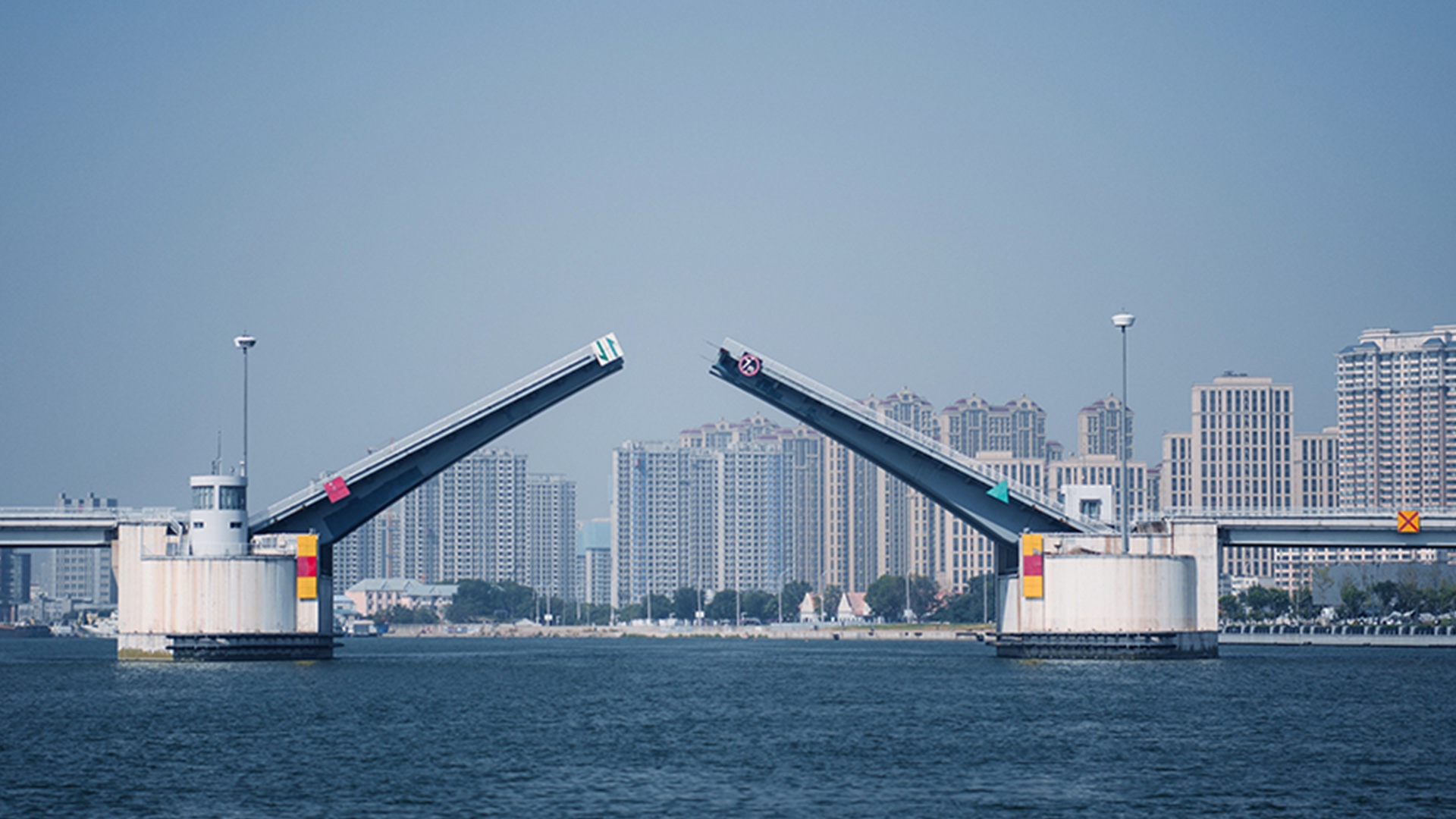
Once contact is established, keep the radio on the bridge's channel through the approach and the transit itself. Operators broadcast genuinely useful information mid-cycle. A mechanical fault halfway through the lift. An emergency vehicle approaching the roadway above. A tug pushing a barge that has the right of way and needs to cross first. Listening in is how the day's complications reach you before they become your problem. Slow down, hold position, and resume the approach when the operator confirms.
Four steps.
Take them in order.
I
Tune
Channel 9 or 13
Check the working channel for the bridge in the latest cruising guide or LNM. East Coast and Florida default to 9. Gulf and inland often use 13.
II
Name the bridge
Use the official call
Always hail by the chart name. Local nicknames cause confusion when two bridges share a channel within radio range.
III
State the request
Direction, vessel, intent
Northbound or southbound, type of vessel, request for next opening. Keep it short. Wait for acknowledgement.
IV
Stand by
Monitor through transit
Keep the radio on the bridge's channel until you are well past the span. Faults, traffic, and tug priorities are announced mid-cycle.
“
The bridge will not see you if you have not spoken. Visibility from a raised span is always partial.
Field Note · USA Onboard Editorial
Holding station in a crowd
A scheduled opening creates a small flotilla. Sailboats with limited reverse control. Trawlers riding a current. Sportfishers throttling in and out to maintain a position. The occasional tug, which often simply has to keep moving because stopping is not an option. Crowds at a bridge are not a queue. They are a loose constellation of vessels each managing its own handling characteristics, and the prudent move is to keep distance.
Wind matters more than most operators expect. A boat with significant freeboard becomes a sail at idle, and a beam wind on a narrow approach can push the bow toward the abutment in seconds. Vessels with deep draft and modest power can be set sideways by a flooding current. Both situations resolve themselves easily with sea room; both become emergencies in tight company. Hang back from the cluster, hold a position upstream or down according to the set, and accept that the safest line is rarely the shortest one.
A common technique among seasoned cruisers is to take the back of the line. The operator is obliged to clear the bridge for road traffic as soon as the last waiting vessel has passed, so do not drop too far behind, but staying off the lead spares you most of the unpredictable handling that happens in front. If two or more vessels are within sight of each other on opposite sides, the operator may delay the opening until all of them can pass on the same cycle. That is normal, not a discourtesy.
Vertical clearance, and the lie of the chart
Air draft is the calculation most cruisers get wrong, and the one most likely to cost a rig. Even when the math seems comfortable, the published clearance is a benchmark, not a guarantee. The federal standard for the Atlantic Intracoastal Waterway specifies 65 feet of clearance above mean high water for fixed bridges, with the well-known Miami exception, but the figure can be quietly compromised by tide, surge, rainfall, or a bridge that has settled below its design height over decades.
The single most cited anomaly on the AICW is the Julia Tuttle Causeway in Miami, a fixed span at 56 feet rather than the standard 65. Sailboats southbound past Fort Lauderdale that exceed 56 feet have to exit the AICW at Port Everglades and re-enter through Government Cut, taking the coast outside for the short hop in between. Other waterways post their own minimums. The Gulf Intracoastal Waterway in Florida is built to 55 feet. The Okeechobee Waterway, which cuts across the peninsula, holds at 49. Each is its own planning problem.
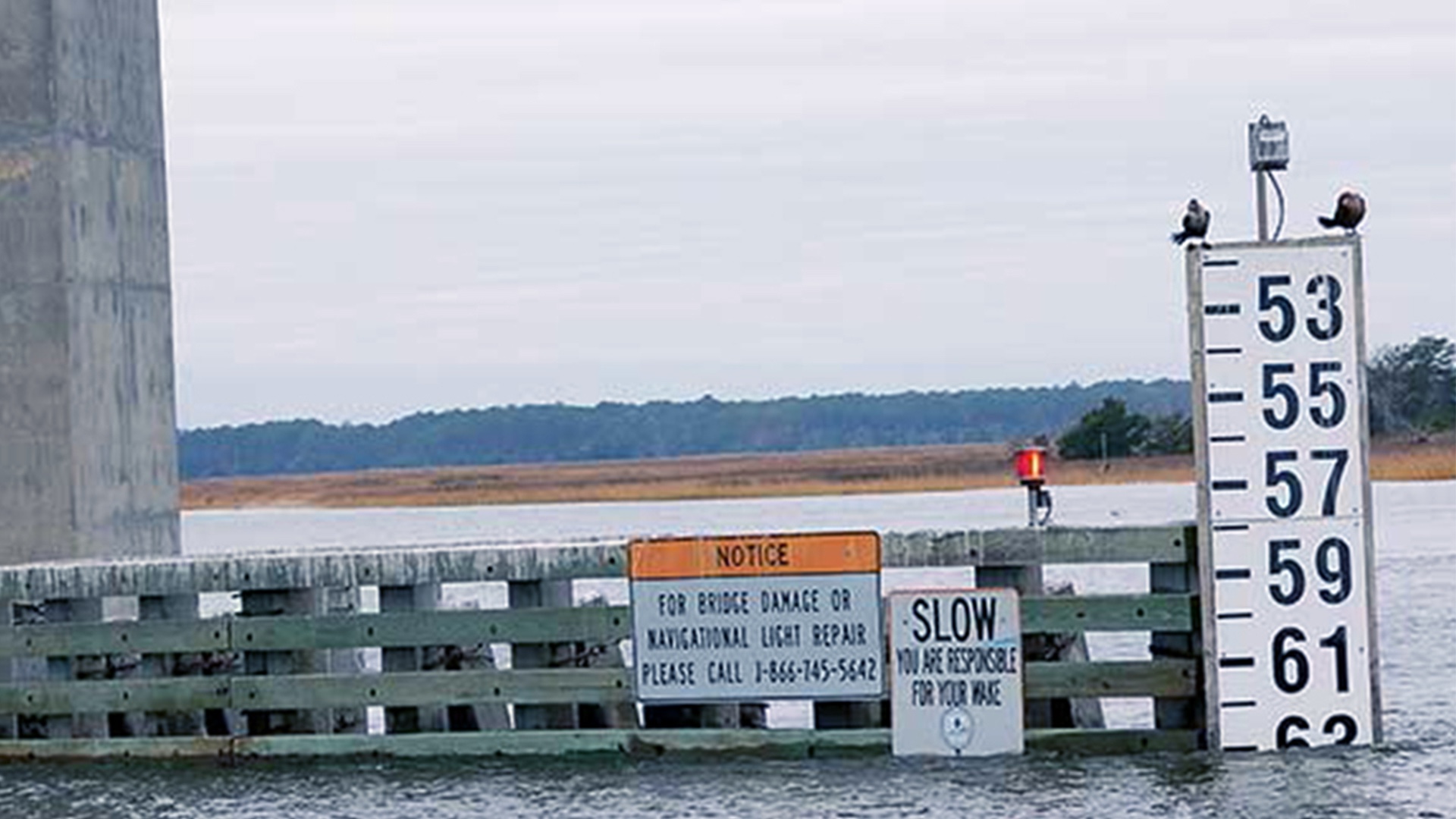
Clearance gauge on the abutment The figure that decides the day, read from the water at the current tide.
Most major spans carry a clearance gauge on the abutment, a numbered scale read from the water at the current tide. Treat it as the operative figure for that exact moment, not the chart number. If the gauge shows less than your air draft plus a comfortable margin, wait for the tide to fall, or in the case of a movable bridge, request the opening. Cruisers who have assumed the chart was correct on a king tide have walked away without a mast. The mistake is famously unrecoverable.
The conservative practice is to add a safety margin of one to two feet on top of stated air draft, and to verify against the gauge before committing to any fixed span on an extreme tide. If the route has multiple low bridges, plan the slowest passages around the lowest predicted water of the day. If a single bridge is the bottleneck, the prudent option is sometimes to step outside through an inlet and rejoin the inland route past the obstacle.
Four waterways.
Four numbers worth knowing.
AICW
65
feet · MHW
Standard for fixed bridges along the Atlantic Intracoastal Waterway, measured above mean high water.
Julia Tuttle
56
feet · Miami
The single low fixed bridge on the AICW. Mile marker 1087.2. Tall rigs must exit at Port Everglades.
Gulf ICW
55
feet · Florida
Standard for the Gulf Intracoastal Waterway across Florida's west coast section.
Okeechobee
49
feet · cross-state
The lowest controlling clearance on the Okeechobee Waterway. Decisive for any vessel crossing Florida east to west.
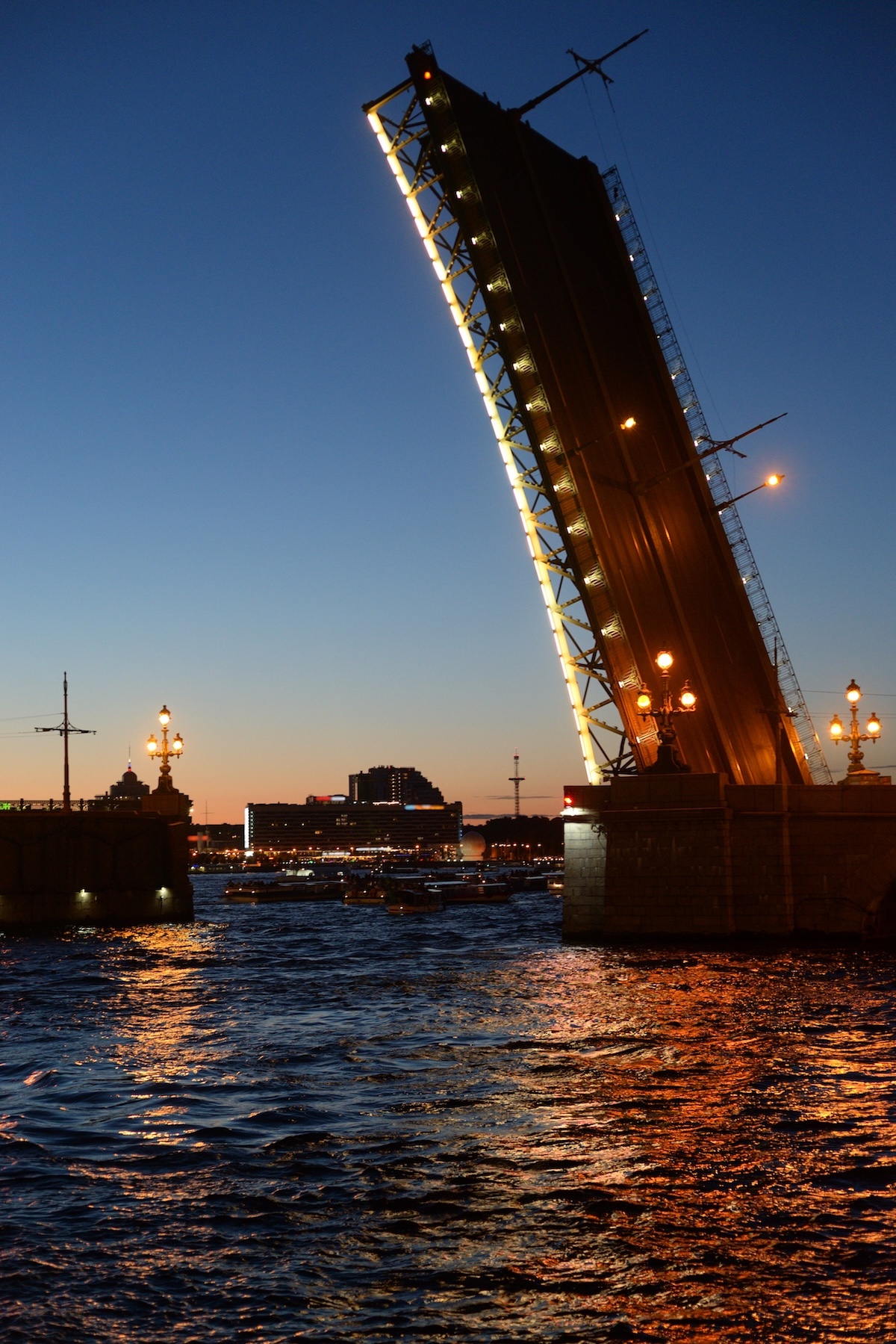
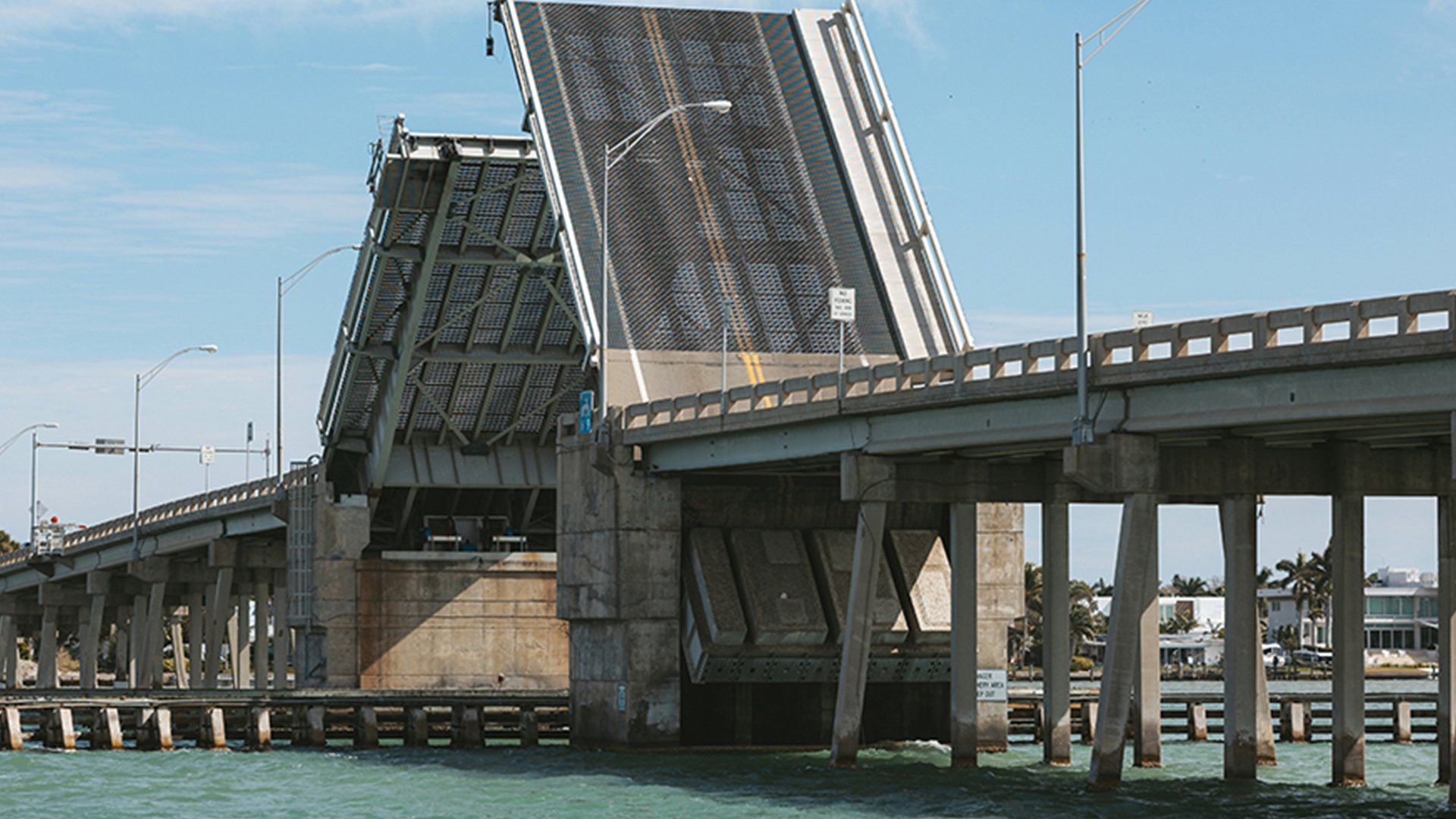
Drawbridge raised, last light A movable span removes the clearance problem, but adds every other one.
Through the span, and beyond
Approach the opening at a measured pace. The span cannot lift until the gates above are closed to road traffic, and on older Intracoastal bridges the mechanism is unhurried. Hold position with enough sea room to absorb a gust or a current set, and accept that the wait is part of the transit. The temptation to push the bow into the gap on the early stroke of the lift is the source of most of the embarrassing footage on this kind of crossing.
Once the span is clear, motor through at no-wake speed. Currents accelerate around bridge fenders and supports, and turbulence near the piers makes steering unpredictable for vessels with shallow rudder or low power. Maintain a generous gap from the boat ahead. Pass cleanly, return to the centerline, and hold the no-wake speed until you are well past the structure. Returning to cruising speed too early is how passing boats catch lingering vessels with a beam wash they did not deserve.
Right of way at a bridge is more custom than statute. With the exception of the Mississippi and a few other inland rivers, no codified priority exists, but the courteous convention is to give way to vessels running with the current. The current-set boat has less margin to slow, hold, or reverse, and the cost of yielding to it is a few seconds. When in doubt, let the other vessel pass first. Bridges are not the place to litigate a point.
Two short lists worth keeping.
At the Bridge · Do
- Hail the bridge by its official name on the working VHF channel.
- Verify clearance against the gauge on the abutment, not the chart.
- Hold sea room from other vessels; assume each has its own handling limits.
- Monitor the bridge's channel through the entire transit.
- Pass at no-wake speed and stay slow well past the supports.
At the Bridge · Don't
- Assume the boat ahead has requested the opening on your behalf.
- Trust a published clearance on a king tide, surge, or extreme rainfall.
- Anchor your position close behind a tug or barge with restricted maneuverability.
- Push the bow under the lifting span before the operator confirms.
- Treat sound signals as a substitute for radio in busy waters.
A bridge is a small piece of infrastructure that asks for cooperation from everyone around it. The operator, the road, the cars overhead, the boats below. Respect for the rules, the local knowledge, and the other vessel: that is what keeps the system working.
USA Onboard Editorial