


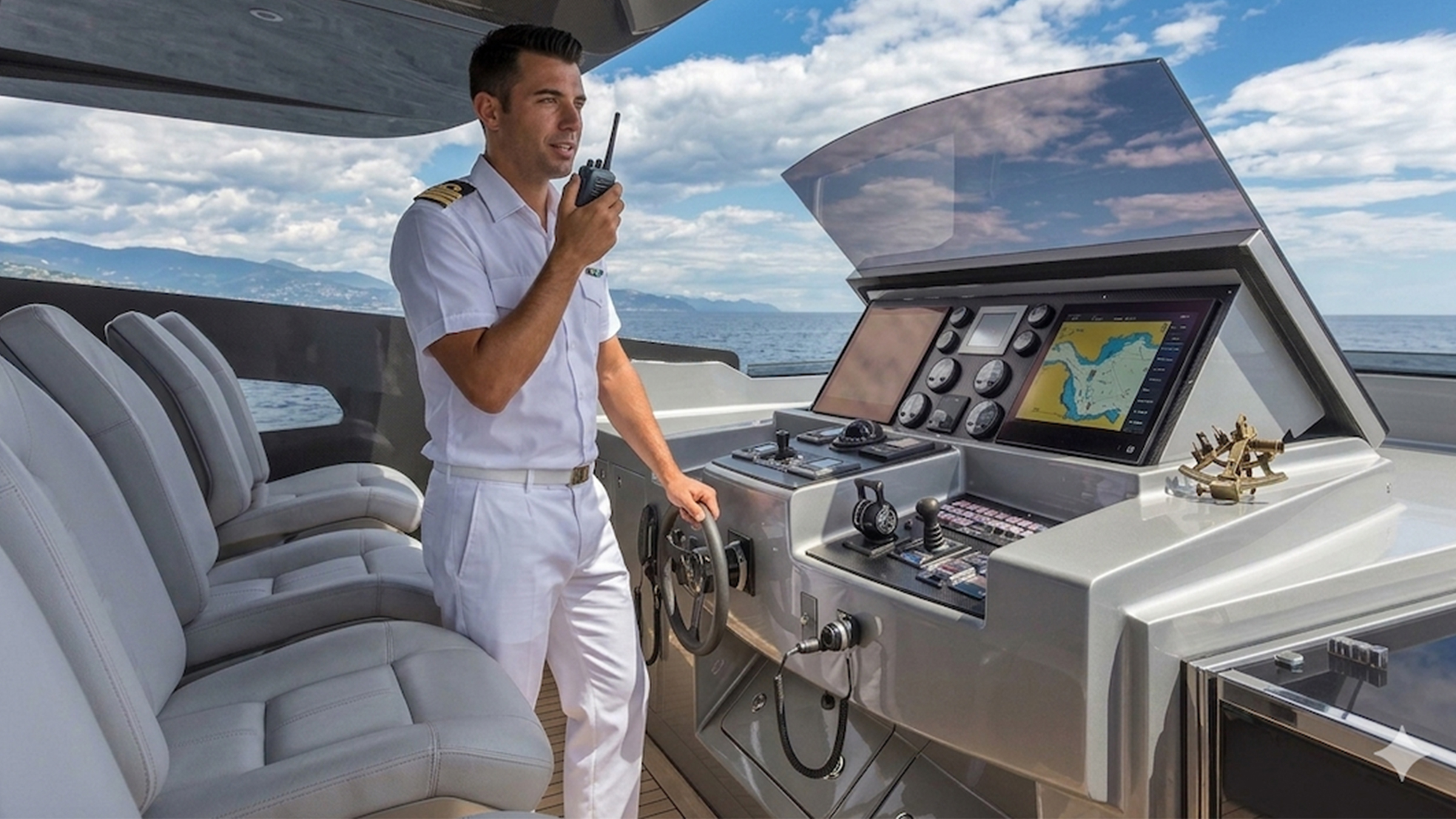
VHF Radio Basics
Every Boater Must Know
Your cell phone fails offshore. Your VHF doesn't. Channels, protocols, DSC distress, antenna range and the legal requirements — in one reference.
Your cell phone will fail offshore. Your flares depend on someone looking. Only your VHF connects you directly and instantly to the Coast Guard — and to every vessel within range, around the clock.
A VHF radio is the single most critical piece of safety equipment aboard, and the least understood. The range depends on antenna height, not power. The red DSC button turns a vague "I'm sinking somewhere" into exact coordinates and a vessel identity, sent to everyone in range at once — but only if your MMSI is registered first. And a false Mayday is a federal crime. This guide turns the radio at your helm from a mystery into a tool you can use with confidence the moment it matters.
What's inside the guide- Antenna range and the physics that decide it — handheld, fixed-mount and masthead compared
- Choosing the right radio, and what Class D DSC actually does for you
- The essential channels — 16, 09, 22A, 68 — and the Florida ICW drawbridge protocol
- Radio language, the NATO phonetic alphabet, and ready-to-use step-by-step scripts
- The full DSC distress & Mayday procedure, FCC licensing, free MMSI registration and the complete checklist
Download the guide free, here.
Leave your name and email and we'll send the full VHF Radio Guide straight to your inbox.