


A New Standard in Volume
Under the 500‑Ton Line
Antalya's most ambitious under‑500GT build rewrites what a 55‑metre steel‑and‑aluminium platform can hold — 42 percent more outdoor space, a split‑level master, and the quiet discipline of a yacht designed to be lived in, not simply owned.
The 500 gross‑ton threshold is the quiet line that shapes almost every modern yacht on the wrong side of fifty metres. Cross it, and a different world of manning, surveying and classification opens up — one that most owners, even deeply experienced ones, would rather keep at arm's length. The engineering question, then, is not how large a yacht can be. It is how much yacht can be coaxed into a number that refuses to grow.
Al Waab II answers that question with an audacity its understated silhouette does little to advertise. Built by Alia Yachts in Antalya and designed throughout by Dutch studio Vripack, she measures 55 metres stem to stern — at launch, the longest steel‑and‑aluminium yacht in the world below 500GT. That claim, repeated often enough to become shorthand, deserves attention only because of what it costs to earn it: a slender 9.1‑metre beam, a shallow 2.17‑metre draft, and a discipline about interior volumes that turns every centimetre into a design decision.
The commission came from a Middle Eastern owner who, early in the process, told the yard he simply wanted 55 metres. The record was not a goal; it was a consequence. What he did ask for was a yacht that felt like a family apartment at sea — a phrase Vripack's co‑creative director Bart Bouwhuis has called the founding principle of the entire design. Everything that follows, from the bamboo‑slatted ceilings to the outward‑facing seating to the absence of direct overhead light, descends from that single instruction.
Overall
Tonnage
Space
Staterooms
Hull‑form as philosophy
Vripack's holistic method — the same that produced the studio's two Design & Innovation Award trophies for this project — treats naval architecture and interior planning as a single problem. The result is an arrow‑like foredeck, a long, slender hull and a superstructure that keeps its weight close to the waterline. The maths reward the restraint: twin Caterpillar C18 diesels of 522 kW each push her at eleven knots in comfort and fourteen in sea trials, while burning roughly thirty‑five percent less fuel than comparable 499GT yachts of heavier construction.
Economy here is not ideology. It is the companion of a range that lets owners disappear into a second week of cruising without calculating against it, and a displacement signature quiet enough to keep the master deck civilised at hull speed. The yacht was delivered from Alia's Antalya yard in 2022 after a two‑year build completed largely through the pandemic — the first superyacht to be launched from the Antalya Free Zone's new 2,000‑tonne ship lift.
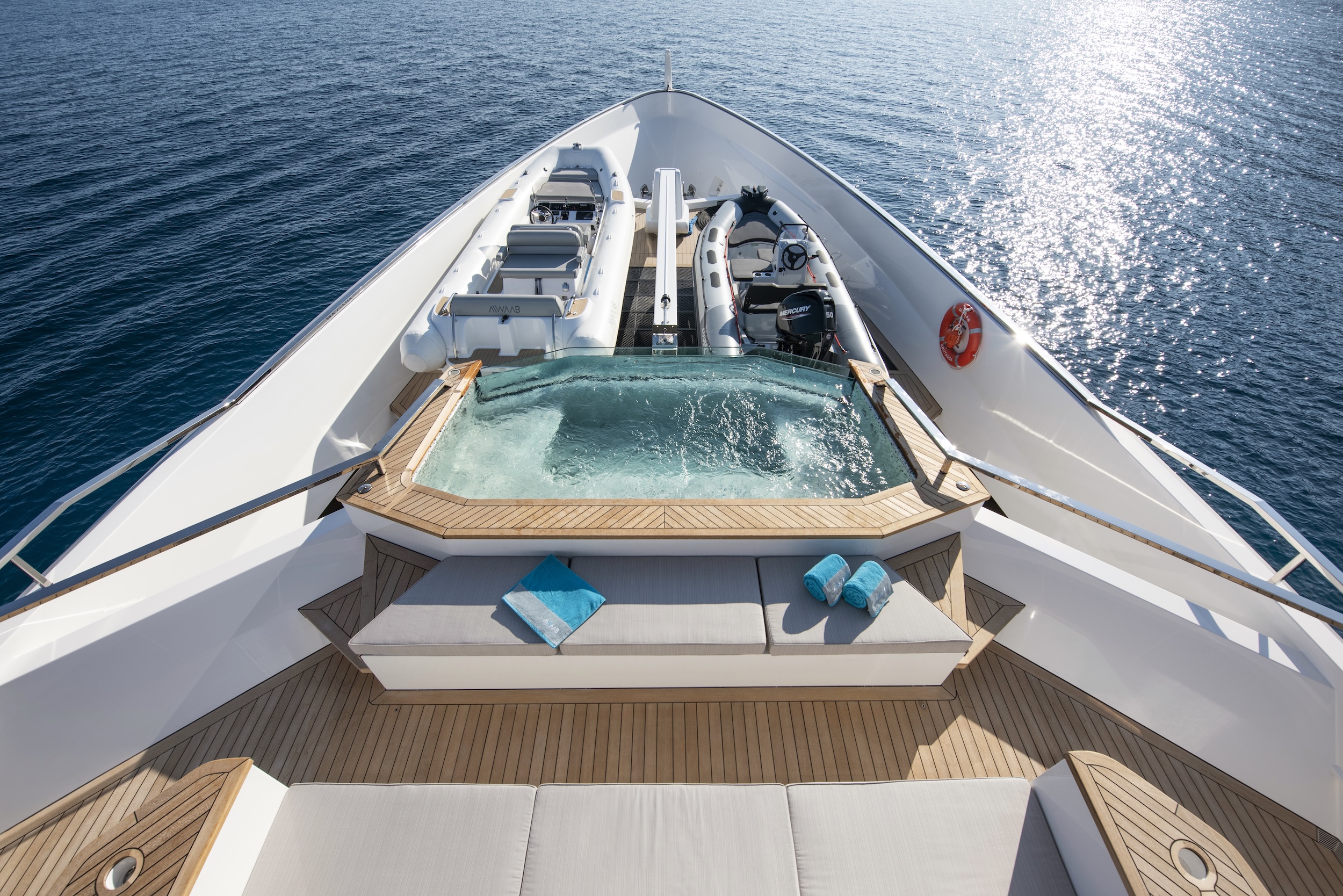
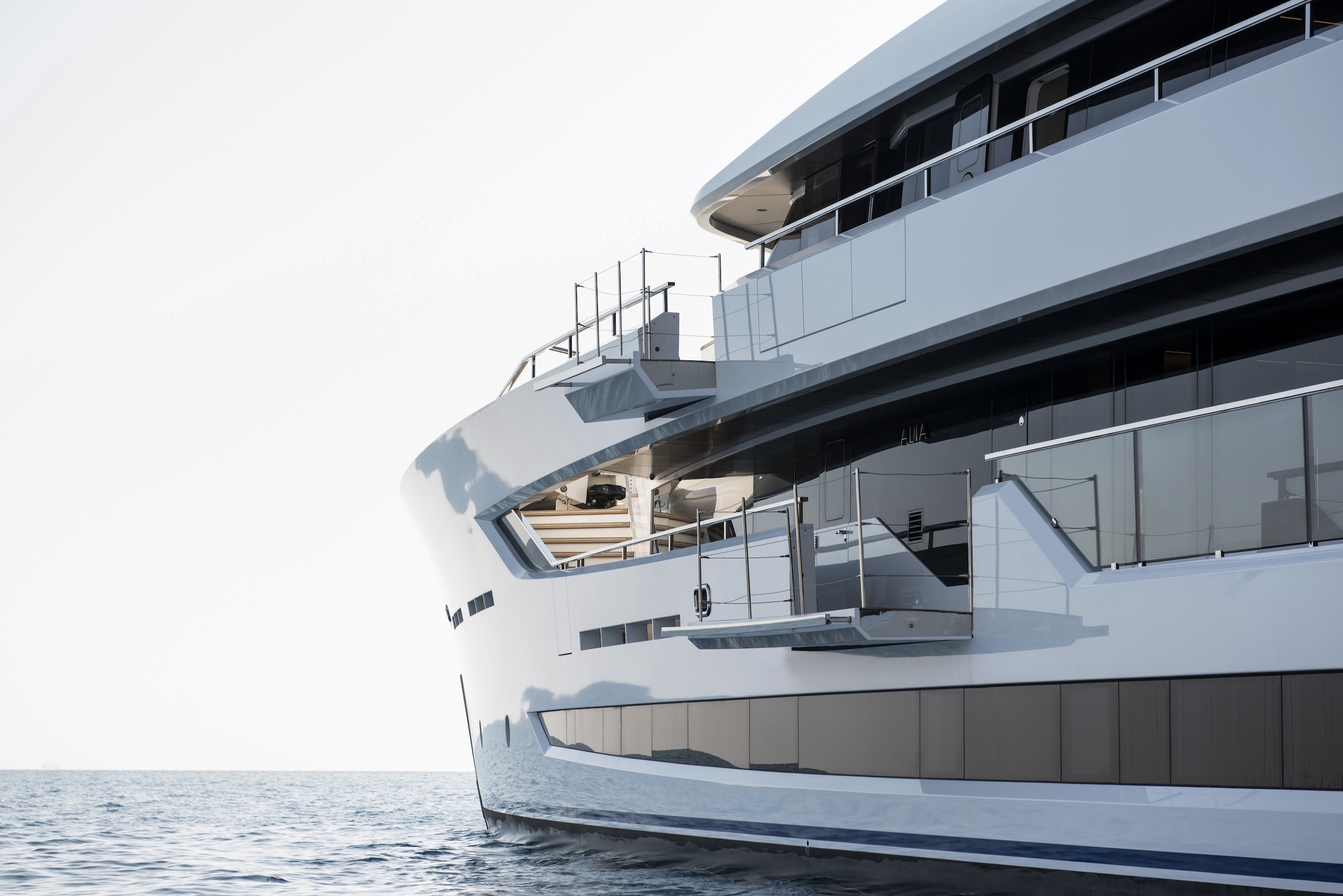
What the silhouette conceals is how much living surface Vripack has extracted from it. The yacht offers an estimated forty‑two percent more exterior deck space than comparably sized vessels in her tonnage class — including covered storage for two tenders, a pair of jet skis and other water toys, tucked into a latticed mid‑deck hollow at the bow. Because the structure is open rather than enclosed, it contributes nothing to the yacht's official volume. The tenders are accessible in seconds and invisible the rest of the time.
It is a piece of lateral thinking with a downstream effect: the foredeck, freed of tender machinery, hosts a four‑metre plunge pool and loungers that belong, in practice, to the master suite directly above. The aft deck, relieved of the garage volume that usually consumes it, becomes a true beach club — a sprawling aft terrace at the waterline with a transom that folds down toward the sea.
Yachts are getting longer and wider, but most owners still want to stay below the 500GT mark. The amount of space and the flow of the layout is what an owner really feels.
Three ideas that define her
Tenders and jet skis sit in a latticed mid‑deck hollow at the bow — accessible in seconds, invisible the rest of the time, and, because the structure is open rather than enclosed, counted as nothing against the yacht's gross tonnage.
The owner's suite occupies the forward half of the upper deck with its sleeping volume at one level and the dressing room and bath a half‑flight below, freeing a private four‑metre plunge pool and loungers on the foredeck immediately beyond.
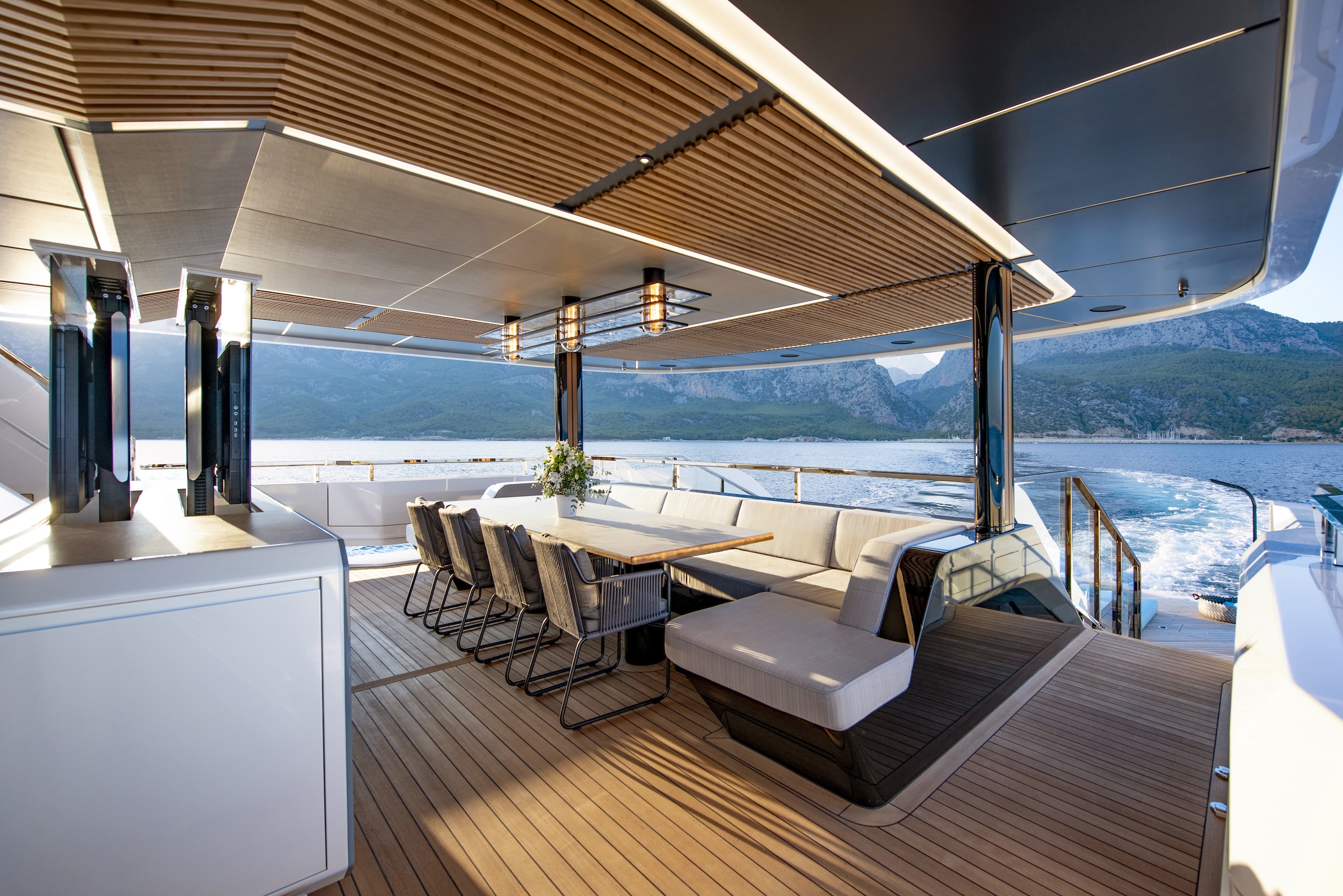
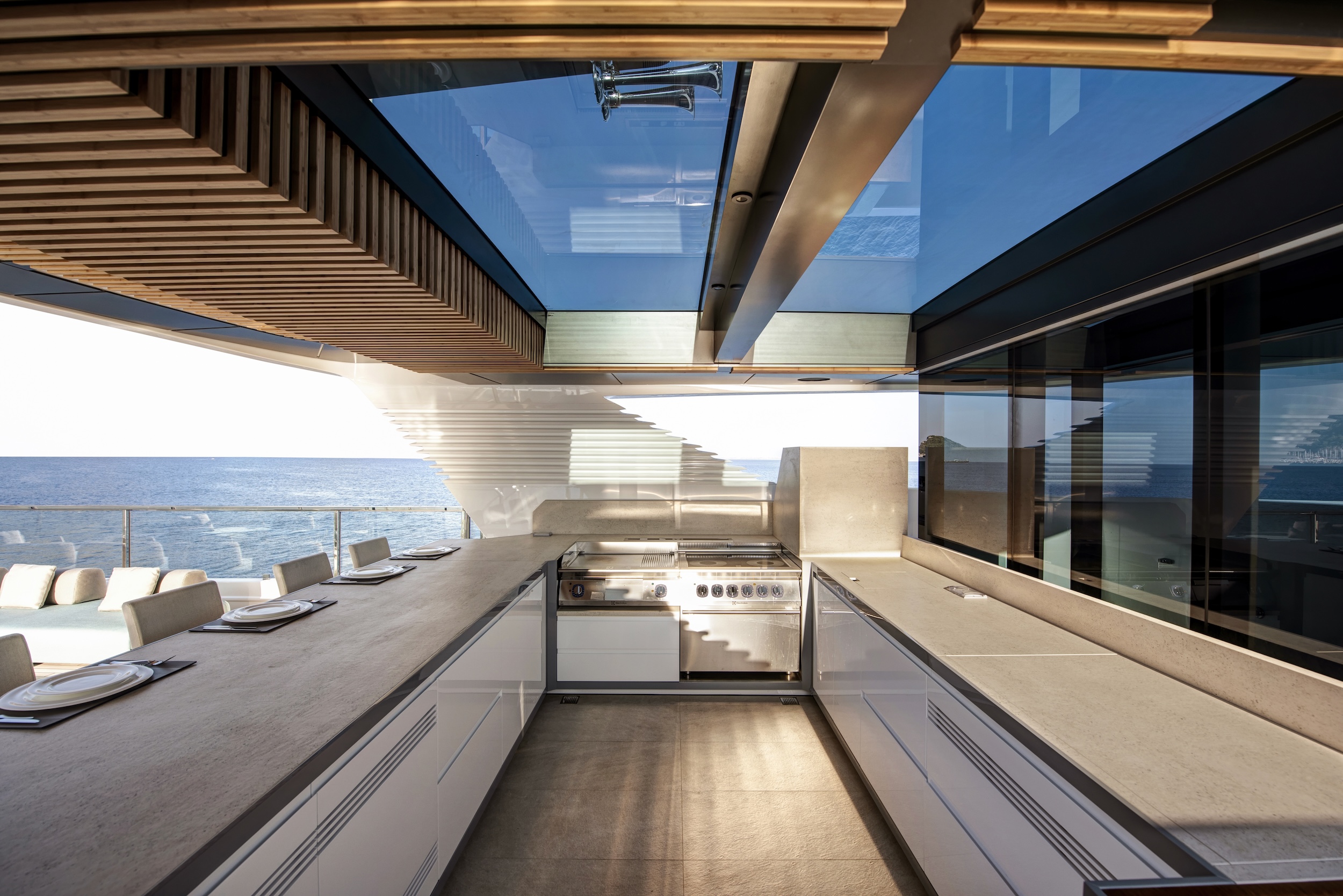
On the starboard main deck, the bulwark folds down into a long al fresco breakfast terrace that sits barely two metres above the sea — replacing the formal dining room convention with a daylight, outward‑facing ritual.
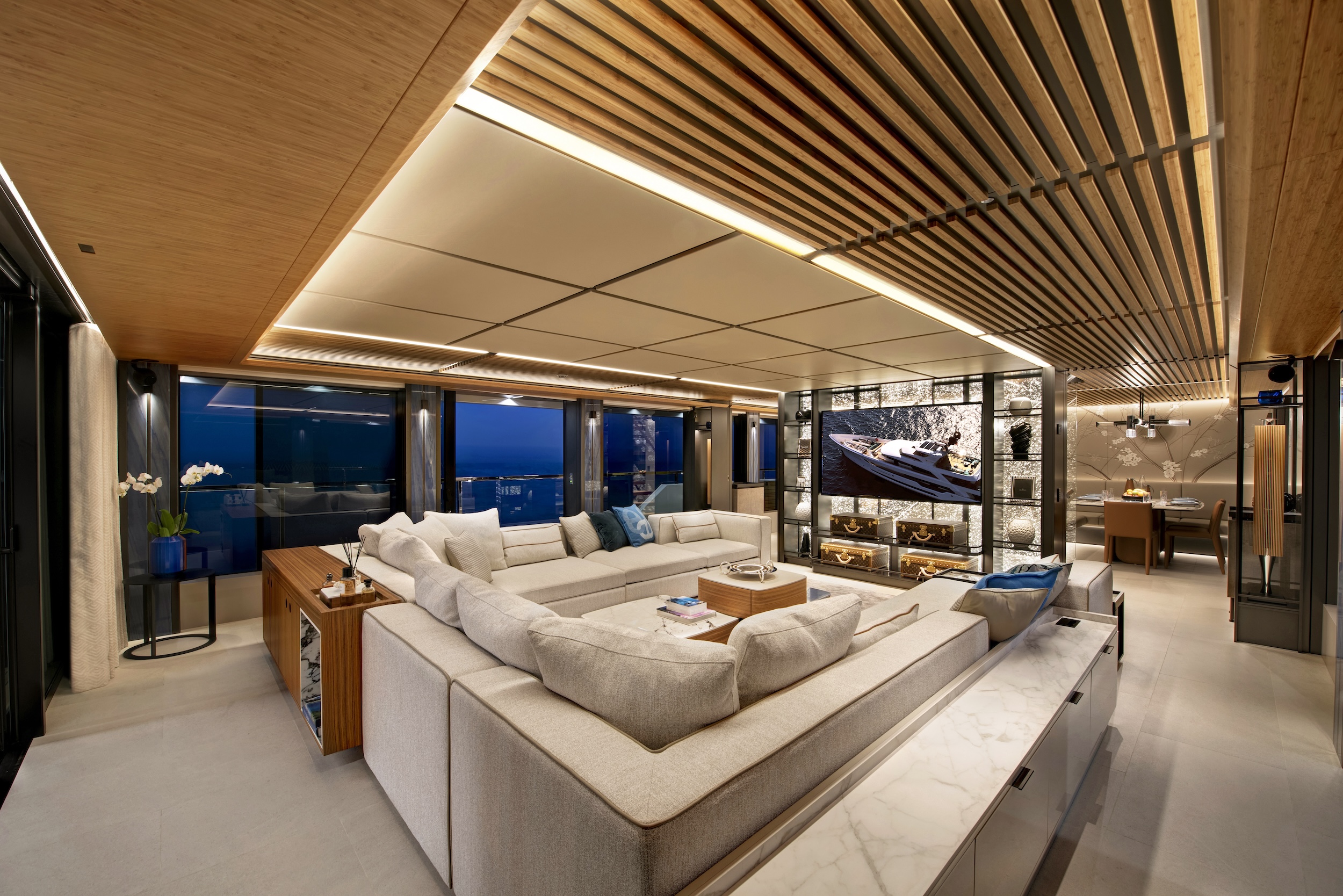
Bamboo, diffused light, and the absence of the overhead spot
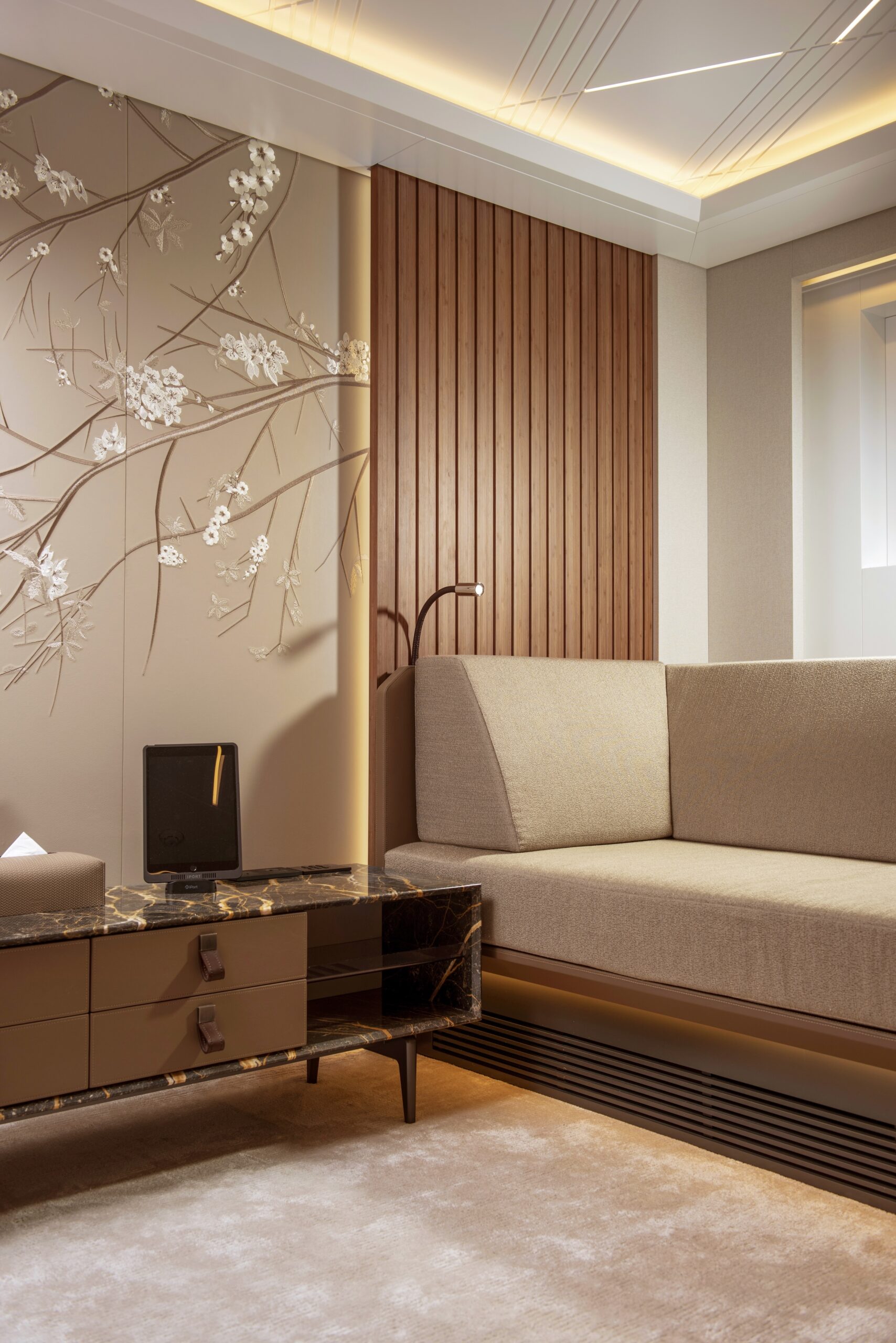
The owner's brief for the interior was shaped by two refusals: no direct overhead lighting, and no design gesture that would compete with the view. What Vripack delivered is an envelope in which light is treated as architecture.
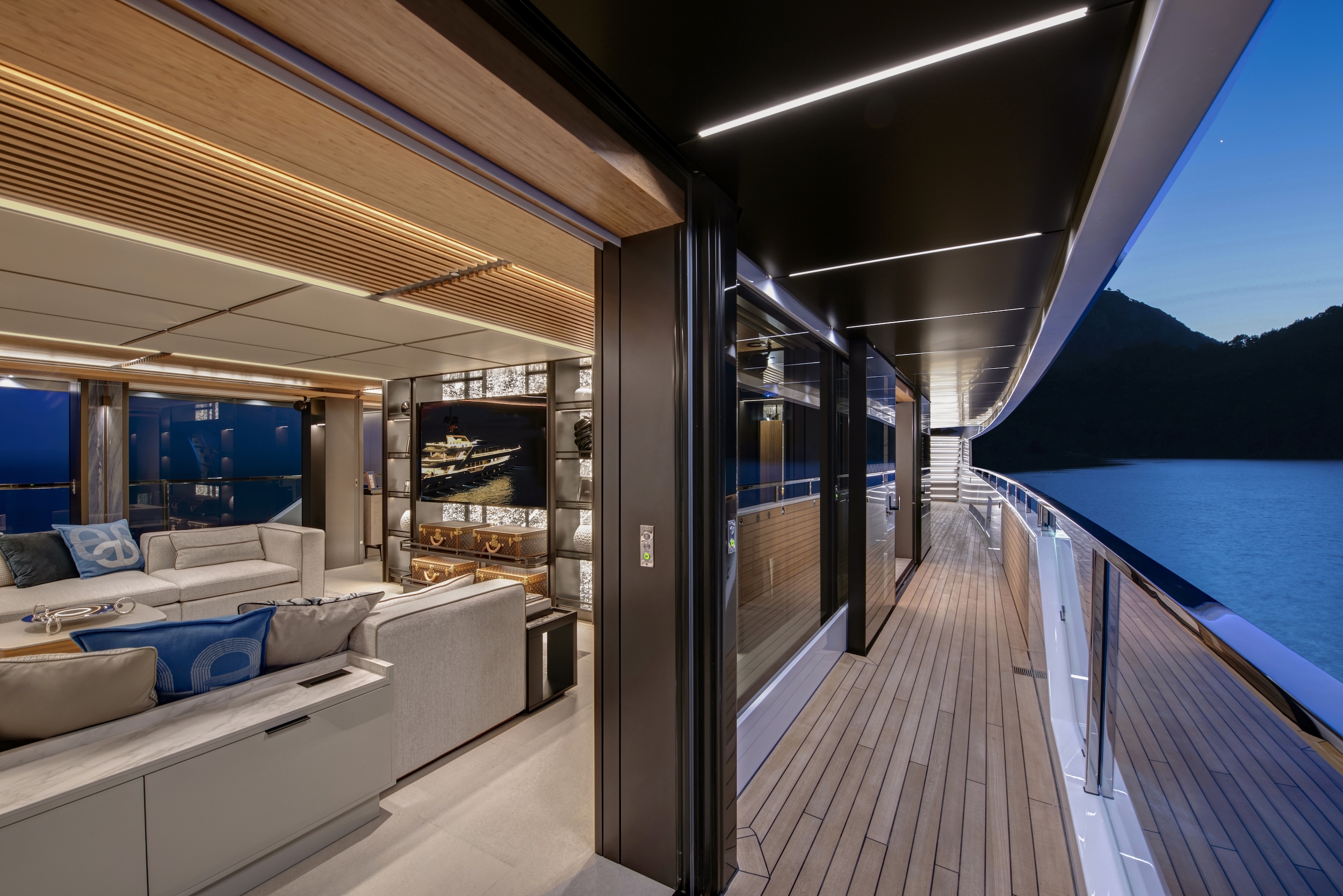
Matte‑finish bamboo slats run the length of the ceilings on every deck, absorbing midday glare through the floor‑to‑ceiling windows and softening into the interior as indirect wash. Faux‑leather panels in pale biscuit and ash carry the light along the walls. The palette — muted greys, browns and beiges drawn in part from Hermès's upholstery ranges — is deliberately recessive, staged to let the sea and the craftsmanship do the work.
One subtle anomaly: the main salon floor is porcelain tile rather than the hardwood convention. It is a practical gesture — the owner wanted to come in from the deck without changing shoes — and a revealing one. This is a yacht designed around the texture of an actual life, not an editorial one.
Glass bulwarks and an outward‑facing grammar
The exterior planning follows the same logic. Glass bulwarks replace opaque panels on every deck, collapsing the distance between the seat and the horizon. Much of the seating on board is oriented outward by design — a small, almost invisible choice that changes the register of every meal, every conversation, every crossing.
The practical effect is a yacht that feels open to the sea from almost any station. The structural effect is more interesting. Because the exterior decks are so deep, protected and naturally ventilated, they function in practice as extensions of the main living areas — a forty‑two percent gain in usable exterior surface that the 499GT metric is incapable of registering.
Surfaces, details, light
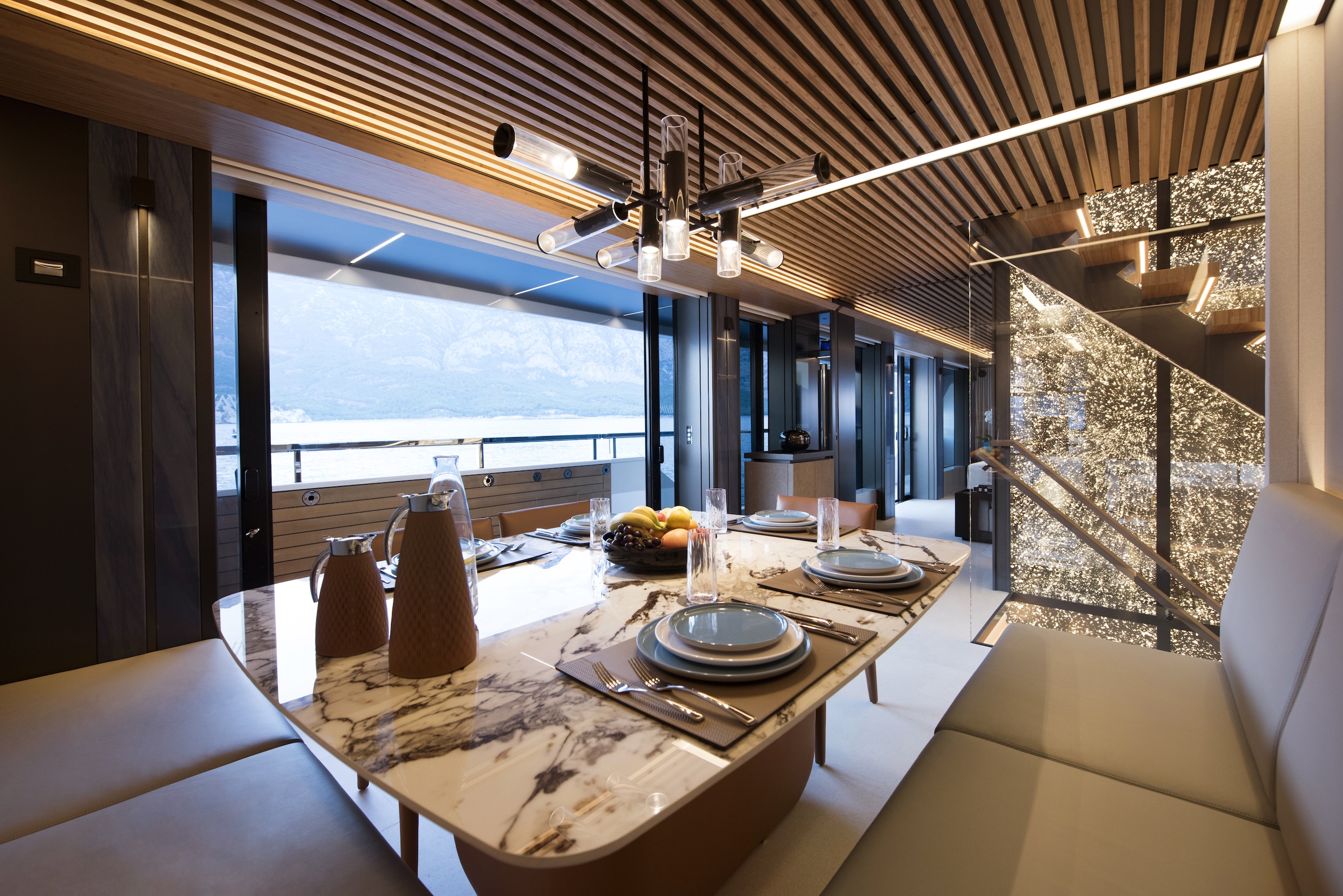
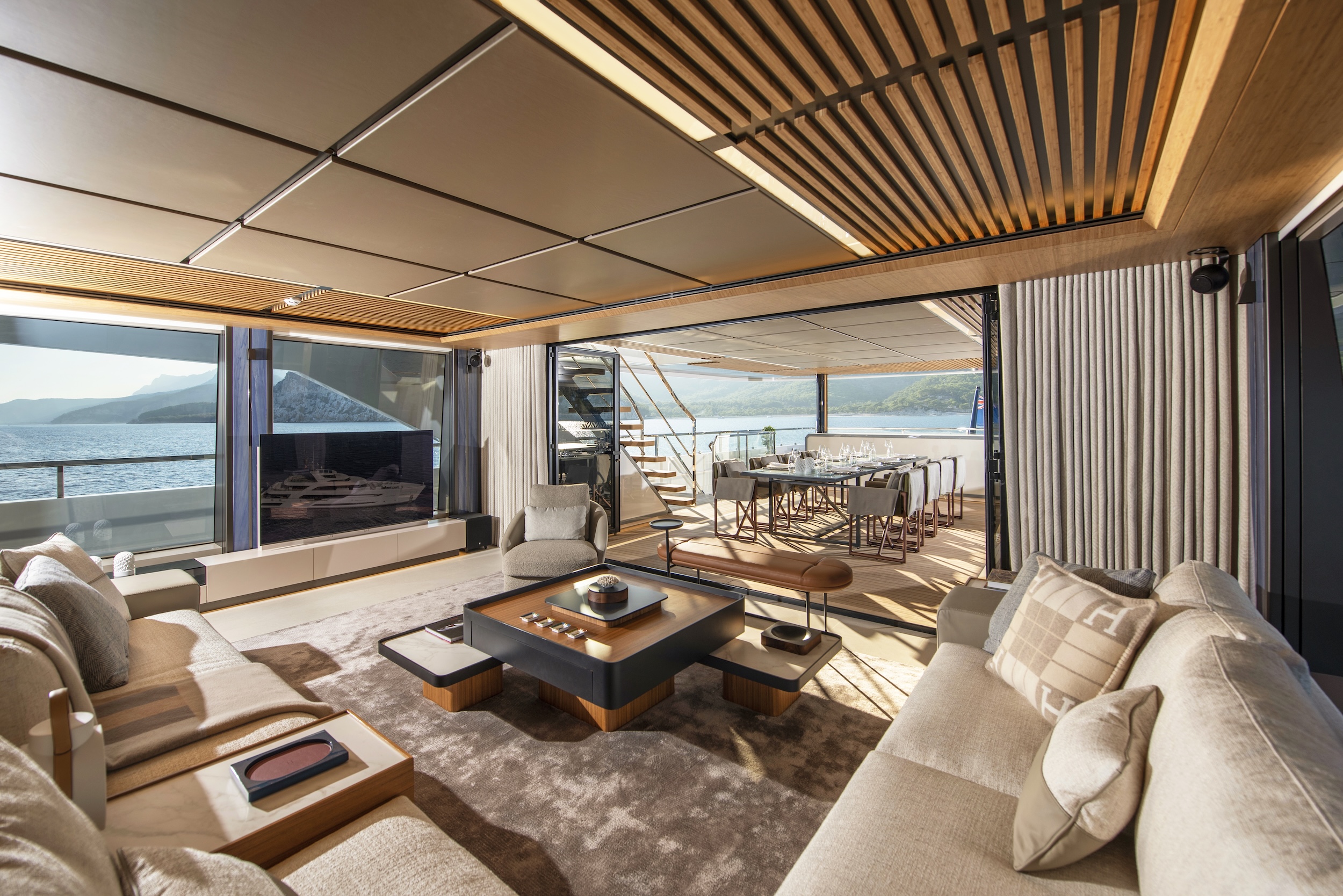
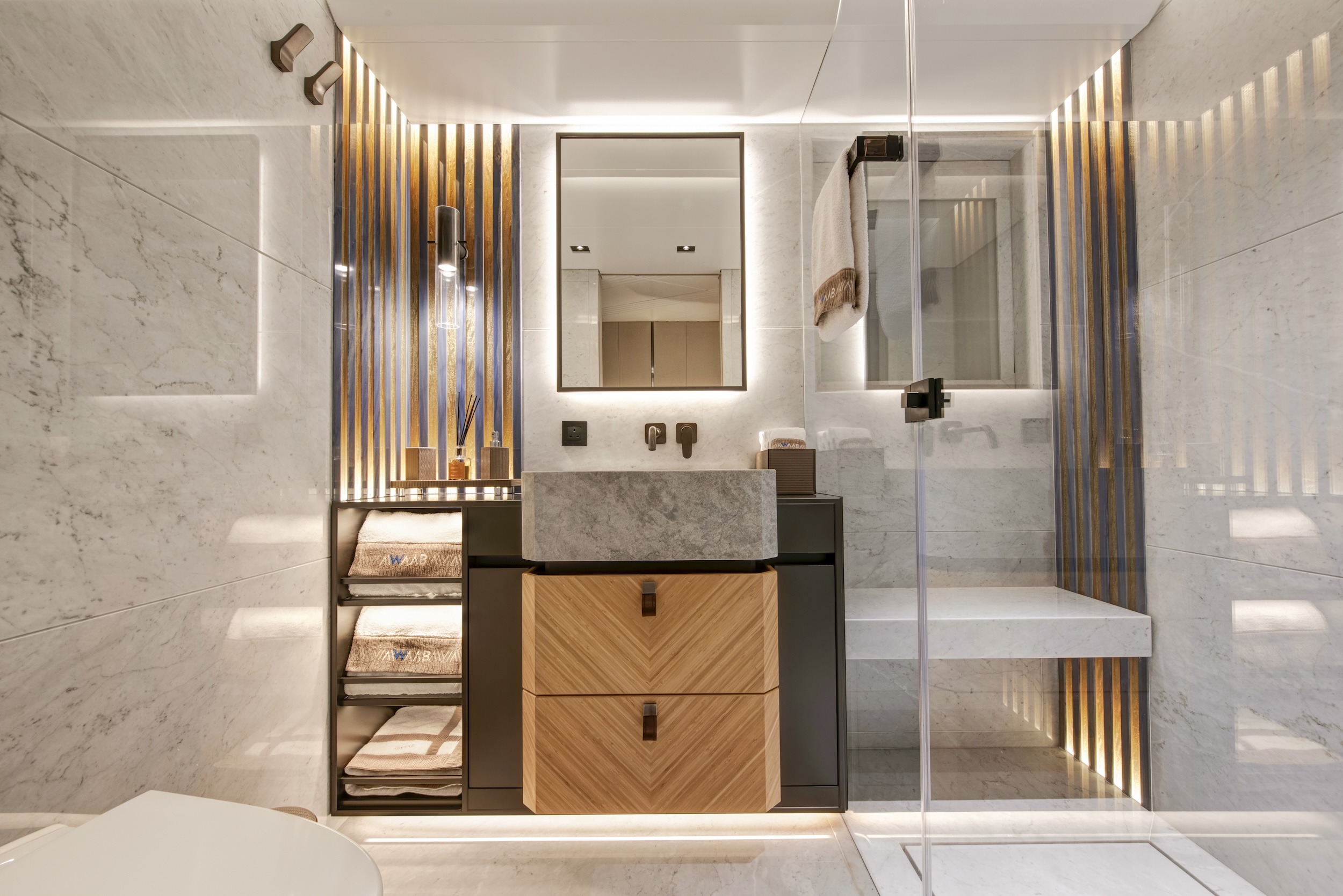
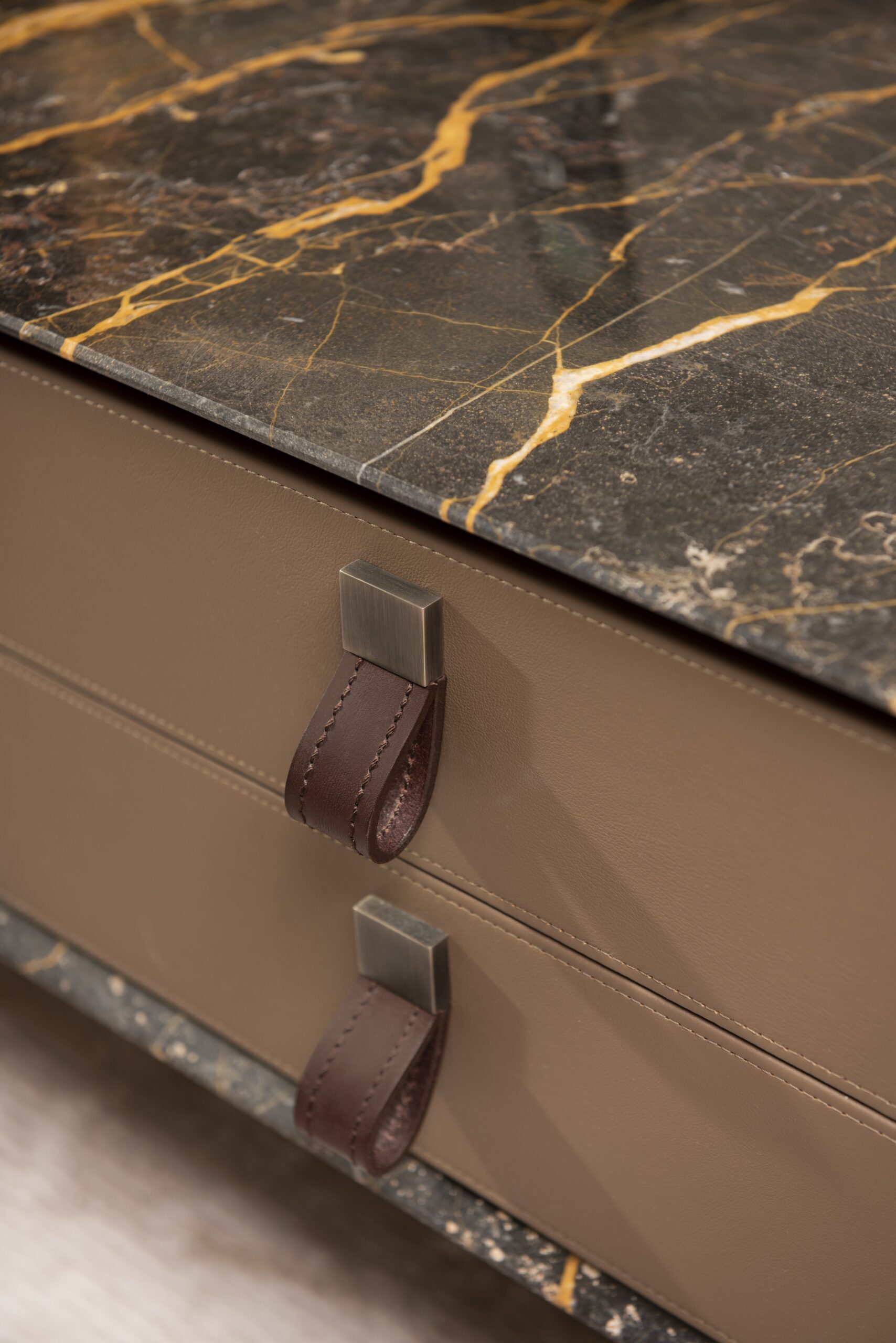
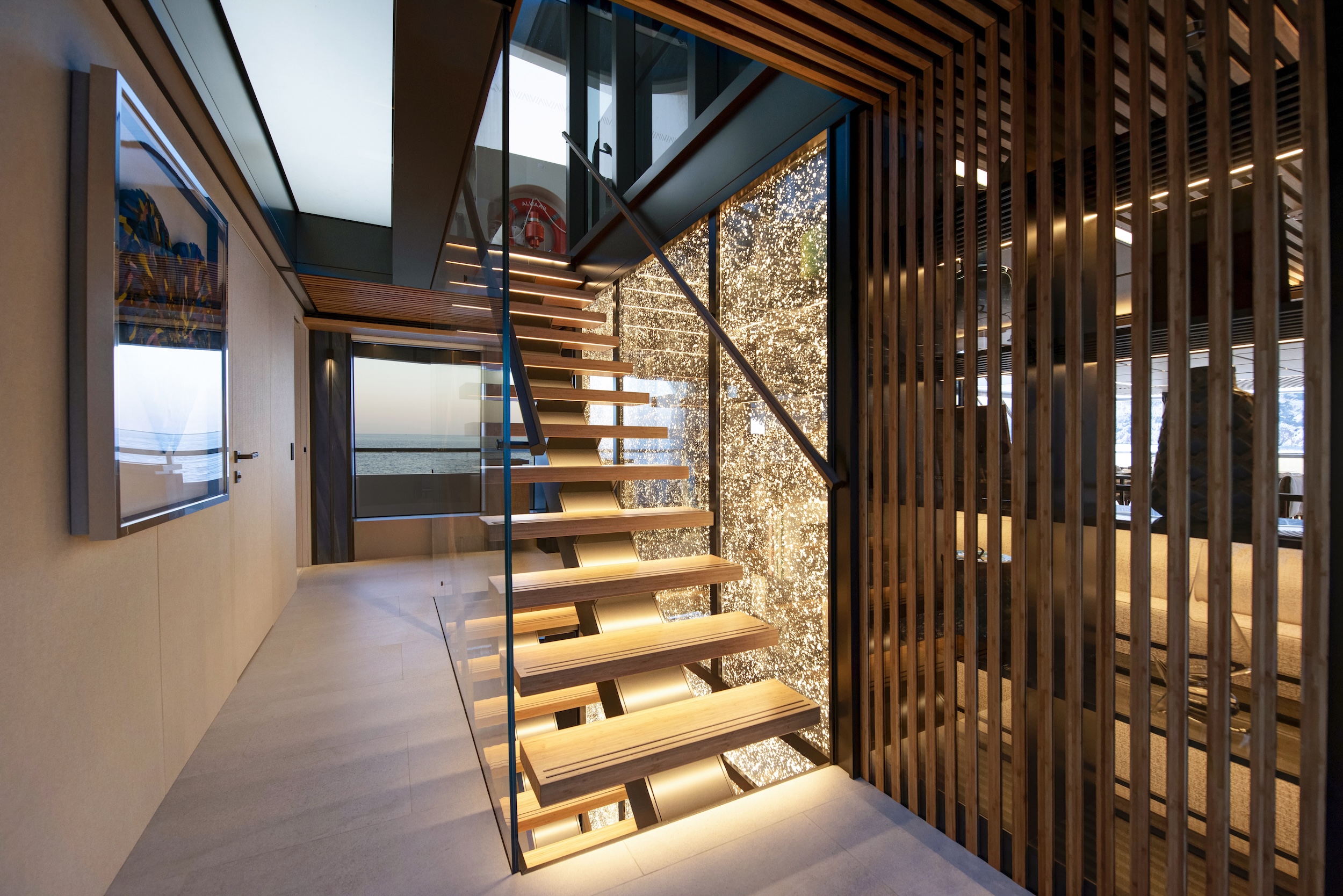
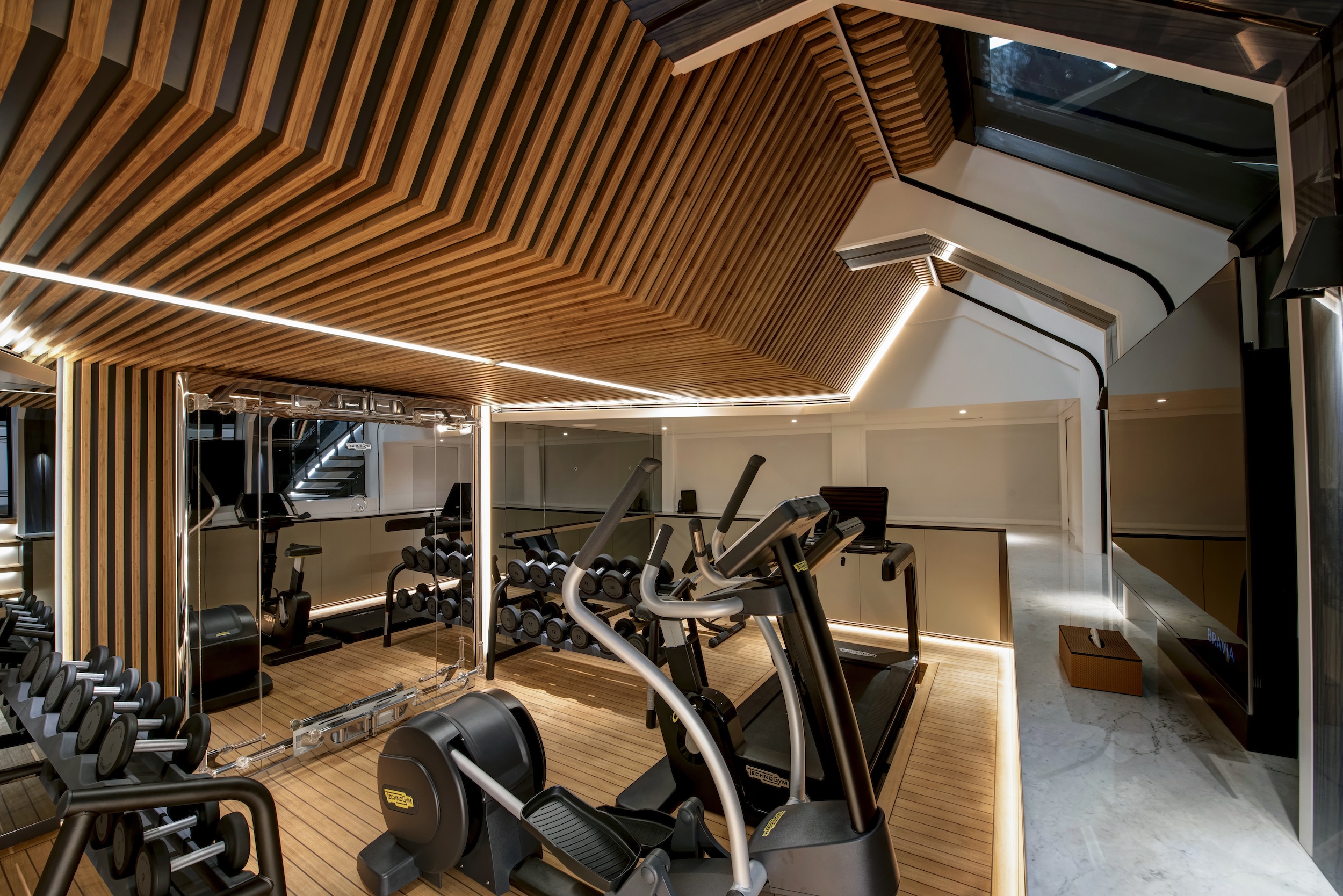
The owner had the explicit desire to use his boat as a family apartment. That desire became the founding principle of the entire design — the very essence of living on the water.
The accommodation plan is unusually generous for the tonnage: twelve guests across six en‑suite staterooms, a configuration rarely achievable at this GT. The split‑level master on the upper deck is the headline — sleeping volume forward, dressing room and a full‑width bathroom tucked a half‑flight below — but the quieter story sits aft on the lower deck, where a full‑beam rear VIP is formed by combining two single cabins into one. A partition slides away, single beds on runners push together, and two cabins become a single grand suite with dual bathrooms, or separate again for travelling parties.
Aft of the guest accommodation, the beach club extends the usable waterline in the other direction. Because the tender garage has been displaced into the bow hollow, the space is given over entirely to the sea. The transom folds down, the two side terraces fold out, a skylight overhead opens to the sun — the beach club becomes, in effect, a small amphitheatre of light and water.
At a glance
A visual tour through the vessel
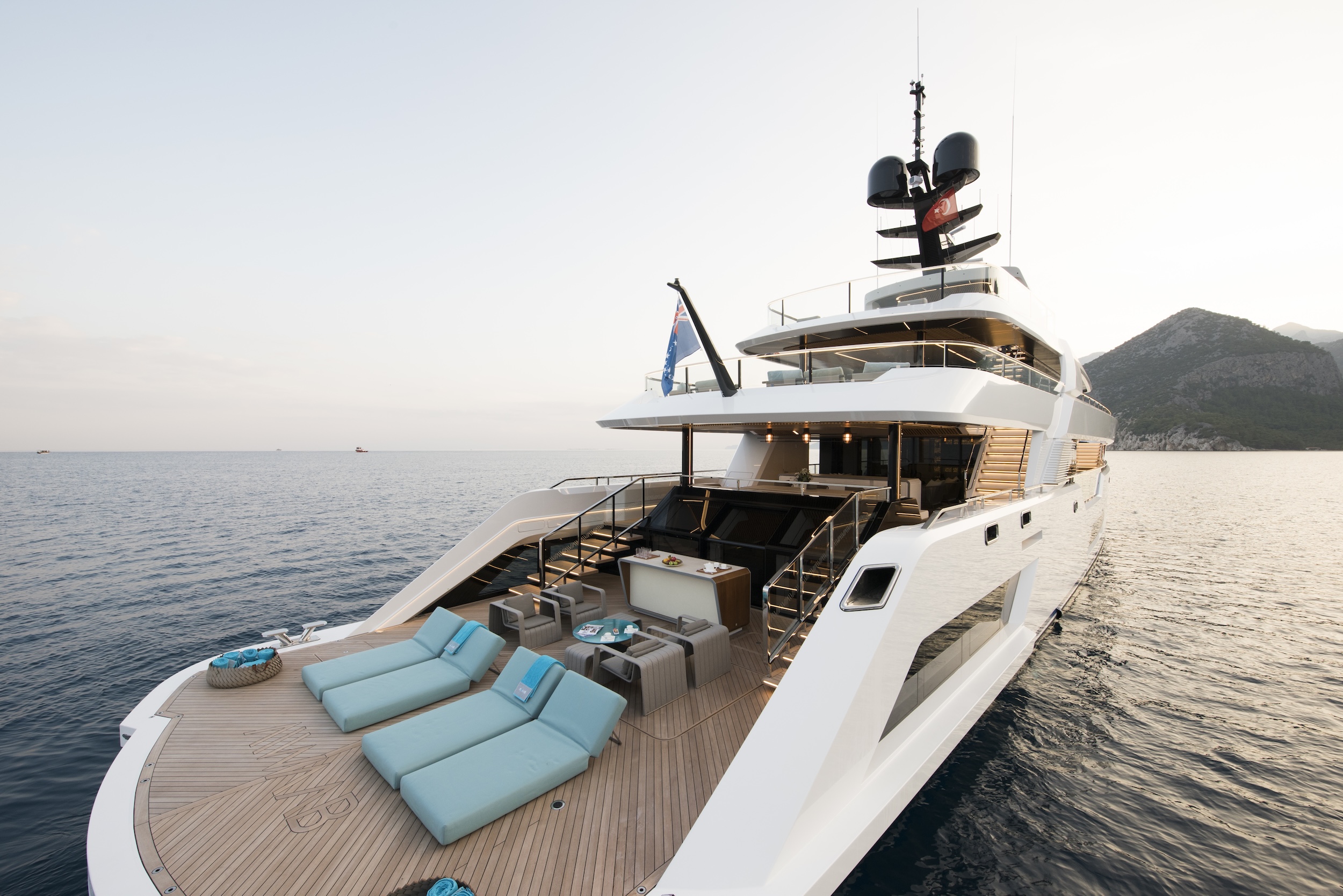
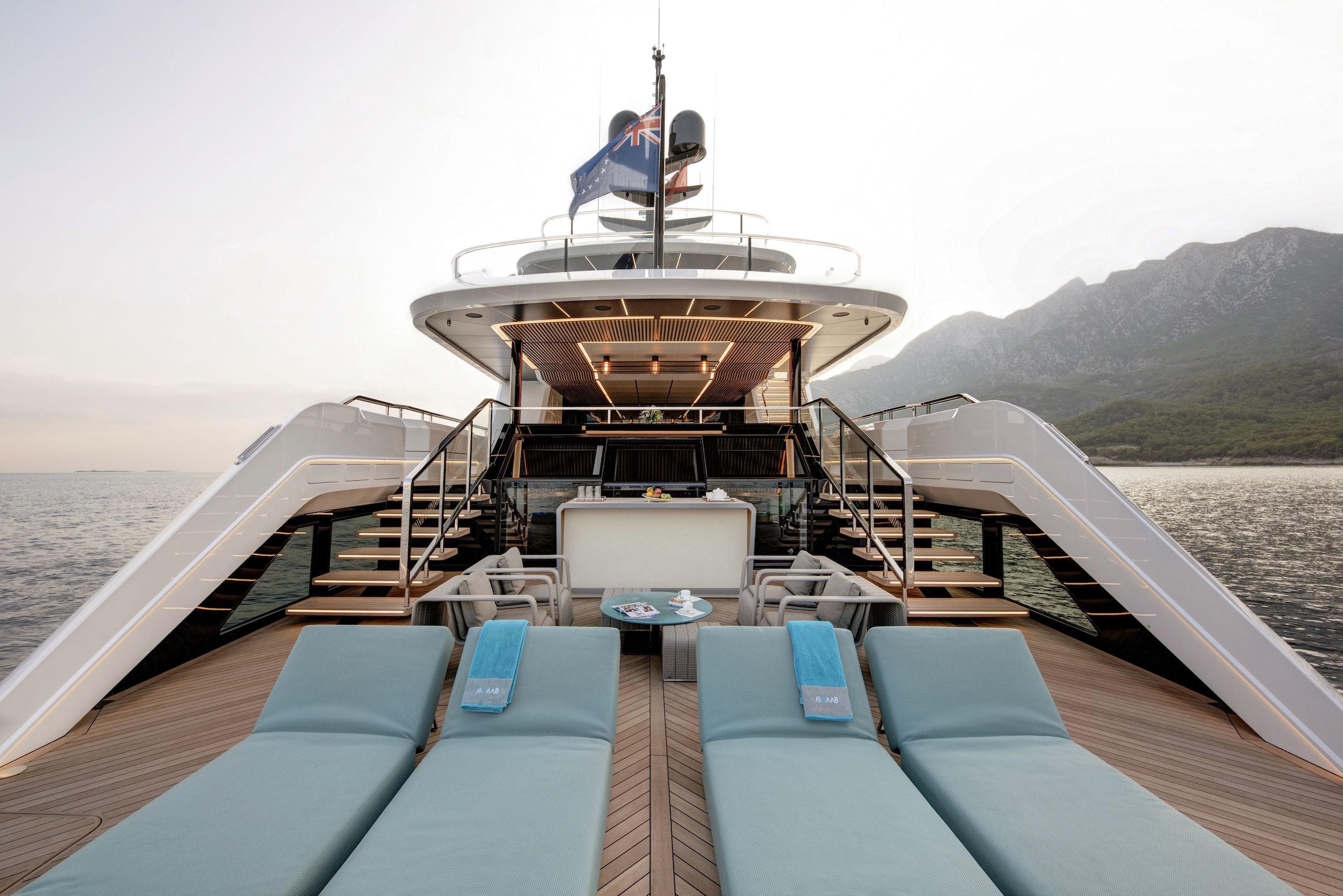
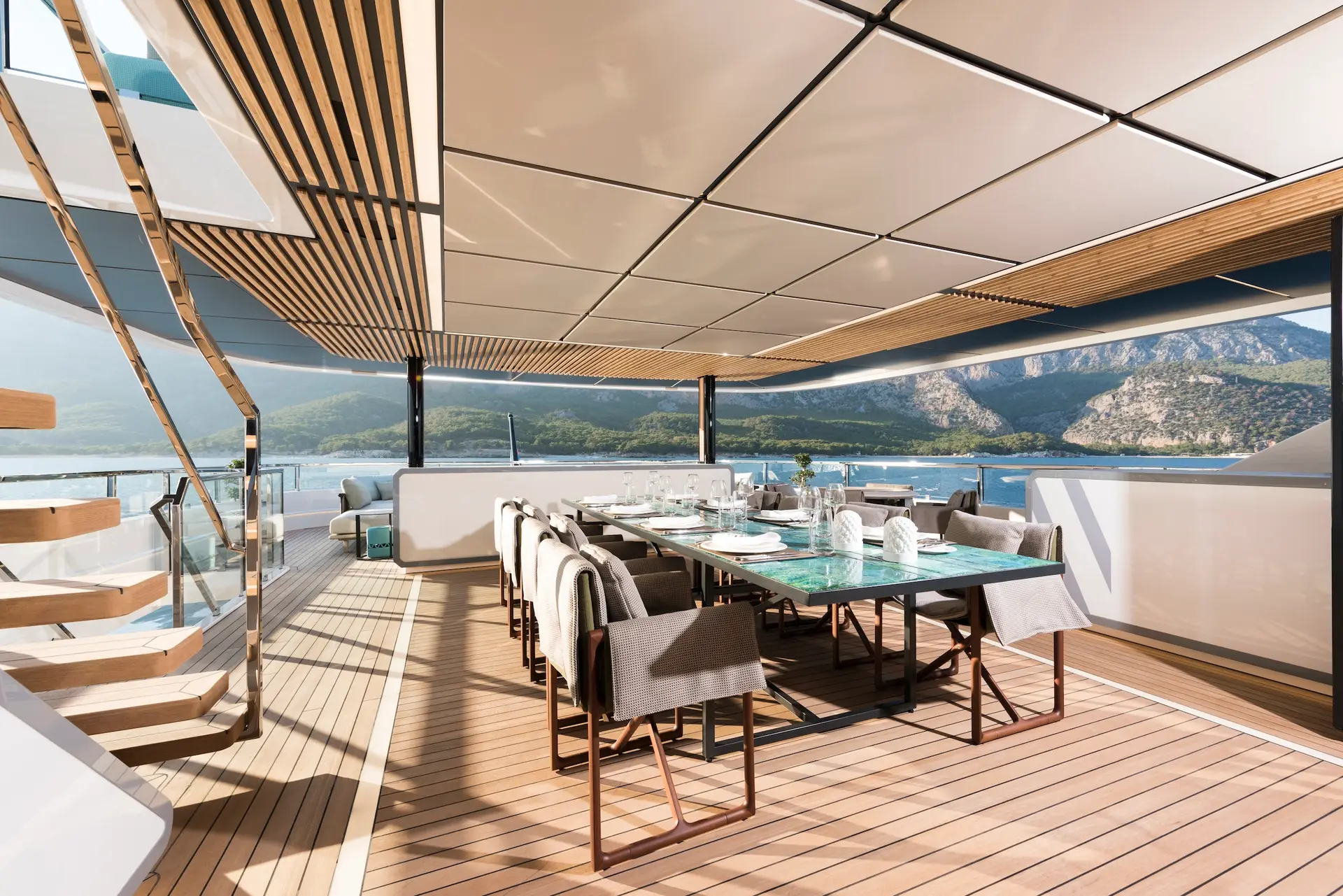
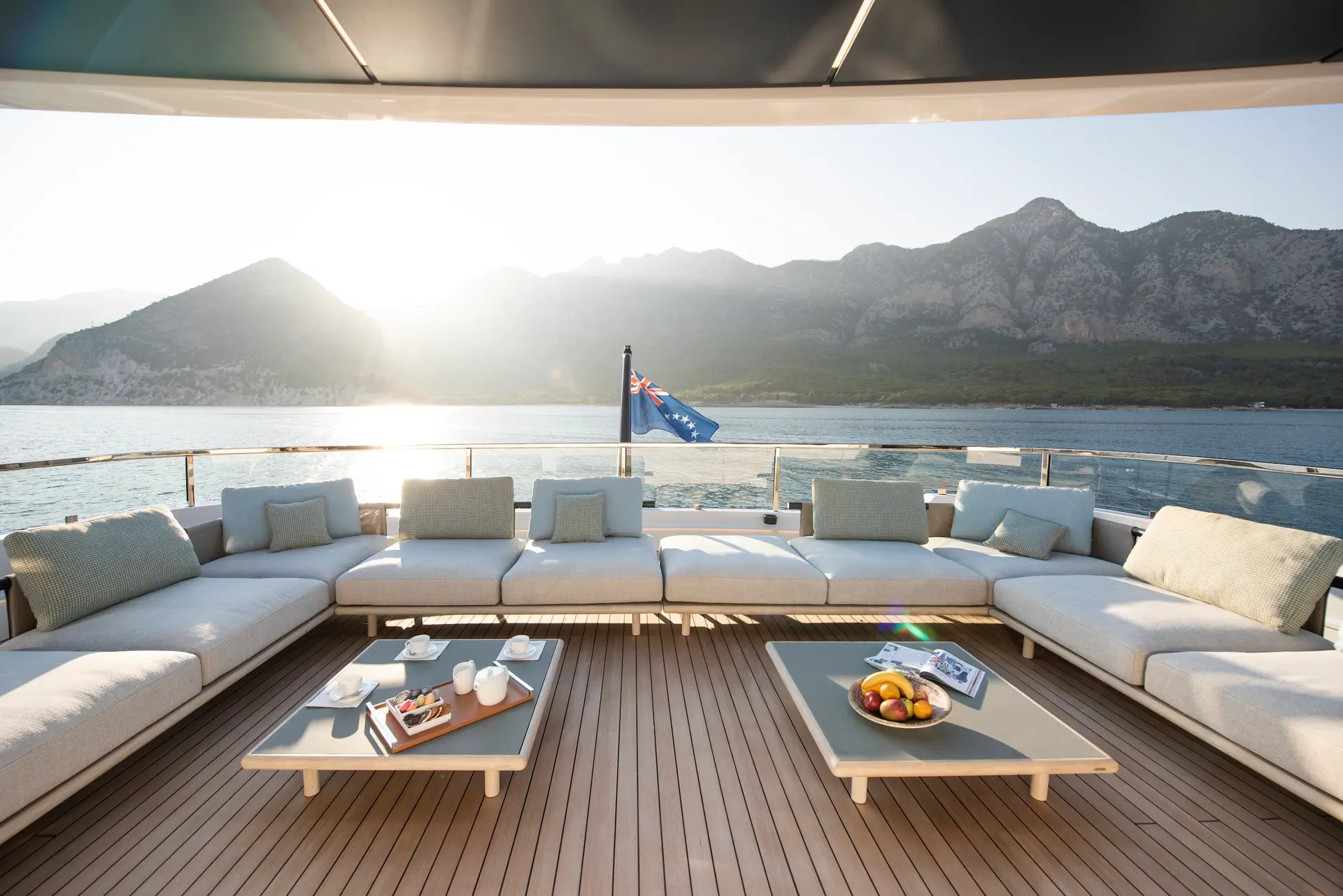
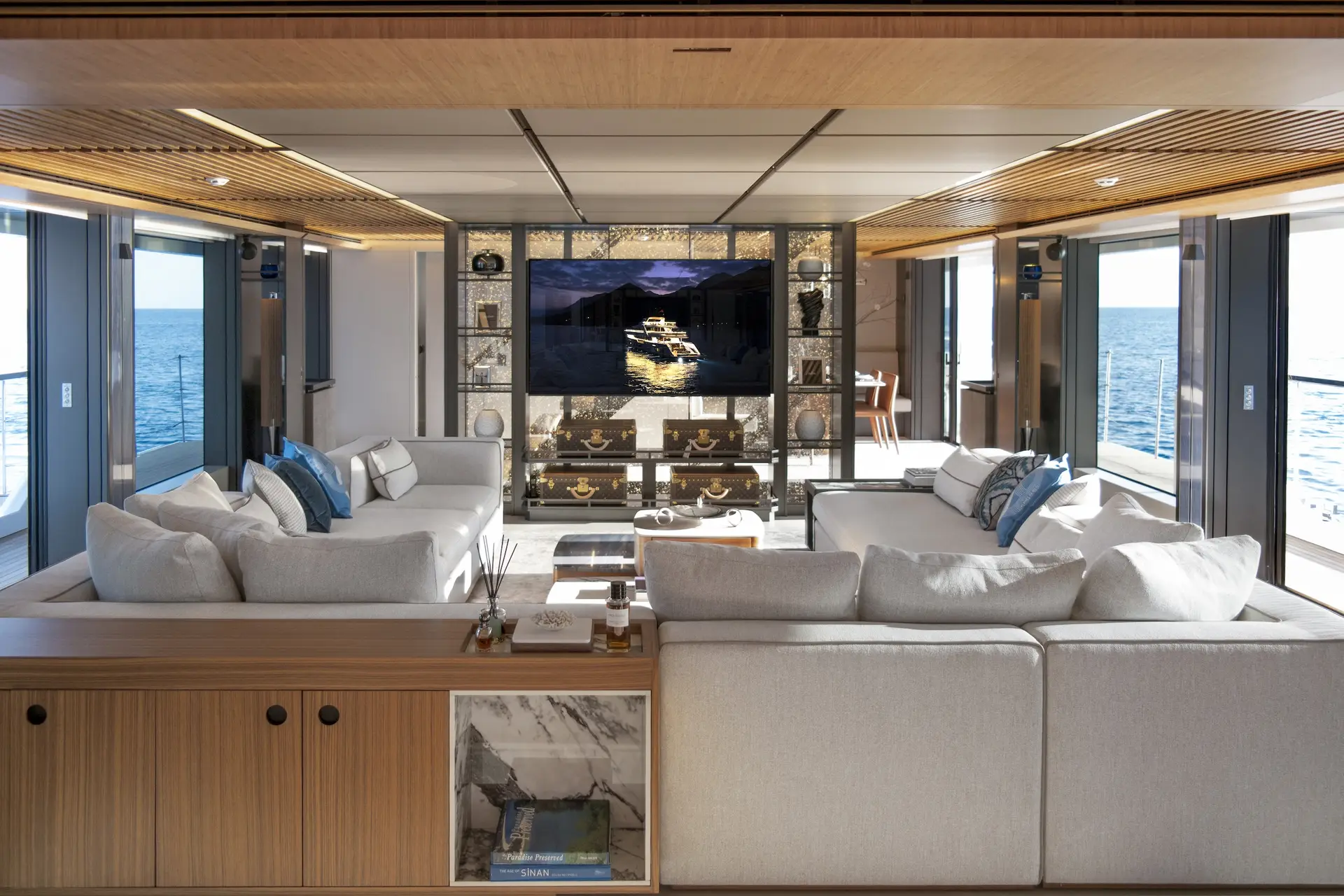
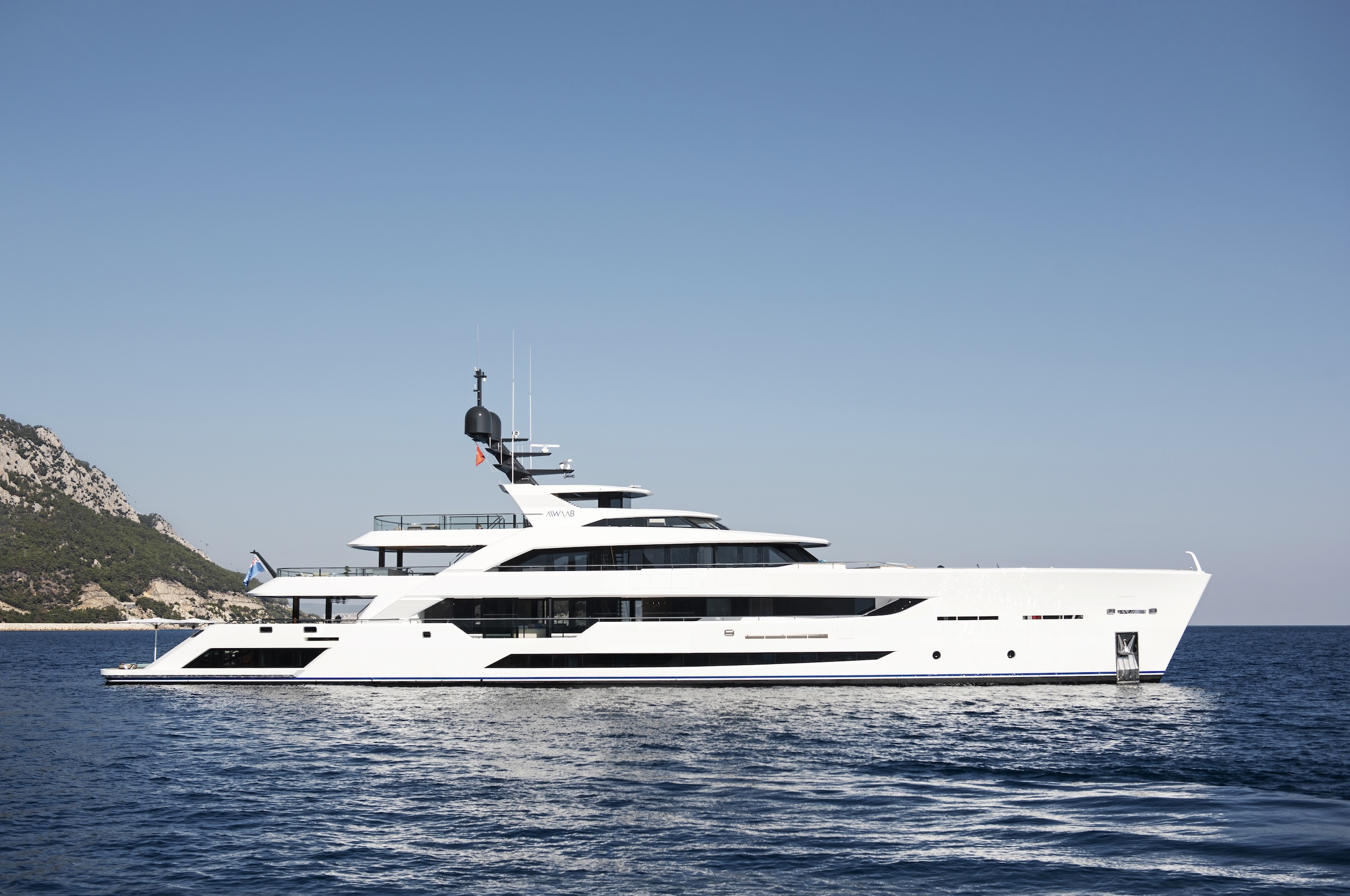
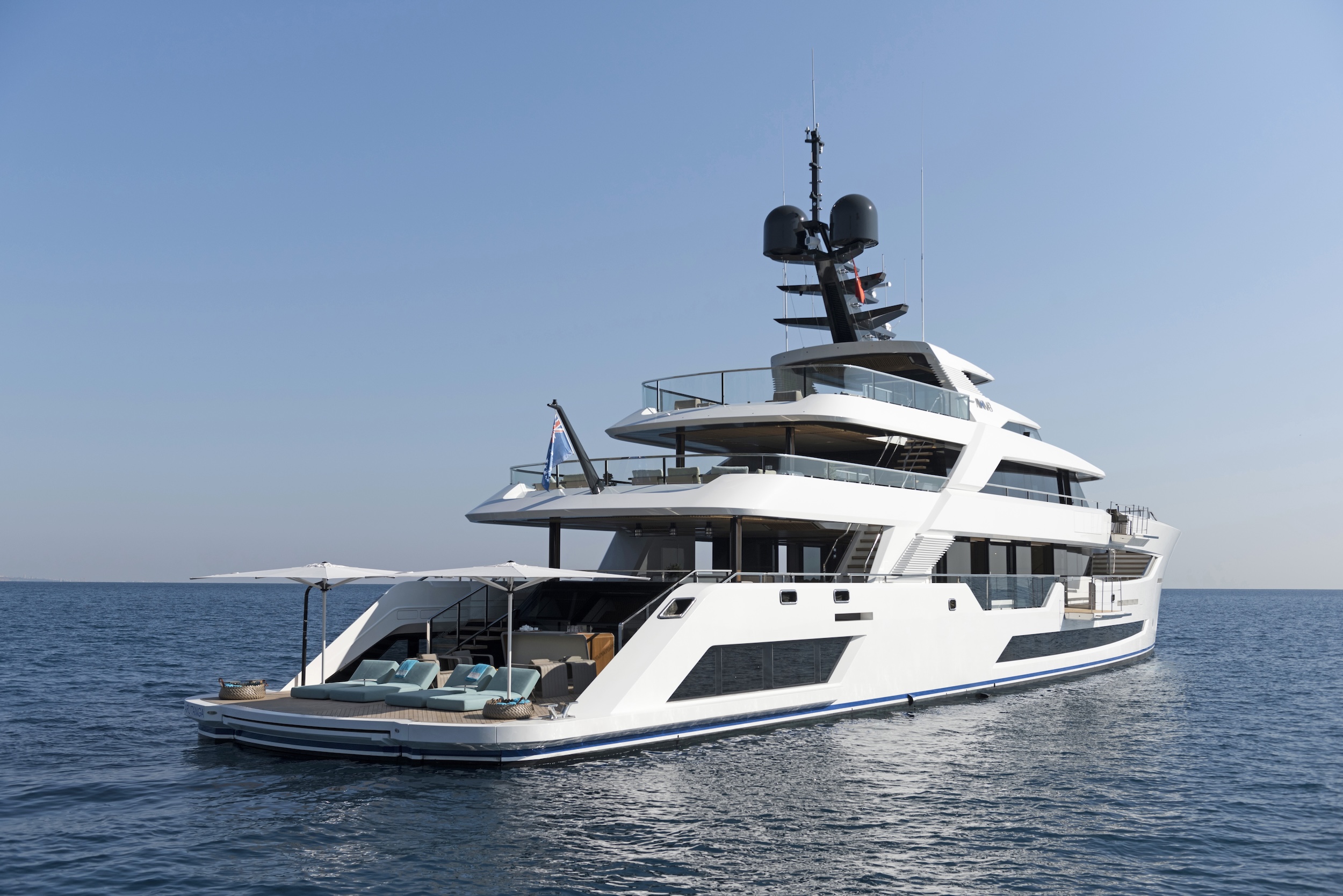
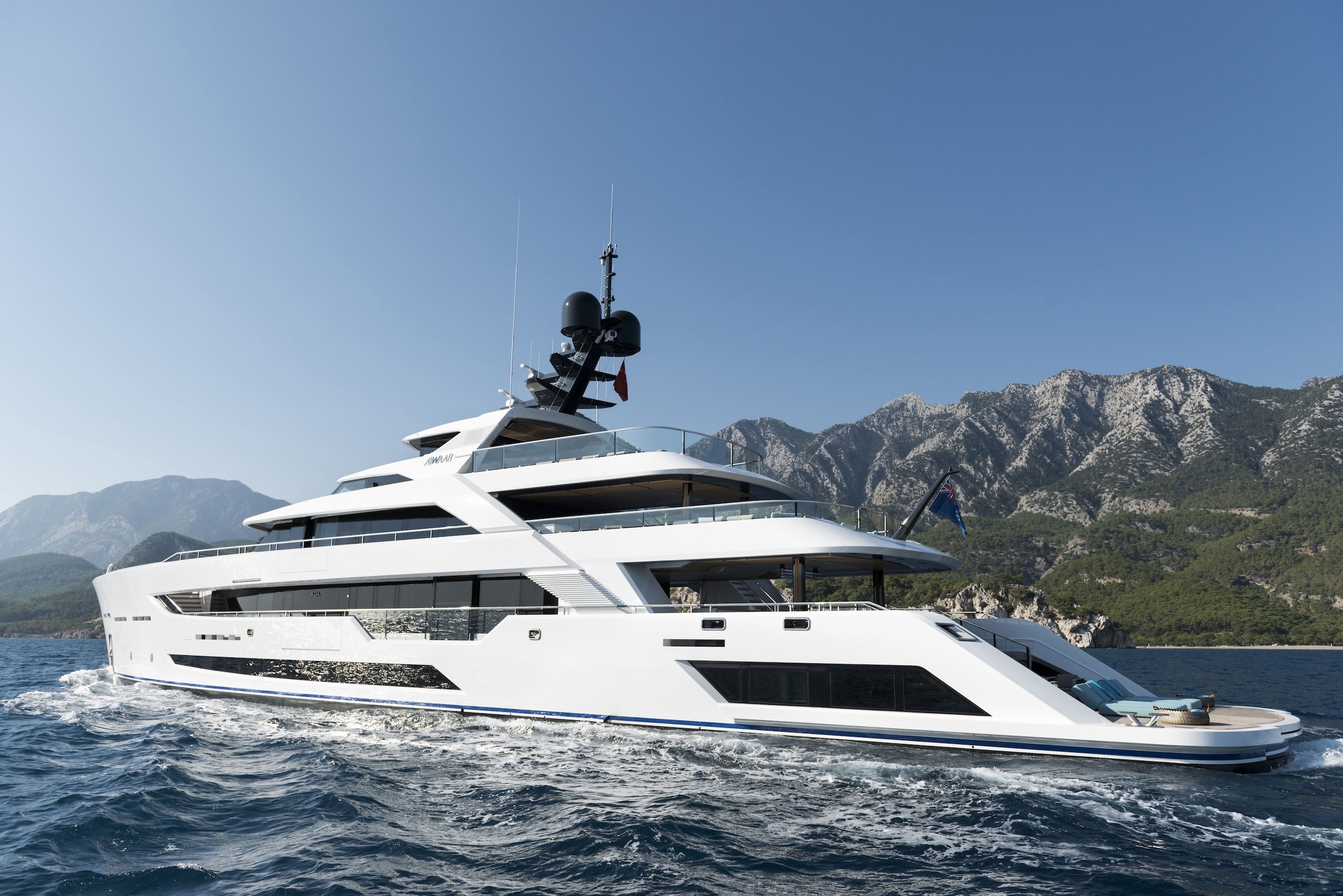
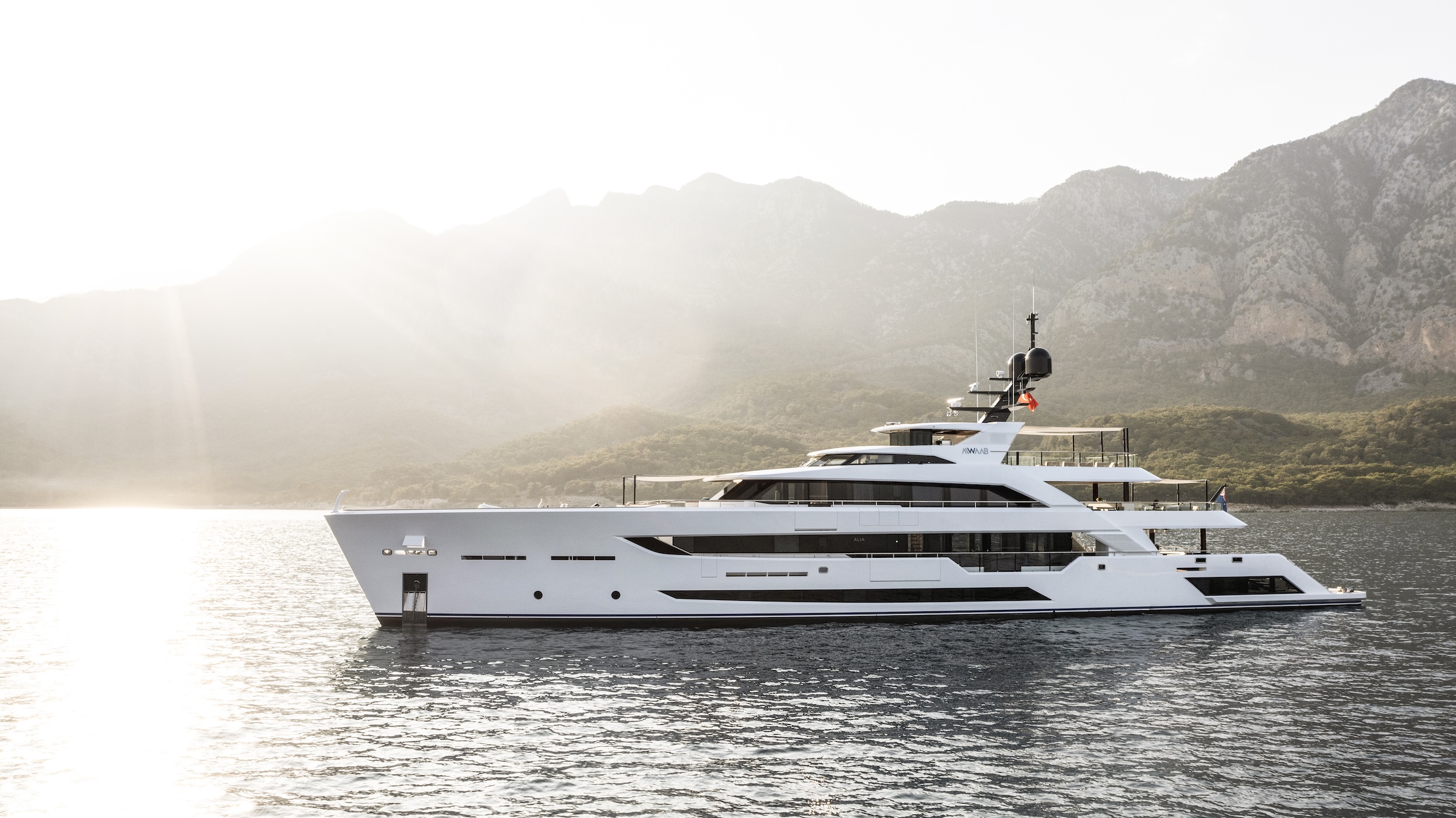
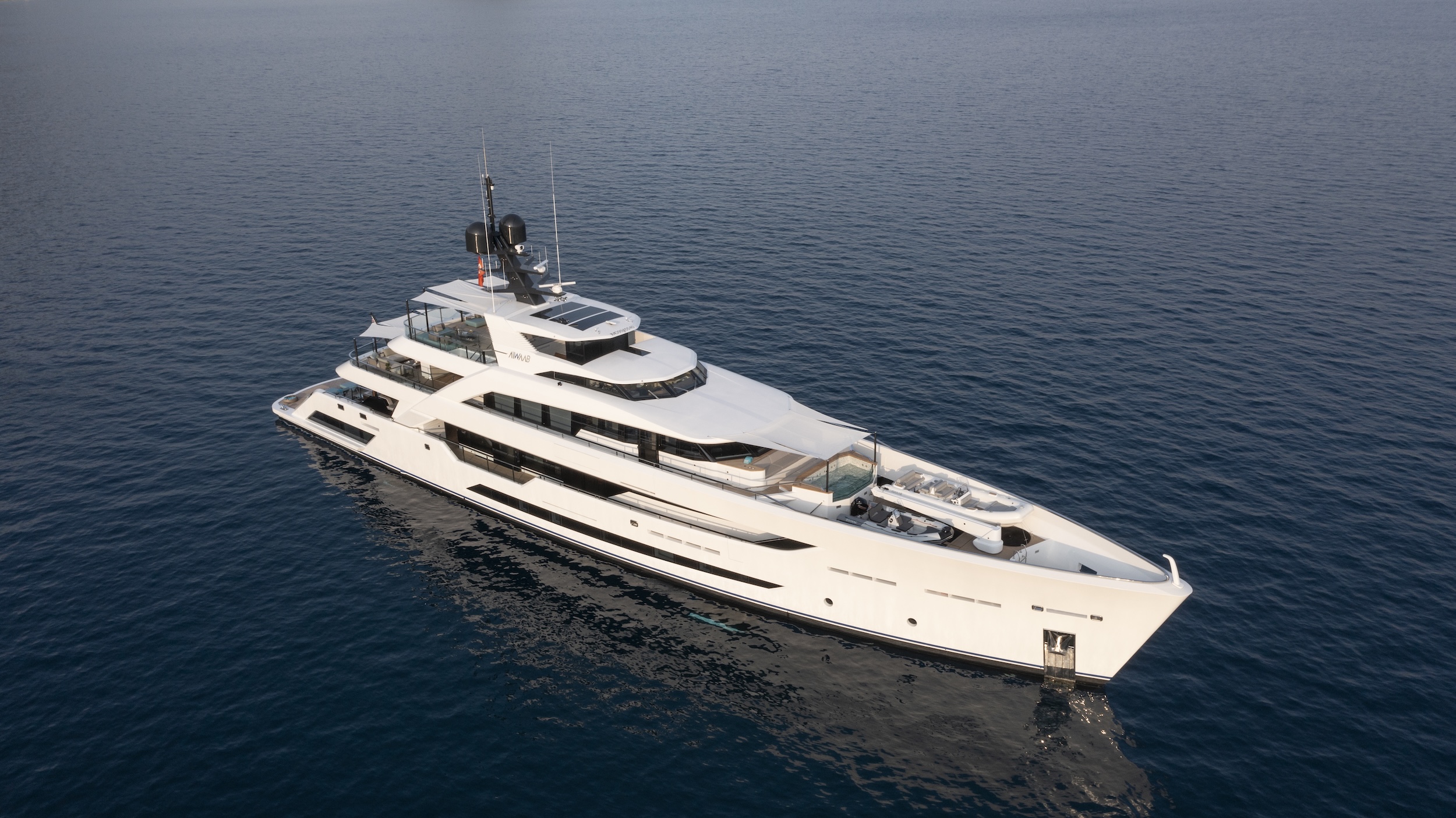
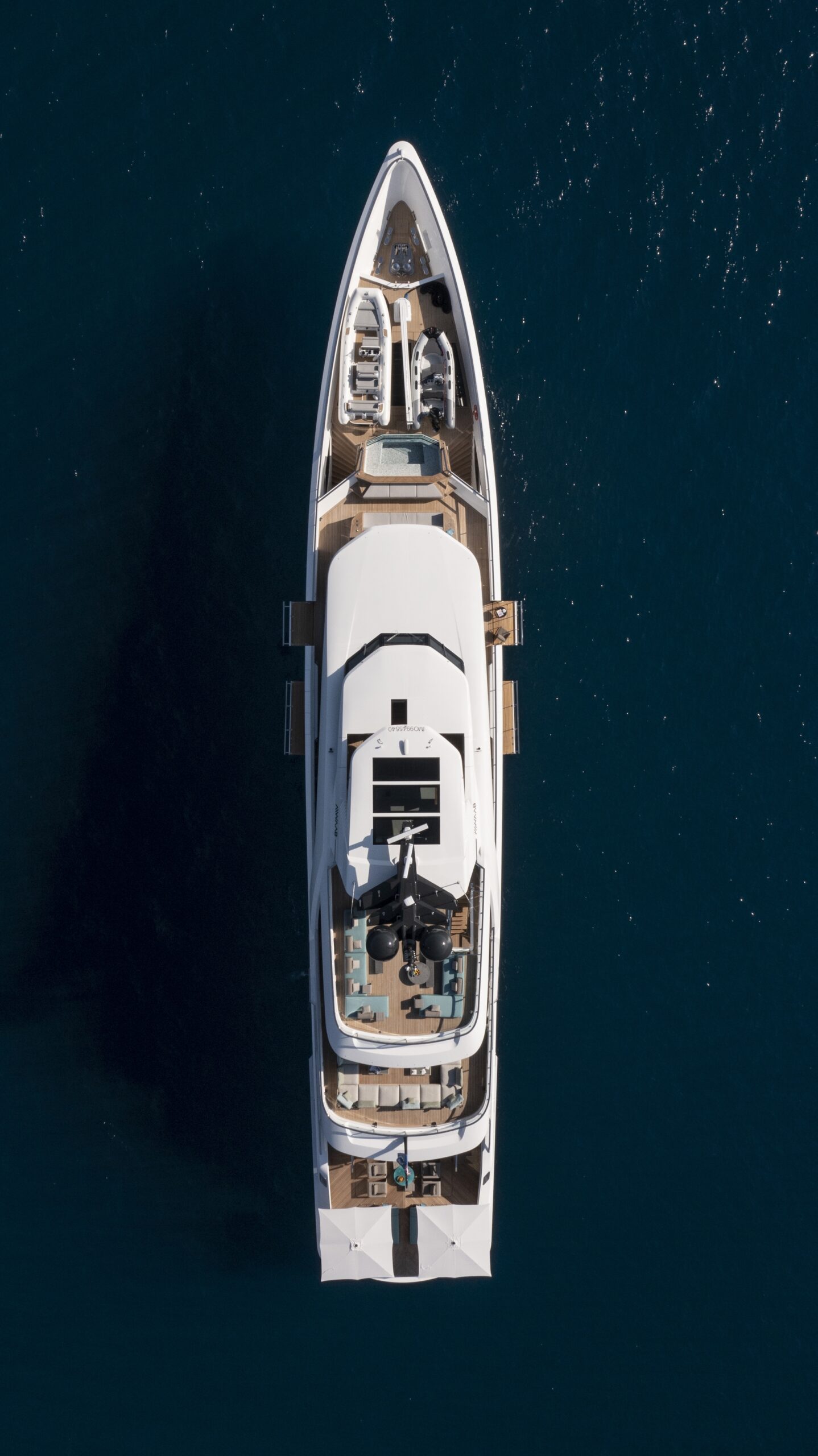
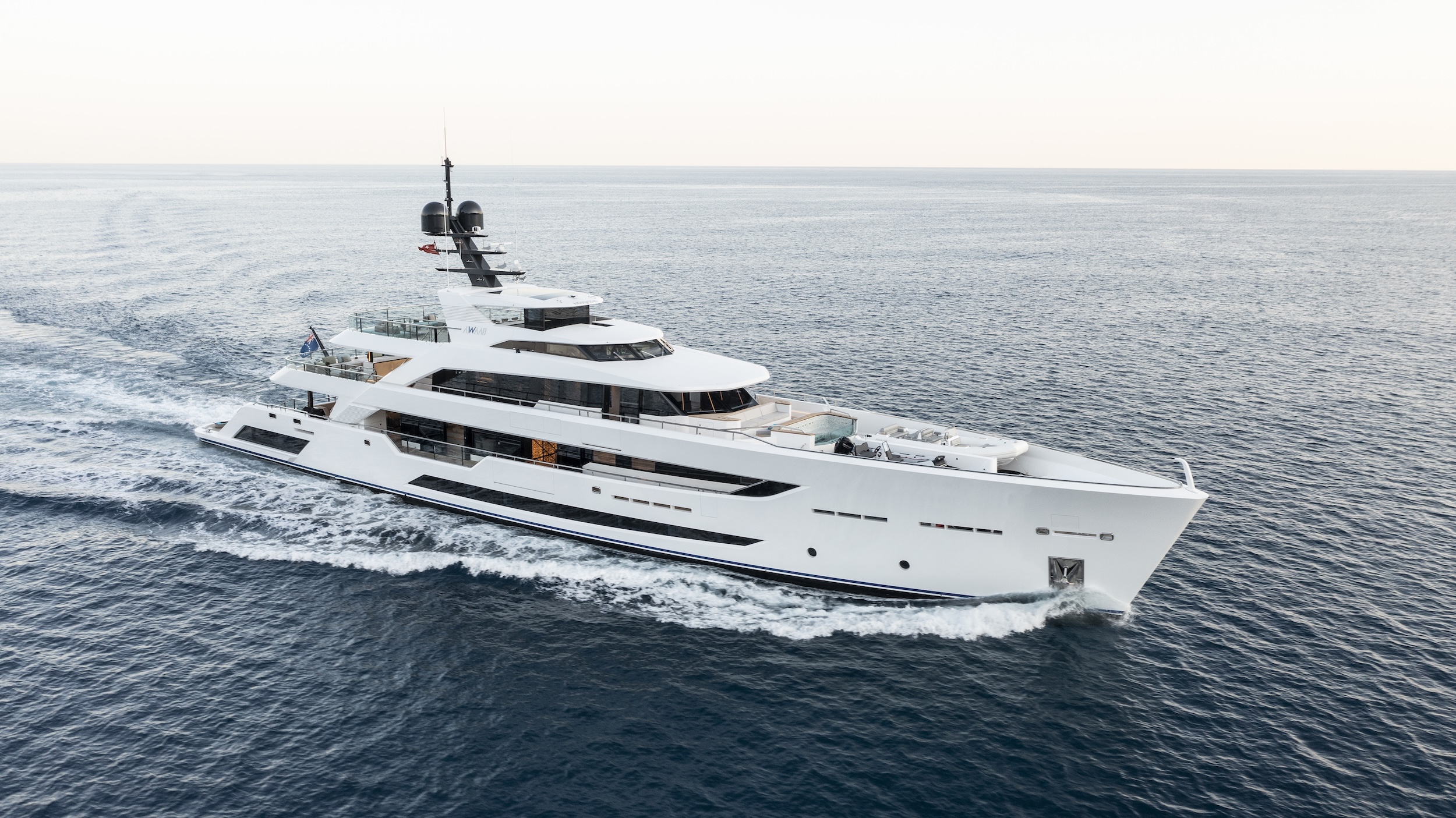
Al Waab II was honoured at Boat International's Design & Innovation Awards shortly after delivery, taking three trophies in a single evening — Outstanding Exterior Design, Best Interior Design below 499GT, and Best Naval Architecture for a displacement motor yacht. The judges, in their citation, singled her out as "a solid, smart design that's slightly more efficient than its fellow nominees." It was an unusually dry way of describing a yacht that, at the time of her launch, had quietly reset the benchmark for her class.
The shipyard that built her continues to grow into the category. Alia Yachts was founded in Antalya in 2008 by Gökhan Çelik and Ömer Koray, and its Lloyd's‑certified facilities now span some twenty‑five thousand square metres of interior capacity — including a four‑thousand‑square‑metre joinery factory that has won awards in its own right. The yard today builds and refits steel, aluminium and composite yachts up to eighty metres.
What Al Waab II demonstrates, in the end, is the difference between a boat designed to the regulation and a boat designed through it. The 499GT number sits at the centre of a constraint that most yards treat as a ceiling. Here it reads, more accurately, as an argument — about where weight belongs, what volume means, and what an owner is really paying for when he asks his designer simply for 55 metres.
A yacht shaped around a single instruction — a family apartment at sea — and engineered through every tonnage rule in the way.