


Building
Your Crew
Who you actually need, what they must hold in their licenses, what they earn, and where you find them — a working guide to assembling a professional crew, written for the Fort Lauderdale market and the boats that move through it.
There is no universal formula for a yacht's crew. Length matters, but only as a starting point. The decisions an owner makes about the people on board will shape the operating budget, the safety margin, and — in ways that are harder to articulate but no less real — the entire character of life at sea.
A well-run 70-footer with an experienced owner-captain needs far fewer paid hands than a 70-footer run by an absentee owner who is rarely aboard. A boat that charters six weeks a year in the Bahamas operates on a different roster than one that lives at the dock and runs twice a month to Bimini. Construction complexity, range, and the role the owner plays are the real variables. Length is the first conversation. It is rarely the last.
This guide is written from inside the Fort Lauderdale market — the most active superyacht crew labour pool in the Western Hemisphere, and the one whose informal standards now travel as far as Biscayne Bay, the Abacos and the wider Atlantic. The credentials that matter here are USCG licensing, STCW certification, and the unwritten rules of the trade: who reports to whom, what a captain can ask of a stew, what a 3-day trial actually tests. The numbers below are 2026 South Florida benchmarks, not theoretical figures.
What follows is the structure of a working yacht: the threshold at which professional crew becomes non-negotiable, the chain of command that holds a vessel together, the licensing ladder that keeps it legal, and the local market — in agencies, in dockwalking season, in the women who now make up 38% of the global crew workforce — that delivers the people who fill those seats.
How many crew does your yacht actually need?
Below 40 feet, most boats are operated by their owners alone, occasionally with help from family or friends. Between 40 and 60 feet, an experienced couple — or a small family with one strong skipper — can manage almost any passage, though a paid hand is increasingly common for longer cruising. The real change comes at seventy feet. Mechanical complexity, the watch-keeping demands of any meaningful run, and the hospitality expectations of the owner's guests stop being optional considerations. They become structural.
Above one hundred feet, the conversation shifts again. A 100-footer in active charter use carries six to eight full-time crew. A 120-footer running a quieter private programme may operate with five to seven. From 150 feet upward, twelve to twenty is the standing roster, and the boat begins to organise itself the way a small hotel does — bridge, deck, interior, galley and engineering as proper departments, each with its own head and its own logic.
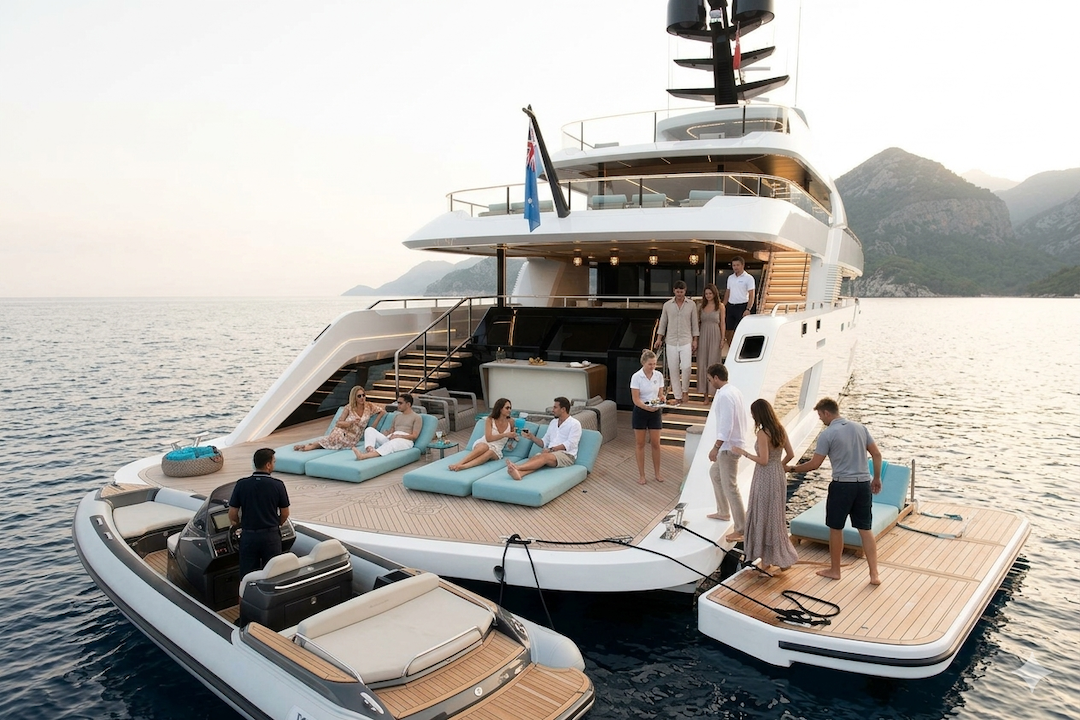
The captain sets the tone. But it's the crew that defines the experience — for the guests, for the owner, and for each other.
Fort Lauderdale Captain · 22 years aboardA clear chain of command — and what each role earns
Master 100–500 GT, STCW, and full legal command. Sets the tone, carries the safety responsibility, signs the logbook. Hardest hire to get right; the one most worth getting right.
Mate 100 GT or OICNW. Navigation watch, deck supervision, relief command on long passages. The captain's working hand and, on smaller boats, often the future captain.
USCG Engineer or ABYC. Mechanical, electrical, plumbing, climate. The hardest role to fill in the South Florida market — and the one whose absence shows up first when something fails.
Interior director. Guest service, provisioning, budgets, the choreography of a charter week. Increasingly recruited from luxury-hospitality backgrounds rather than from within yachting.
Senior deck. Maintenance, line handling, tender operations, water-toy supervision. STCW required; the visible face of the boat at the dock and on the bow.
Menu design, provisioning, dietary accommodation. On charter, consistently among the highest-rated positions on guest surveys; on private programmes, the role that quietly defines the season.
Hybrid role. Interior upkeep, laundry, provisioning, line handling, anchor work. The 70-foot owner-captain's most useful single hire — and the position with the best ratio of competence to cost.
Entry point. STCW required, watch standing, line handling, exterior maintenance. The first rung of a long ladder; the position from which most captains began.
Bridge, deck, interior, galley and engineering. On larger boats these become proper departments with their own heads. On smaller ones the lines blur — but the chain of command does not.
Hire for character first, credentials second.
Fort Lauderdale Captain · 22 years aboardLicenses & certifications: what your crew must hold
The United States Coast Guard licensing system is the legal floor of professional yachting in American waters. Every captain operating for hire must carry a USCG credential matched to the vessel's tonnage and to the number of passengers on board. That is the law. The market — particularly the Fort Lauderdale superyacht scene — has set a higher floor in practice: MCA standards out of the United Kingdom and the global STCW framework have become the working baseline for any serious crew agent, regardless of whether the boat is technically obliged to comply.
Of those, the STCW Basic Safety Training is the single non-negotiable item. Five days, four modules — personal survival techniques, fire prevention and firefighting, elementary first aid, and personal safety with social responsibility — all required by the 2010 Manila Amendments for crew on seagoing vessels. Even on private yachts that fall outside the mandate, most captains and most crew agents will not place a candidate without it. South Florida runs the course at $500 to $800, with availability concentrated at MPT in Fort Lauderdale, International Yacht Training and a handful of others.
Fort Lauderdale: superyacht capital, training capital
The concentration of maritime schools, simulation centres and interior-service academies within twenty miles of Port Everglades has no equivalent in the Western Hemisphere. MPT — Maritime Professional Training — runs the full USCG ladder from OUPV through Master 500 GT, alongside every STCW module, radar and GMDSS. IYT — International Yacht Training — operates globally but maintains a strong Fort Lauderdale footprint, with insurance-accepted certification across the chain. And Luxury Yacht Group functions as the finishing school for interior crew: silver service, wine, floral, guest relations, with its 5-day stew programme priced near $1,200.
Together they shape the candidates who walk the docks each November. A green stew with no yachting background but a 5-day STCW certificate and a Luxury Yacht Group interior course is, in this market, considered placeable. So is a deckhand with a fresh OUPV and a clean record. The schools do not promise positions. What they deliver is a CV the agencies will actually read.
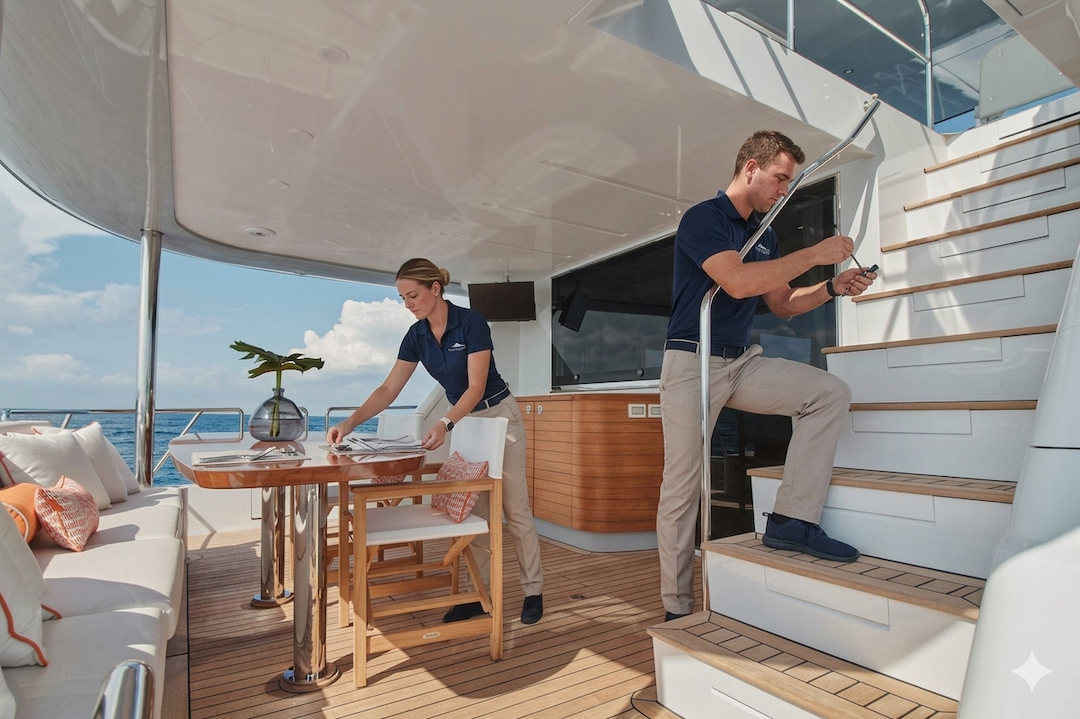
You're captain of your 70-footer. What support do you actually need?
You navigate, you plan, you know the boat intimately. You hold a USCG Master 100 GT — or you are working toward one. The question is not whether to hire a captain. The question is what kind of crew lets the boat run well without turning you into a full-time maintenance manager.
At seventy feet, a capable owner-captain needs support in three places: deck and seamanship, interior and hospitality upkeep, and mechanical watchkeeping on longer trips. The working number for a liveaboard or active-use programme is two full-time crew, with one part-time addition for extended passages.
The hybrid deck-stew position is the secret weapon of this size of boat. One person who keeps the interior immaculate, manages laundry and provisioning, handles guest service when friends are aboard — and steps onto the foredeck to assist with lines and ground tackle. At $3,000 to $4,500 per month with live-aboard benefits included, the role attracts motivated candidates. The good ones become indispensable, fast.
The numbers, at a glance
Monthly compensation for full-time crew, Fort Lauderdale and South Florida market. Live-aboard, food included; gratuities additional on charter programmes.
Where to find qualified crew — and how to vet them
The Fort Lauderdale dock-walking season — October through January — is the industry's annual ritual. Qualified crew from around the world descend on the marina districts of Fort Lauderdale, Hollywood and Miami, CV in hand, looking for a boat. For owners, it is the best window of the year to find motivated talent face-to-face, on the dock where a candidate's bearing tells you something a Zoom call cannot.
The digital infrastructure now sits alongside the dock. Dockwalk.com remains the industry's primary job board; YachtCrew.com, CrewFinders and Luxury Yacht Group's placement service are the agencies running the most rigorous vetting. For captains and senior officers, the MCA-recognised crew register adds a layer of credentialing verification that the U.S. system, focused on the USCG ladder, does not by itself provide.
Women in yachting: the fastest-growing force
Women now represent 38% of the professional yachting workforce, up from 28% five years ago. This is not a marketing trend. It reflects a structural shift in how captains recruit, how agencies present their books, and how a generation of professional women has discovered that yachting offers a combination most industries cannot match: meritocracy, mobility, and compensation that scales with competence rather than with tenure.
The interior department, historically the most female-coded, has not just maintained its share — it has raised its ceiling. Chief stewardess roles on serious charter programmes are now among the most competitive positions in the industry, drawing candidates from Ritz-Carlton, Four Seasons and Relais & Châteaux backgrounds. The galley has become roughly gender-neutral, with female chefs consistently among the highest-rated on guest surveys — a metric serious captains track with care. The deck department, the area where the gender shift was once most resisted, is now the fastest-growing for women: modern winches, windlasses, bow thrusters and joystick docking systems have rewritten what the role physically requires.
Female captains remain a minority — around 22% — but their numbers have roughly doubled since 2015. The path is identical to the men's: USCG progression, sea time, mate, captain. The culture is changing, boat by boat, programme by programme. Owners willing to look past habit are finding talent the previous generation overlooked.
By the end of the first day underway, they've stopped hesitating. Competence doesn't have a gender.
Captain Sophia L. · Master 100 GT · Fort LauderdaleA working checklist for building your crew
Define the owner's role first. Owner-captain or hands-off owner — that single decision determines the entire crew structure that follows. For a 70-foot owner-captain programme, the working target is one mate or bosun plus one deck-stew, with a monthly budget in the order of $7,000 to $10,000 all-in.
Require STCW Basic Safety as a floor for any crew member living aboard or working professionally. Use the 3-day paid trial before signing a contract. Sign a written Crew Agreement covering salary, duties, notice period and medical provisions — protecting both parties is not paranoia, it is the local norm.
Post on Dockwalk.com between October and January for the strongest candidate pool of the year. Consider female candidates actively — the data shows longer tenure, lower turnover, and stronger guest feedback. And budget, quietly, for crew training: a candidate whose STCW or licensing upgrade you have funded is a candidate who tends to stay.
A visual tour through the working yacht
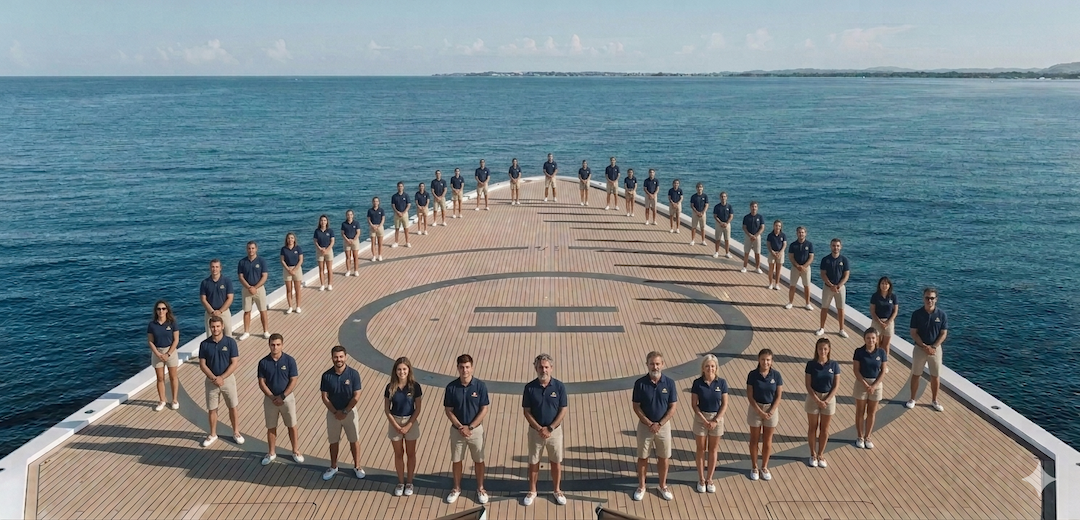 01 · Full Crew
On the bow
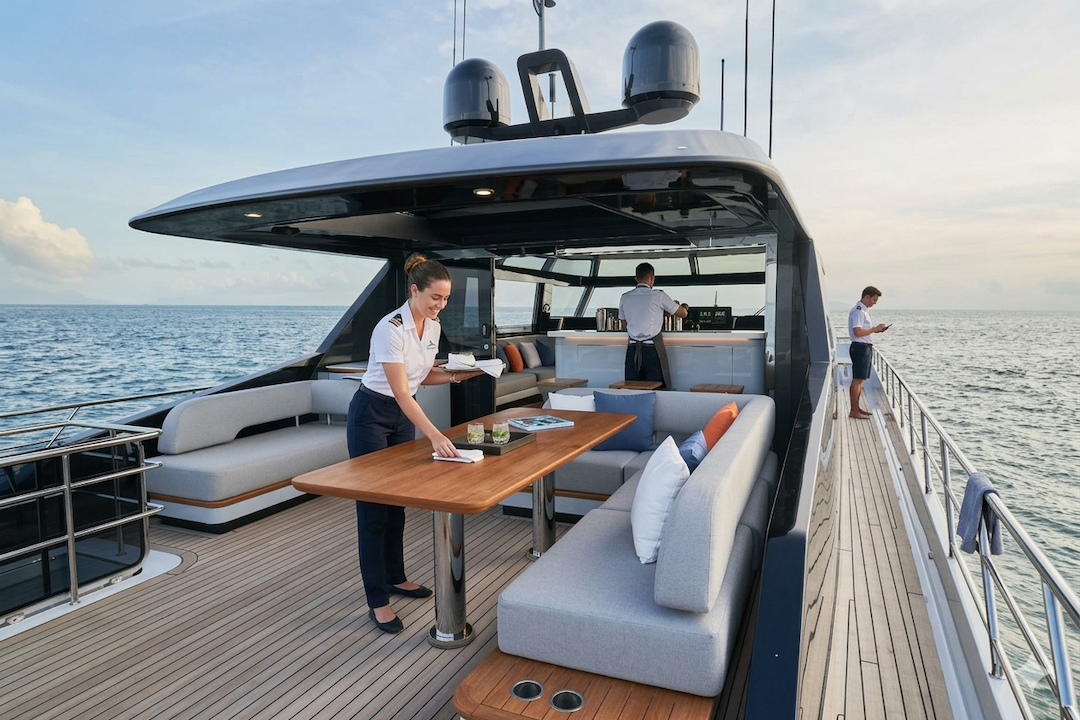
02 · Interior
Guest hospitality
01 · Full Crew
On the bow
02 · Interior
Guest hospitality
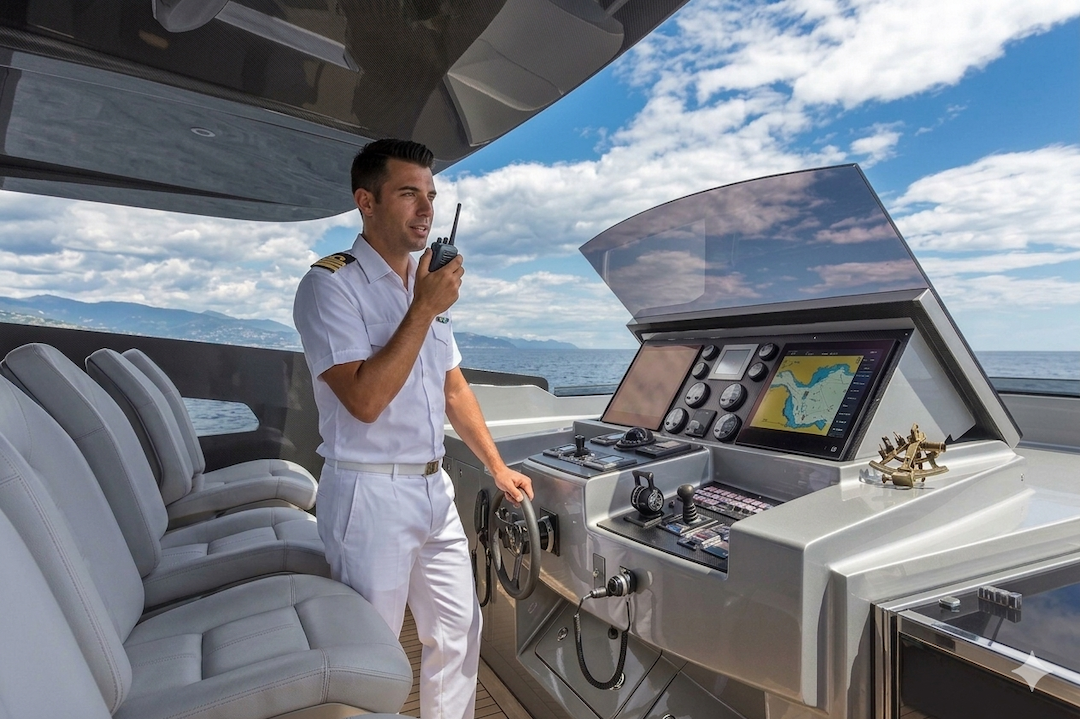 03 · Bridge
VHF communications
03 · Bridge
VHF communications
 04 · Flybridge
Underway
05 · Cockpit
Deck operations
04 · Flybridge
Underway
05 · Cockpit
Deck operations
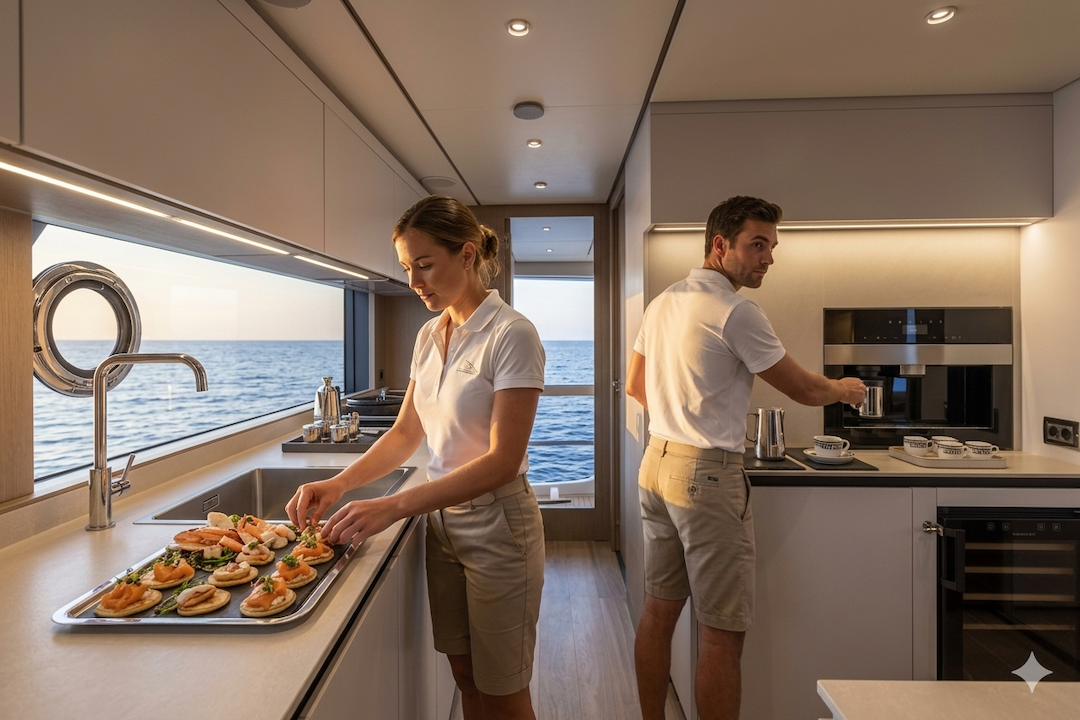 06 · Galley
Provisioning & service
06 · Galley
Provisioning & service
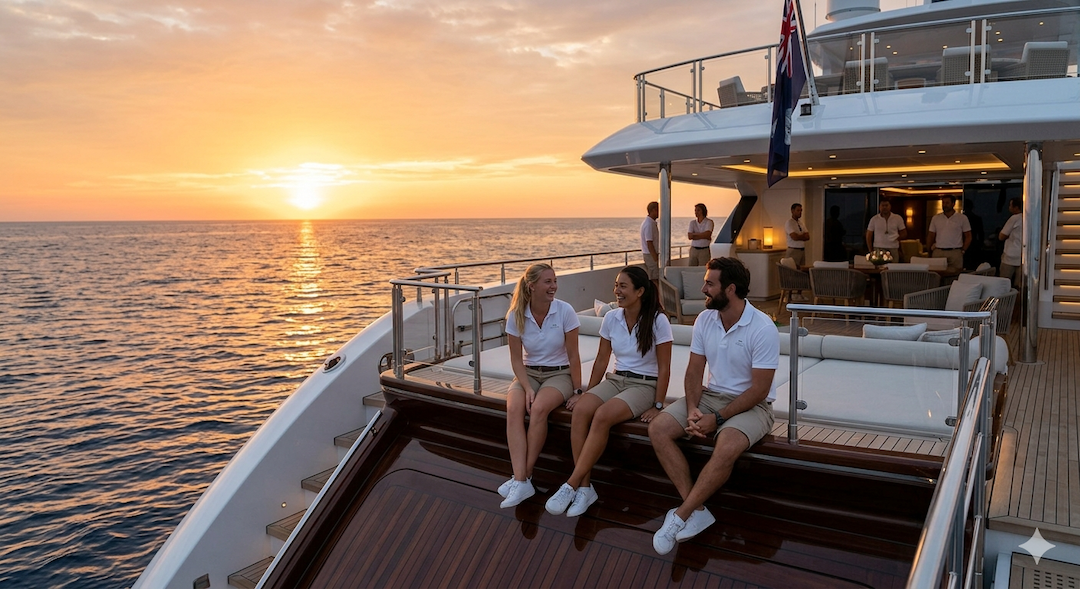 07 · Off-duty
On the stern
07 · Off-duty
On the stern
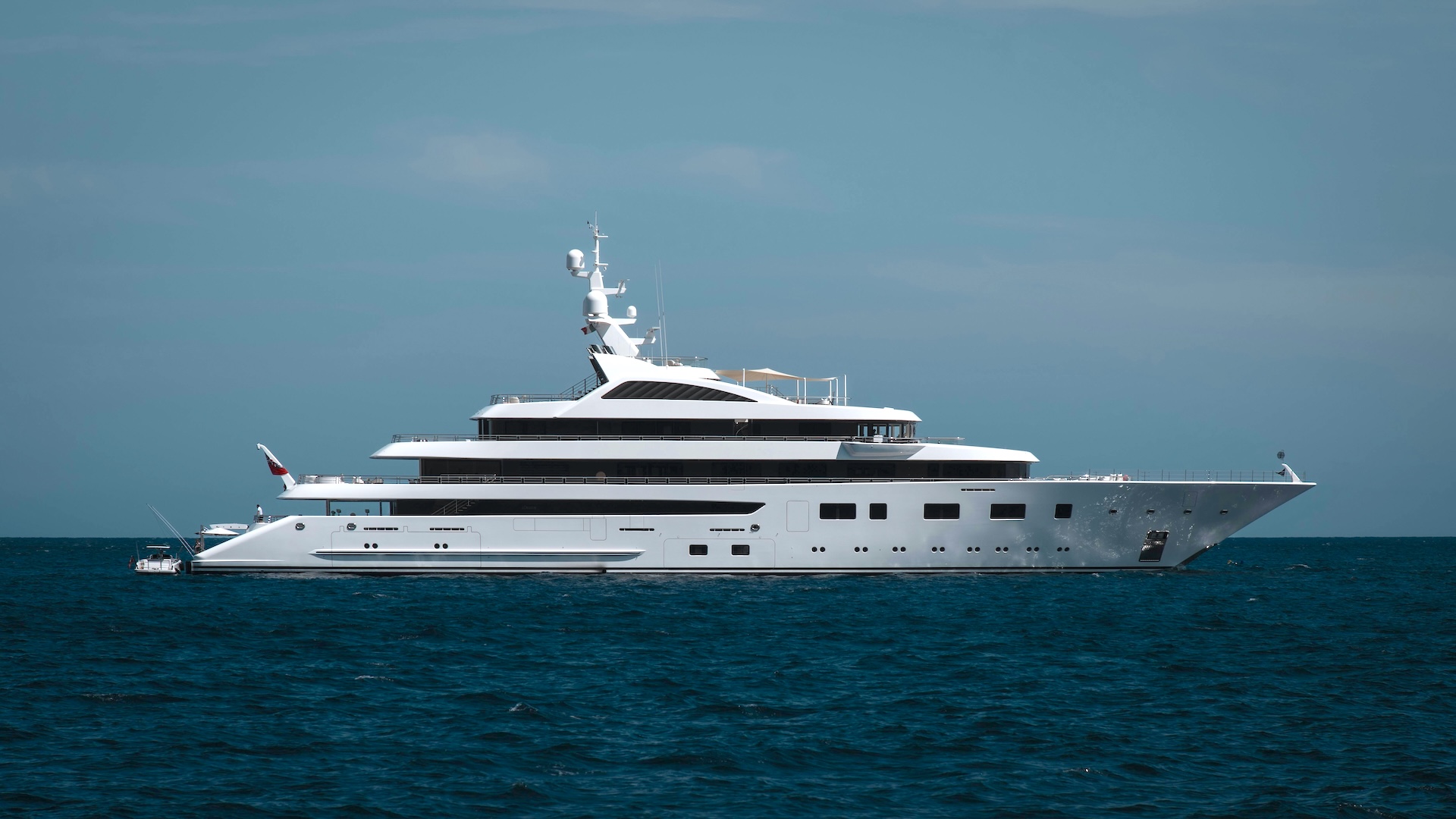 08 · Vessel
Open water
09 · Anchorage
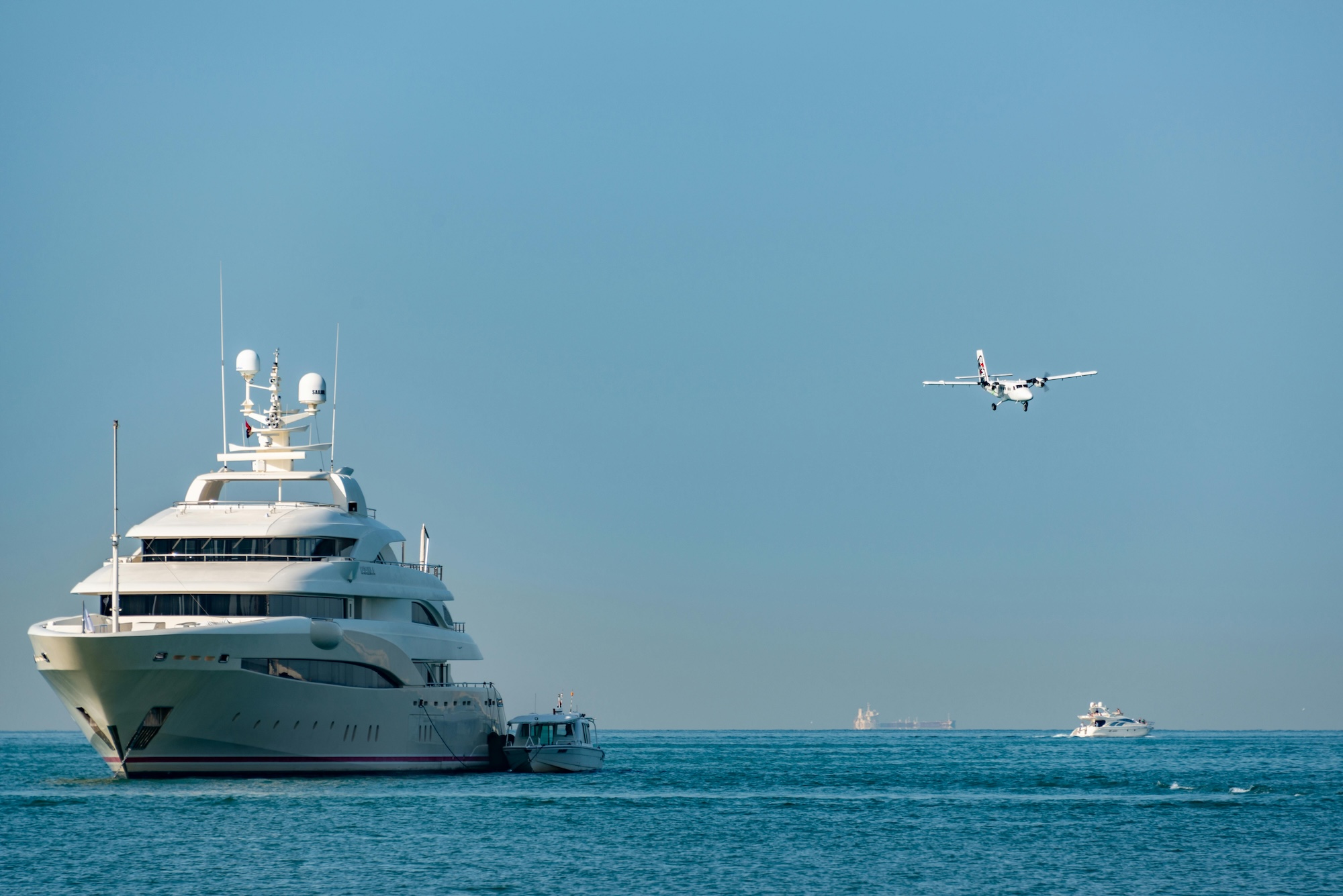
Tender & aviation
08 · Vessel
Open water
09 · Anchorage
Tender & aviation
A yacht is not the hull and it is not the engines. It is the people who run them — chosen with care, trained to a standard, and treated like the professionals they are. Build the crew well, and everything else follows.