

Where Luxury
Finds Its Horizon
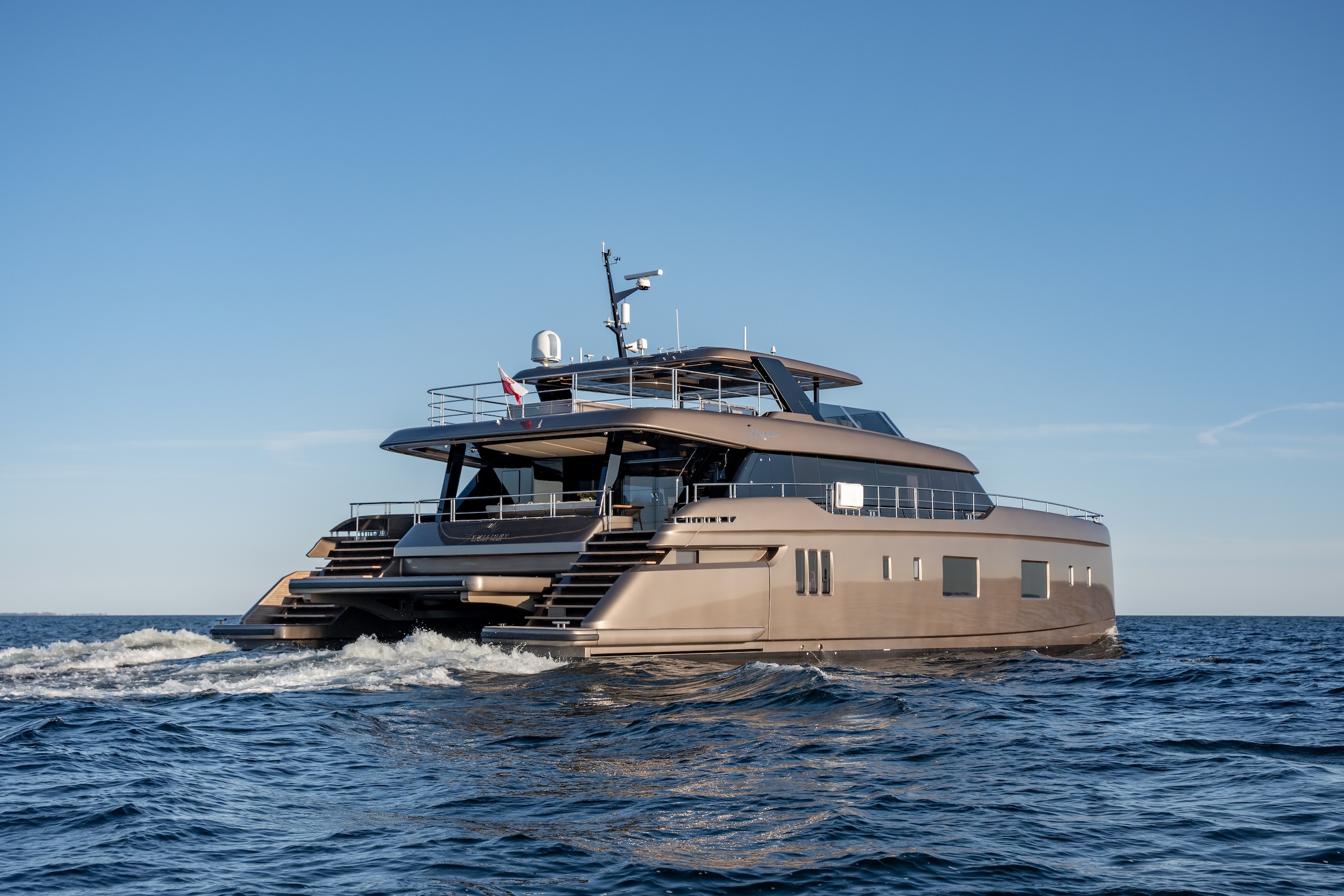
A 30-metre catamaran with a beam that behaves like a second deck, the 100 Sunreef Power is the Polish yard's most complete argument yet for what a supercat can be — and the first luxury yacht to carry flax-fibre composite as a visible design language.
There is a moment, stepping aboard a catamaran of this scale, when the mathematics of the sea rearranges itself. Two hulls, one continuous horizon, and a volume that owes nothing to the old grammar of the displacement yacht.
The 100 Sunreef Power is the clearest expression yet of that recalibration. Built in Gdańsk by the shipyard Francis Lapp founded in 2002 — the house that redrew the luxury catamaran into a genuinely oceangoing proposition — she measures 29.95 metres on deck and carries a beam of 13.5 metres, roughly the width of a suburban lot turned sideways. That geometry is not a curiosity. It is the yacht's thesis: that living space at sea should not be rationed by the constraints of a single hull.
The numbers bear the thesis out. Five hundred and fifty-seven square metres of total living area — 222 indoors, 256 outside, plus a 79-square-metre beach club that reads as neither deck nor cabin but a third register entirely. For a yacht of 30 metres, that is the square footage of a generous family villa. For a yacht built to cross oceans under twin 1,300-horsepower diesels with more than three thousand nautical miles of range, it is something closer to a category error — a villa that moves.
What makes the 100 Sunreef Power genuinely new, however, is not the volume. It is the material. This is the first luxury yacht to carry flax-fibre composite as an architectural element — the bar, the BBQ station, the navigation area of the flybridge all built from plant fibre bonded into structural panels. An environmental argument made not in a press release but in the surface your hand rests on.
A brief drawn around the beam, not against it
Most luxury yachts inherit a compromise: every square metre of interior is negotiated against the slenderness of the hull that carries it. The catamaran platform removes that argument at the root. On the 100 Sunreef Power, the main saloon is not a corridor with furniture in it — it is a room, 222 square metres of open plan, oversized glazing on three sides, a sleek aft bar, and a starboard dining area drawn for the evenings a chef is on board.
The design language that holds it together has a particular texture. Natural oak, plantation teak, cottons and linens, a soft palette tuned to long horizons rather than deep interiors. The references are coastal-residential, not nautical-traditional. And the yacht is fully custom — every space on board can be reconfigured against the owner's navigation plan, which is the shipyard's standing position rather than an upgrade.
Luxury should be redefined, not by excess but by conscious creation.
Nicolas Lapp · CTO & Co-founder, SunreefThree moves that reorder the yacht
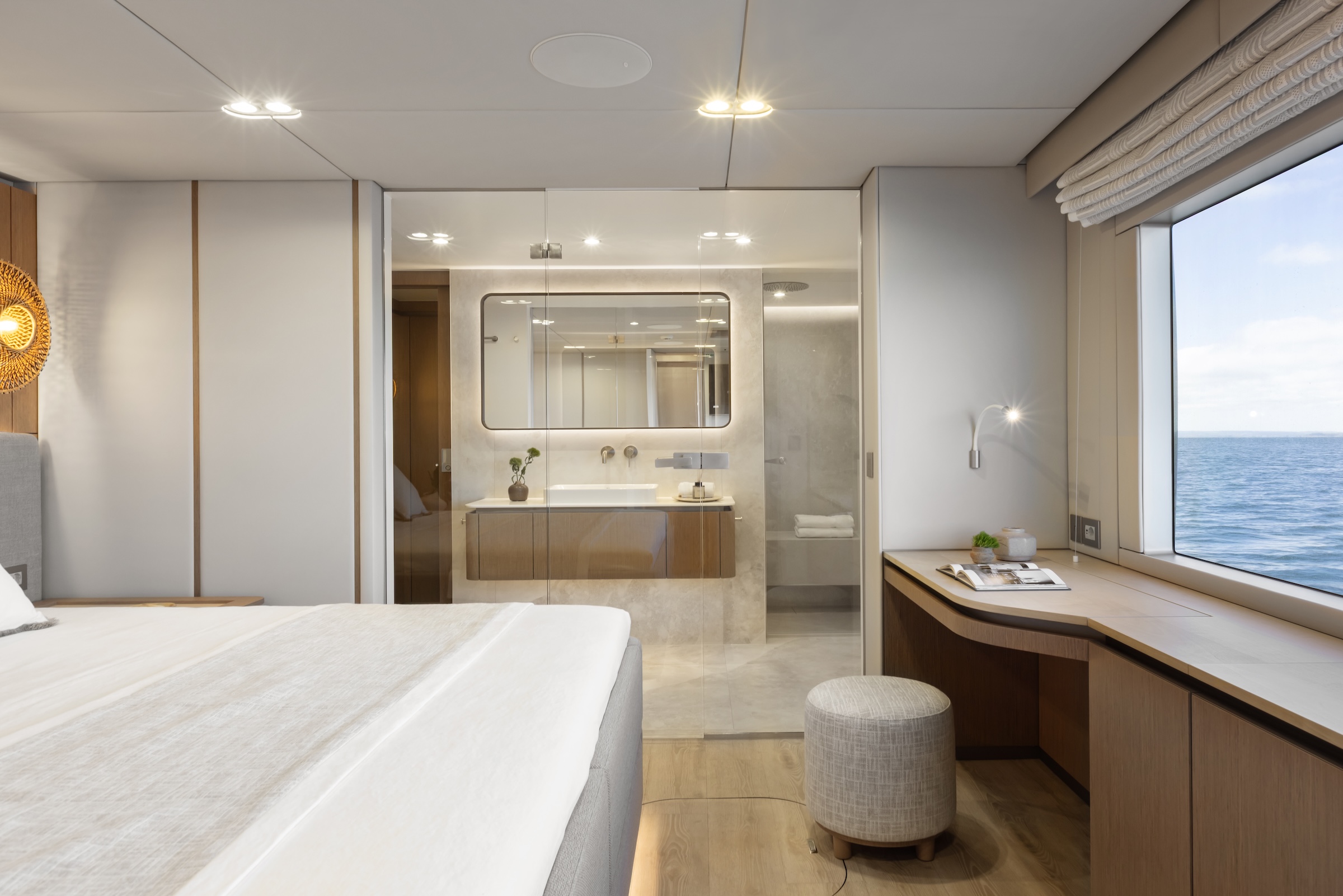
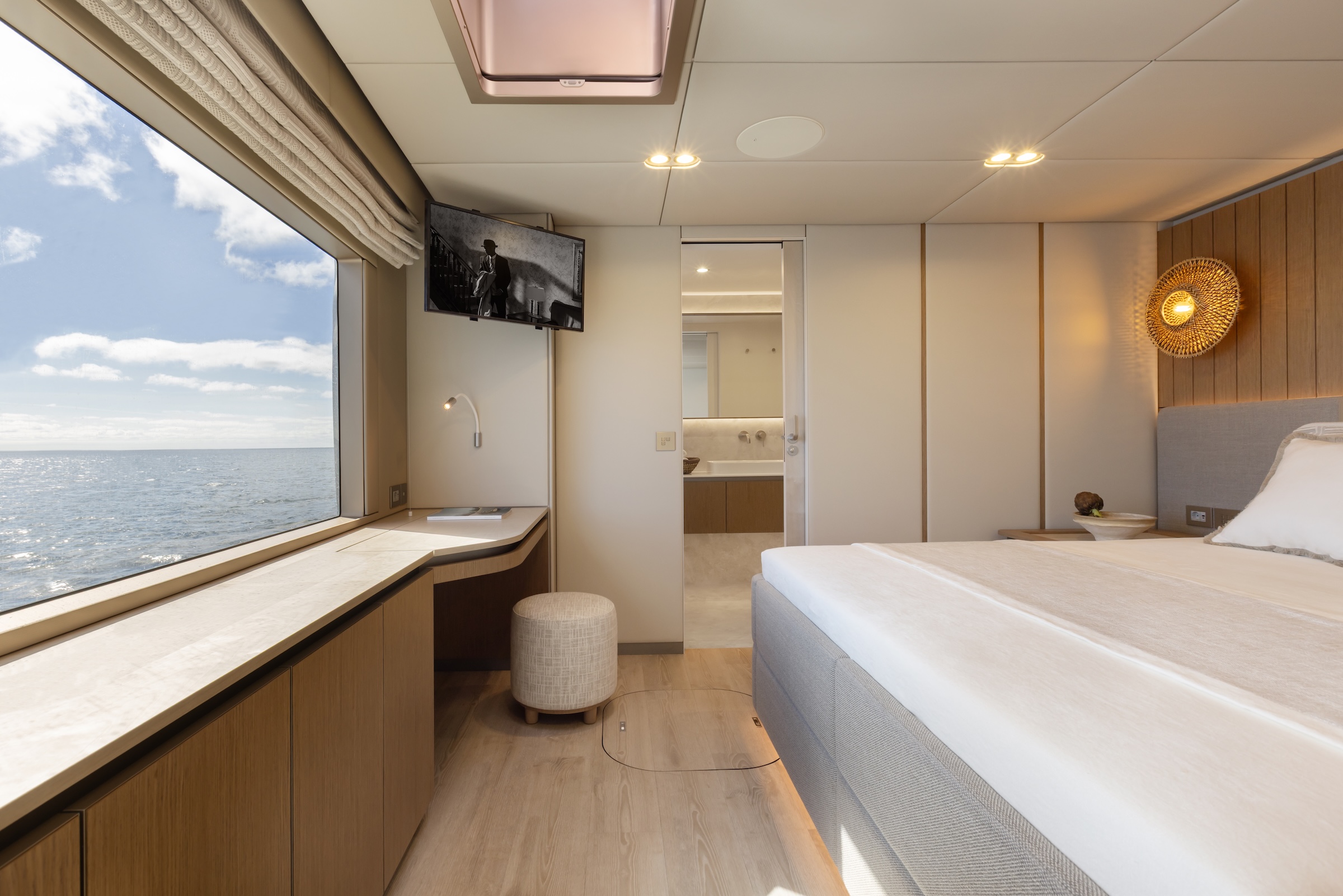
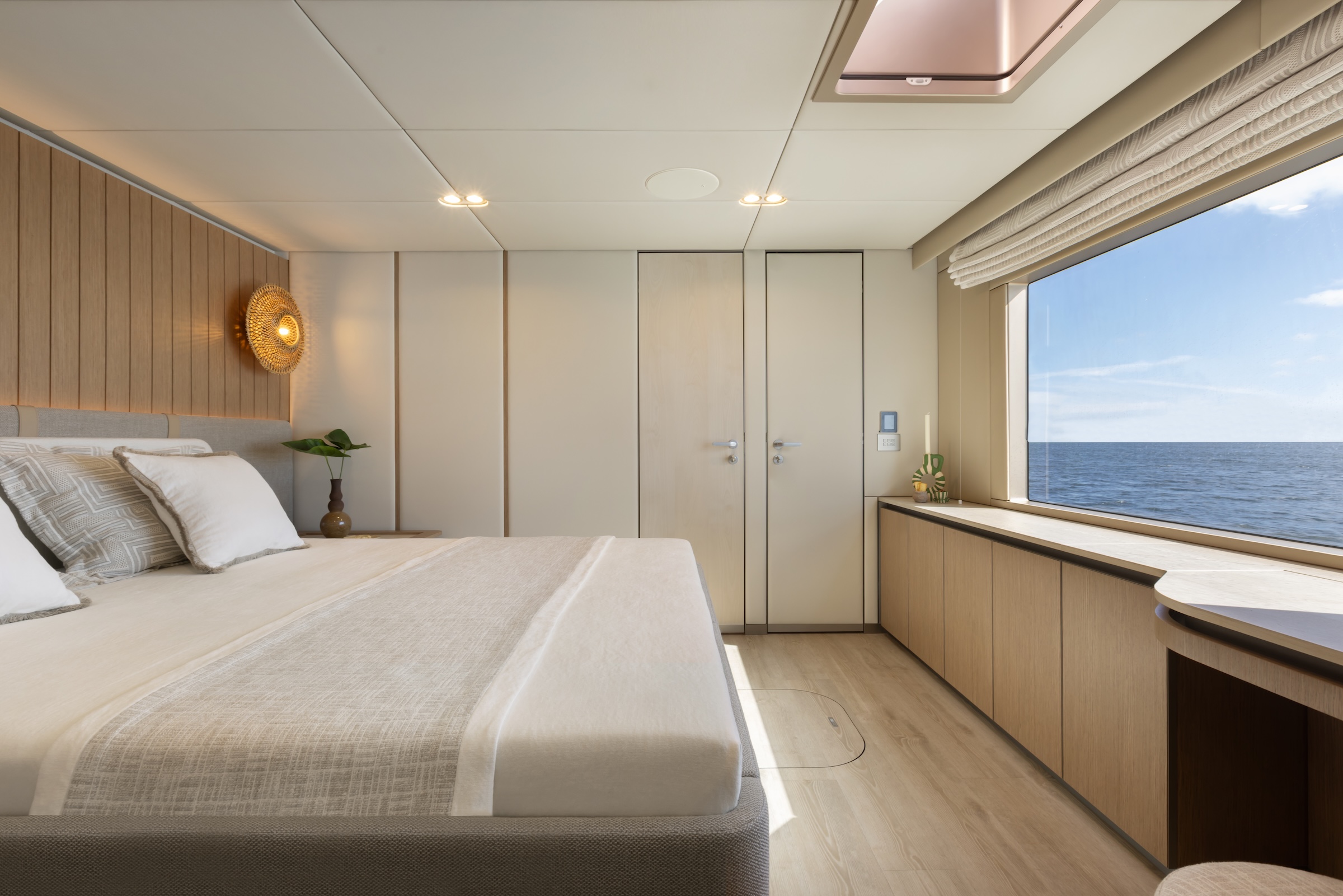
On the main deck, the owner's suite stretches across the yacht's entire 13.5-metre width, with panoramic forward views and a direct private entry from the bow terrace. Flax textiles, cotton upholstery, plantation teak, a spa-inspired ensuite with rain shower — a sanctuary engineered as architecture rather than as a room with a bed in it.
At the stern, the beach club and garage resolve into a single waterside room. Concealed storage accommodates two jet skis and the full water-toy inventory, while the hydraulic lifting platform — rated to 1,200 kilograms — handles tender launches without ceremony. It is the main deck's second lounge, set at sea level.
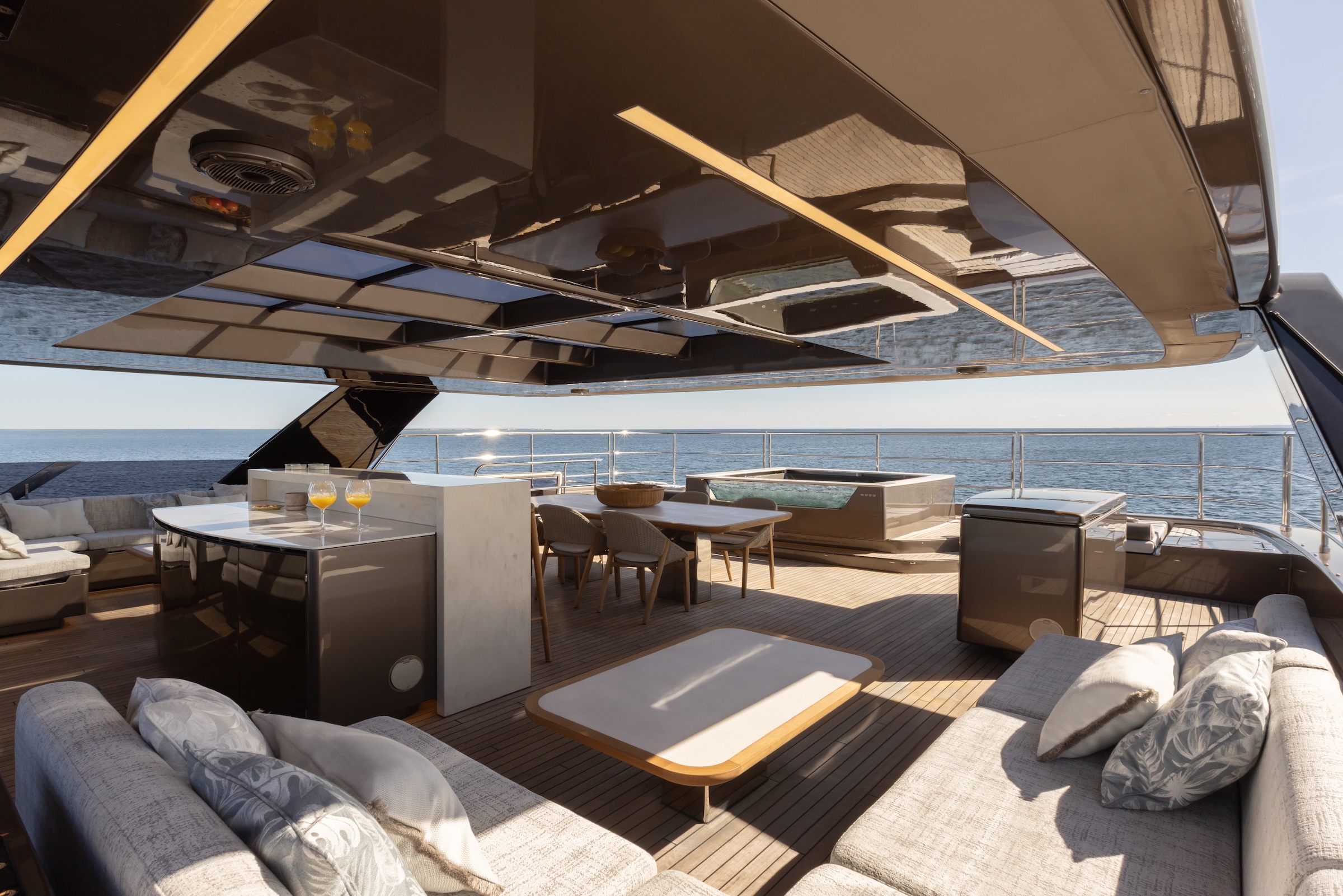
The upper deck is the yacht's third living space in its own right. Twin L-shaped lounges, a full dining area, a drink bar and double BBQ station, sunpads stretched aft, a jacuzzi toward the bow — and, forward, the world-first flax-fibre composite panels that give the bar and nav station their material signature.
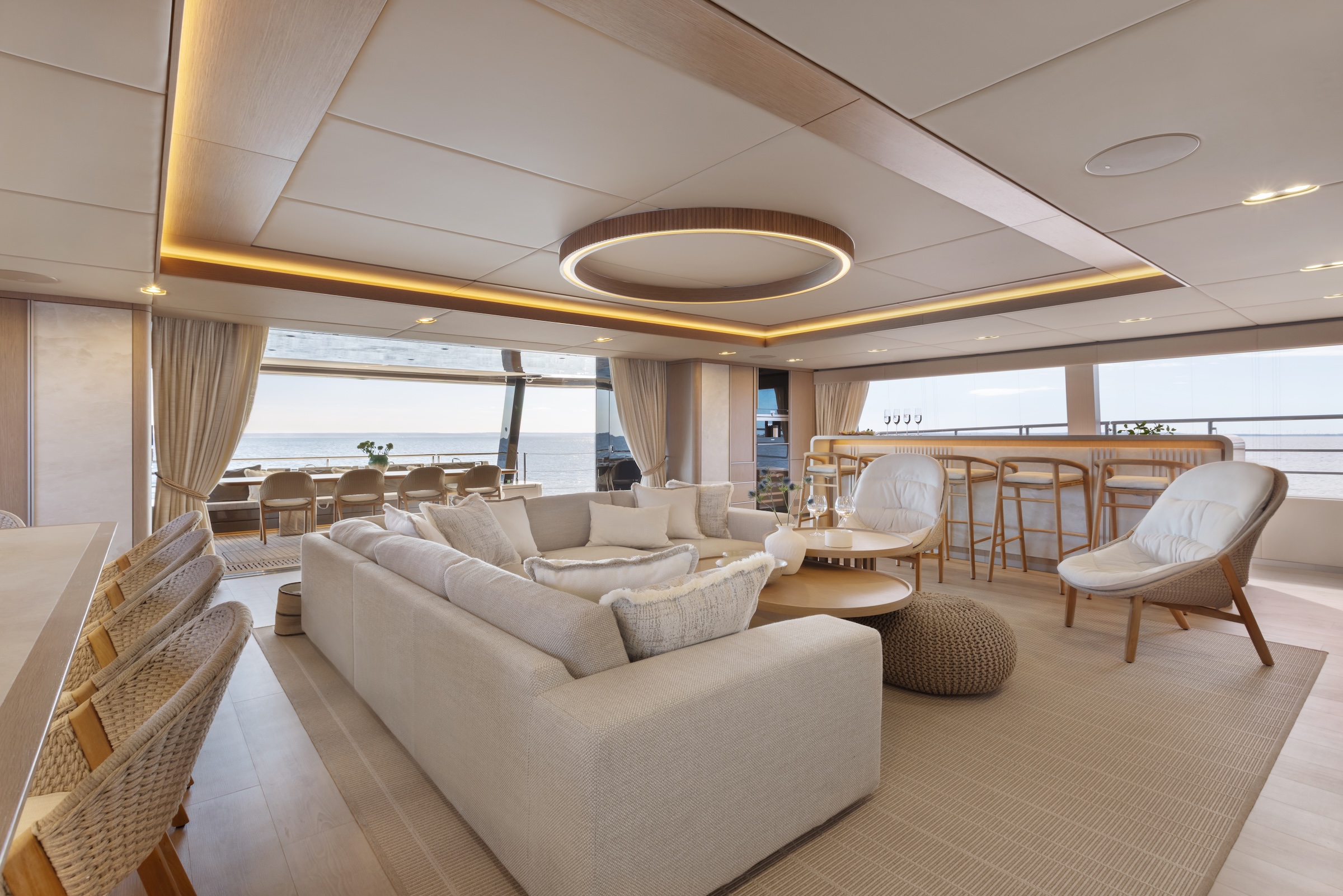
A living room drawn in daylight
The main salon is the first room that makes the catamaran argument unarguable. Two hundred and twenty-two square metres of open plan, oversized glazing on three sides, and a sliding door aft that erases the line between interior and cockpit. A central lounge anchors the volume; a sleek aft bar handles the evenings; a starboard dining area hosts the chef-prepared meals that long cruising demands.
The palette stays quiet on purpose. Soft textures, sun-washed tones, natural oak veneers, and upholsteries in flax and cotton allow the sea to remain the room's dominant material. It is, deliberately, not a saloon. It is a living room — and the horizon is the wallpaper.
A coastal vocabulary in flax, teak and stone
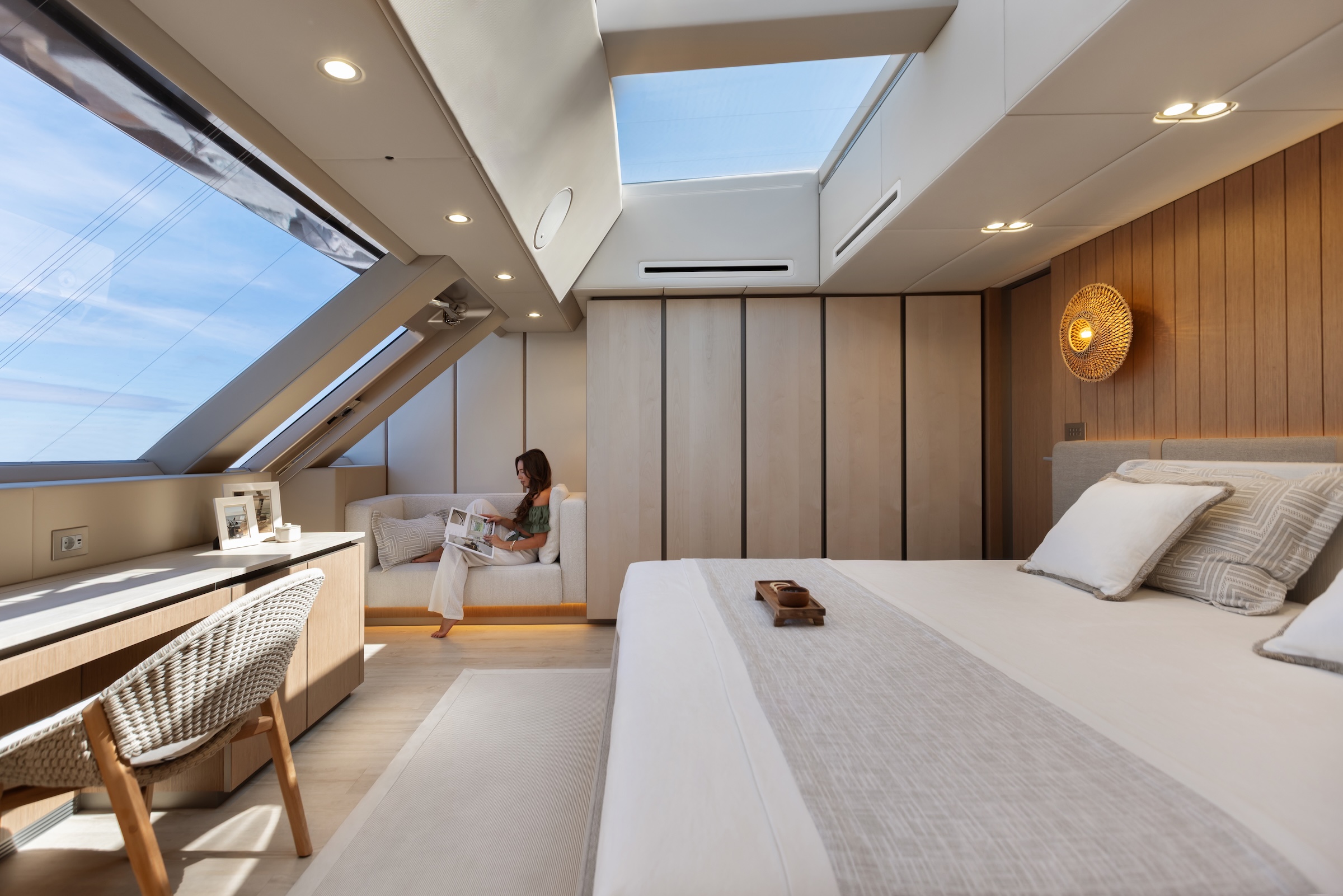
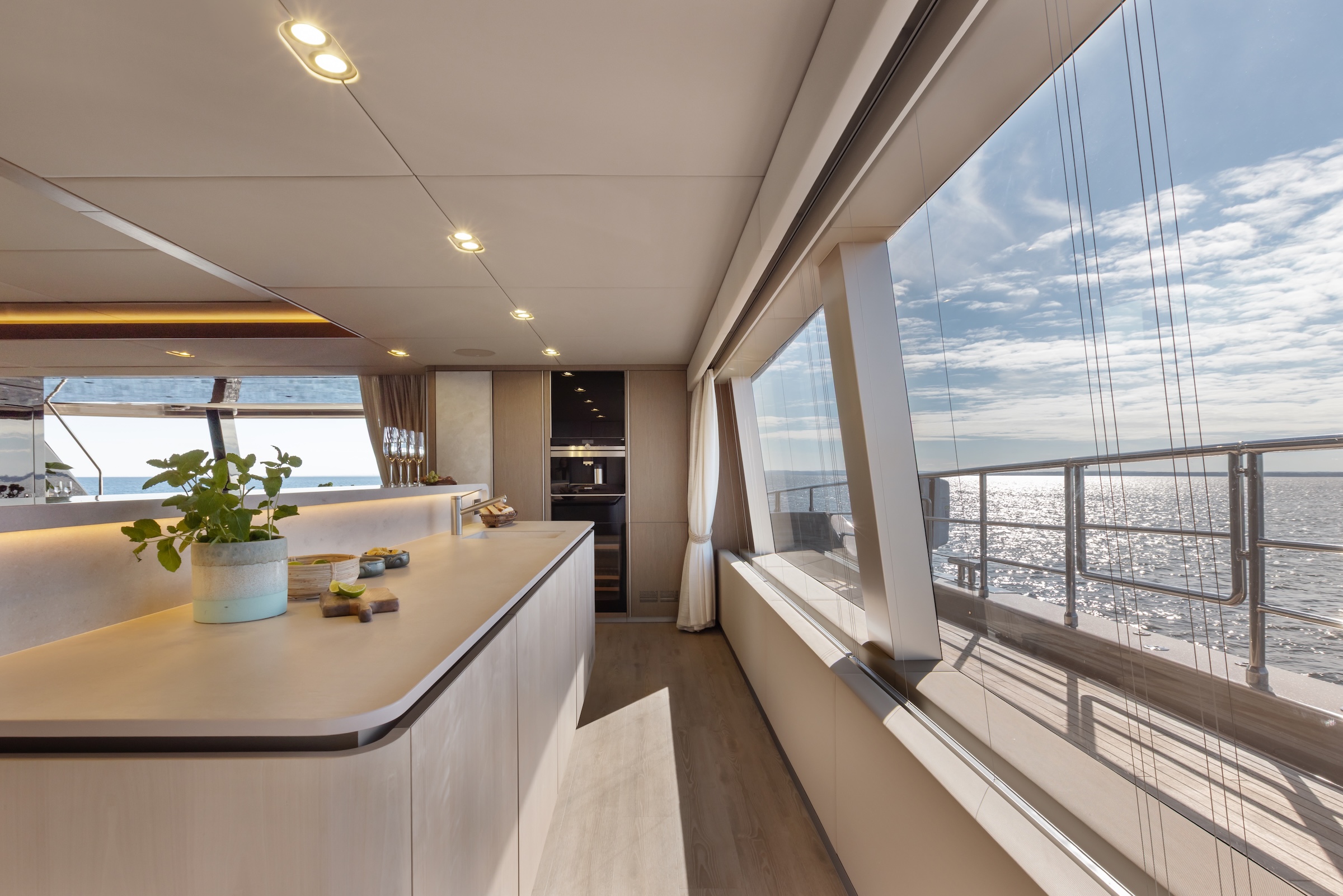
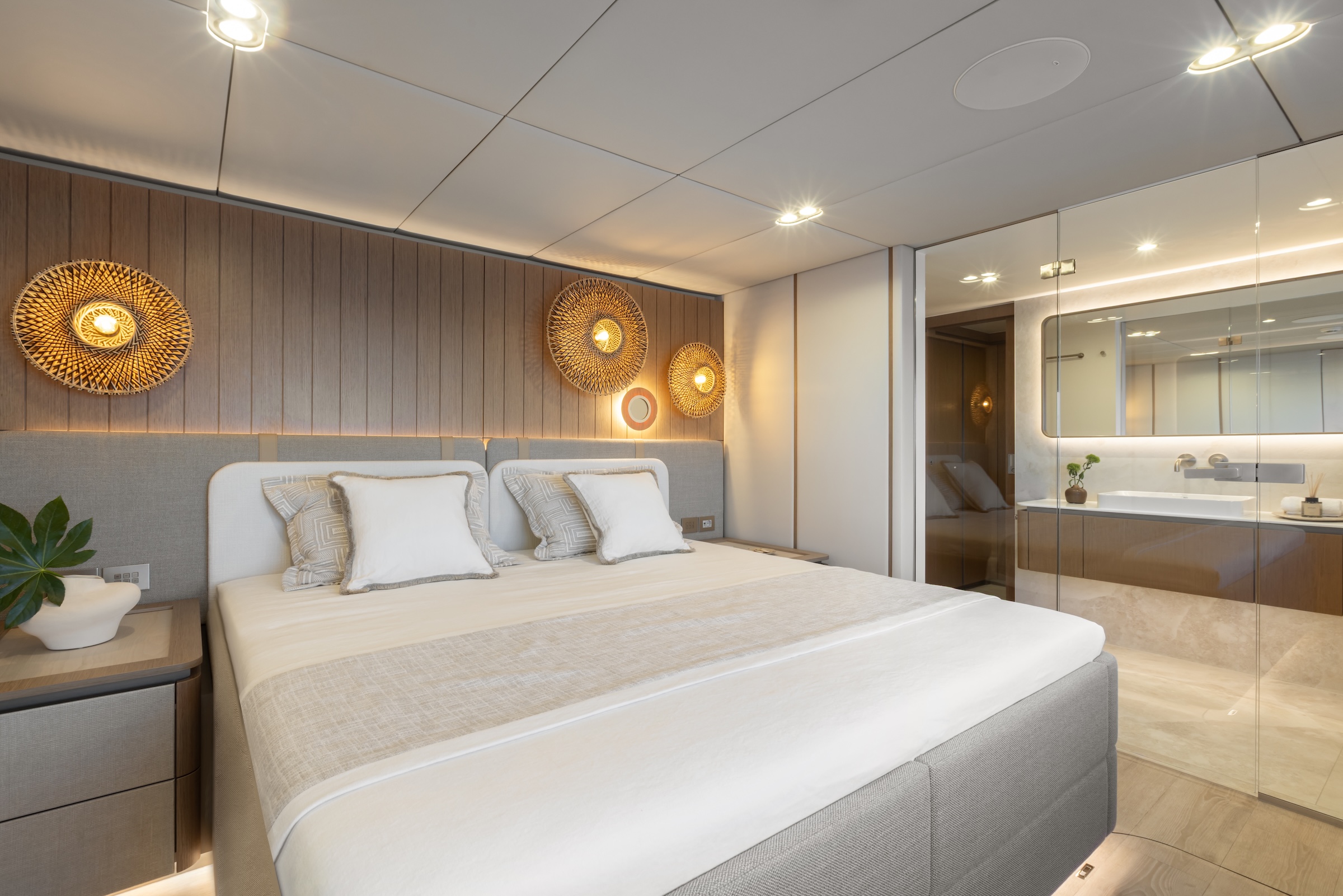
Flax, plantation teak, and a quieter kind of luxury
Sunreef's material brief on this yacht reads almost like a manifesto. Flax fibre appears as both textile and structure — woven into upholsteries inside, bonded into composite panels outside. Plantation teak, certified and farmed, replaces old-growth timber for the cabinetry and deck surfaces. Cotton carries the soft furnishings. The palette is warm rather than cool, tactile rather than mirrored, closer to a coastal house than to a conventional yacht interior.
The environmental logic is precise. Flax absorbs CO₂ during growth, which means the fabric carries a negative carbon footprint before a single panel is laid. Paired with bio-based or recyclable resins, the resulting composite can be disassembled at end-of-life and both fibre and matrix recovered. It is sustainability as structural decision, not as a brochure line.
Natural materials elevate both the aesthetics and the performance of our interiors.
Nicolas Lapp · On the Bcomp collaboration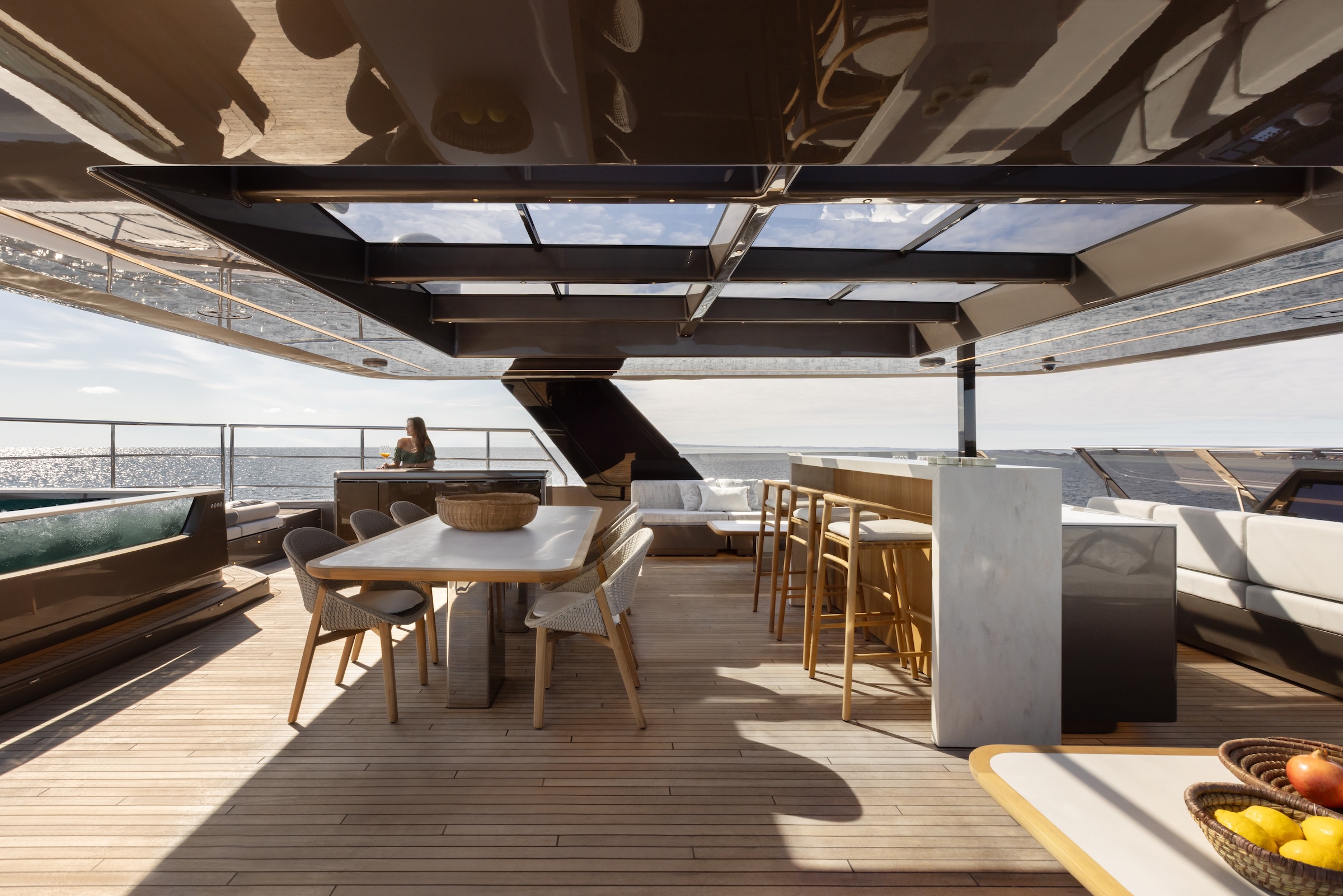
An entertainer's deck without a ceiling
The flybridge is where the catamaran's geometry pays its most generous dividend. With 13.5 metres of beam to work with, the upper deck behaves like a private rooftop rather than the cramped lookout that the flybridge once was. Two L-shaped sofas face one another across an open circulation; the drink bar and double BBQ station cluster forward for sunset service; the dining table seats the kind of party a long cruise attracts; aft, the sunpads stretch the full width.
Forward of the bar sits the yacht's quietest revolution. The navigation area and the panels that frame the bar and BBQ are built from flax-fibre composite — a fabric laid like carbon, bonded with bio-based or recyclable resin, and finished in a pearl grey and charcoal gradient that is deliberately not trying to imitate another material. It looks like what it is: a plant woven into architecture. In a yacht of this tier, at this size, that is a world-first.
Drawn for long water
Twin MAN V8 diesels at 1,300 horsepower each push the 100 Sunreef Power to a transatlantic range of more than three thousand nautical miles at ten knots. The number is not a marketing claim; it is a design premise. Every interior decision — the stowage depth, the size of the cold-room, the generosity of the crew quarters — follows from the assumption that the yacht will spend weeks between ports, not days.
Crew comfort is given the same care as the guest decks. The captain's cabin is notably generous; two further crew cabins carry private bathrooms. Aft, a professional galley with twin ovens and convertible fridge-or-freezer drawers is drawn for extended voyages — a workspace tailored to the route, not improvised around it.
At a glance
The 100 Sunreef Power, in context
What sets this yacht apart from the increasingly crowded 30-metre market is not the length — there are longer catamarans and there will be longer ones again — but the disposition. The 100 Sunreef Power treats living space as the primary specification rather than a consequence of the hull, and treats environmental ambition as material rather than marketing. Flax fibre is not in the brochure; it is in the bar and in the navigation station where hands land.
That specificity is the product of a shipyard with a long memory. Founded in 2002 in Gdańsk by French entrepreneur Francis Lapp — who launched what was then the world's first luxury oceangoing catamaran — Sunreef spent two decades re-educating the luxury yacht market on what a multihull could deliver. The 100 Sunreef Power is the argument compressed into a single vessel.
She is also, usefully, not a one-off. As a flagship of Sunreef's power range — with even larger sisterships, including a 49-metre, already at various stages of construction — she represents a production grammar rather than a bespoke flourish. The 557-square-metre interior, the full-beam master, the flax-fibre flybridge: these are the new standard, not the exception. Luxury finds its horizon, to borrow the yacht's own line, precisely at the point where space, material and intention stop negotiating with each other.
A visual tour through the vessel
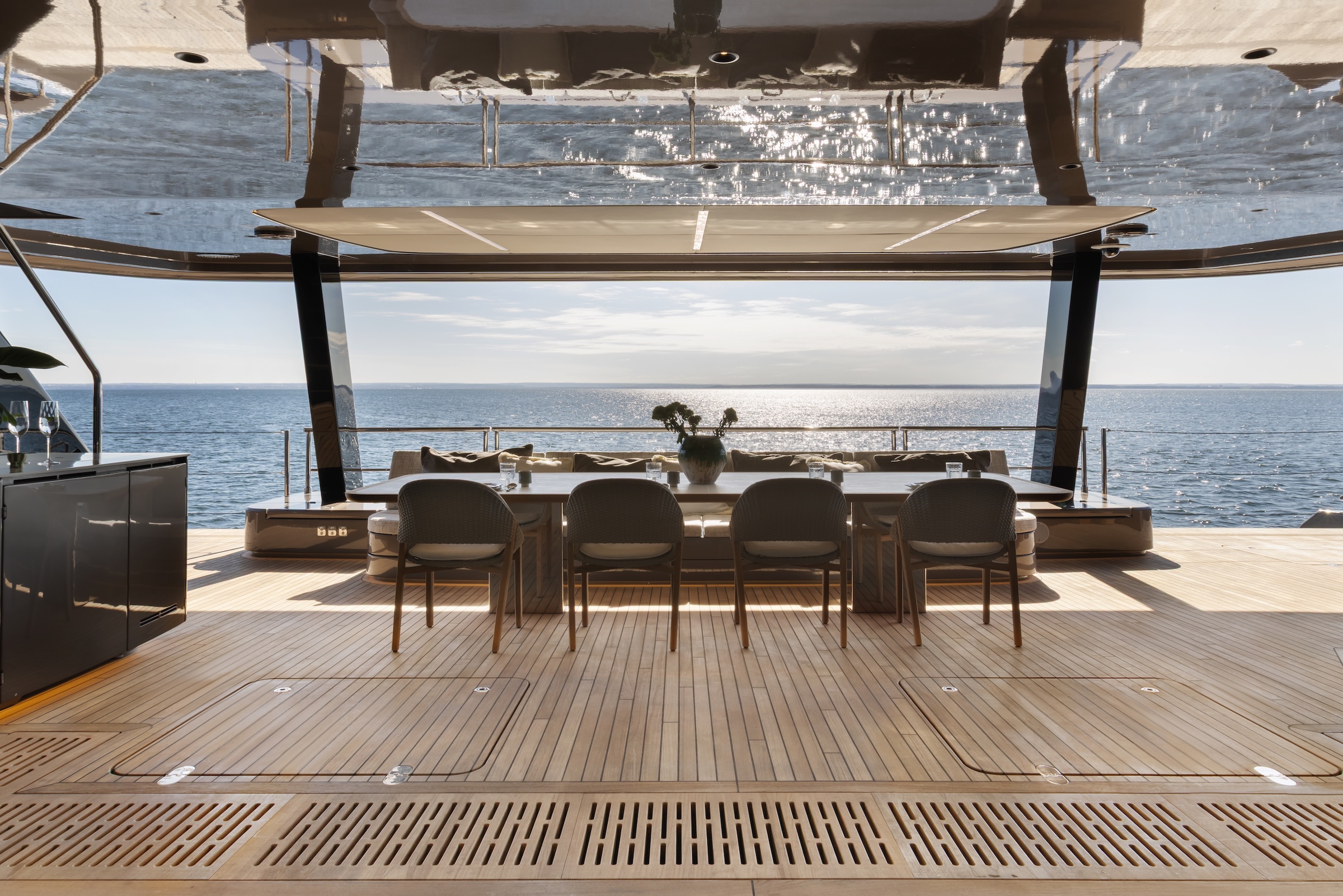 01 · Cockpit
Aft deck · Dining
01 · Cockpit
Aft deck · Dining
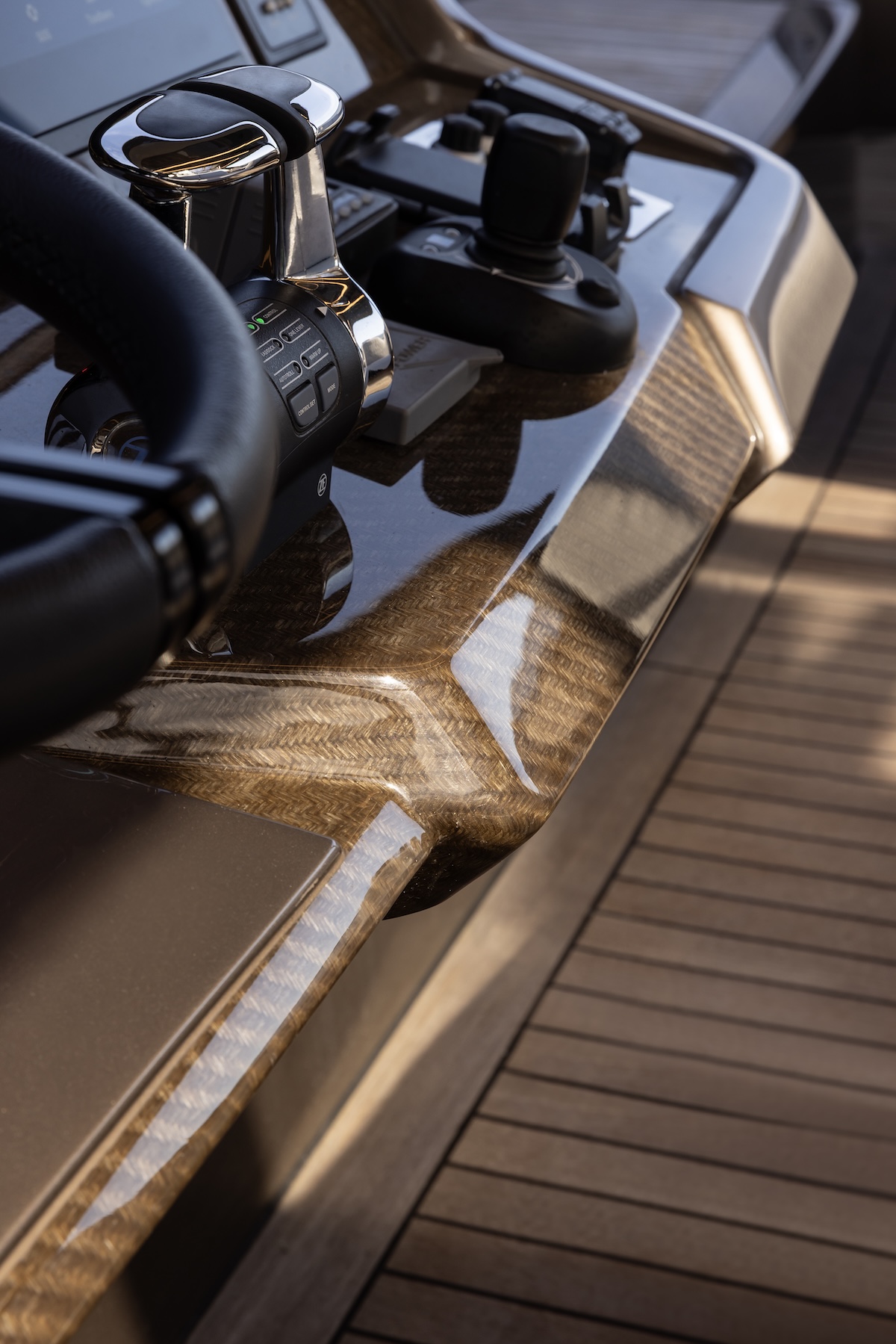 02 · Wheelhouse
Helm · Joystick
02 · Wheelhouse
Helm · Joystick
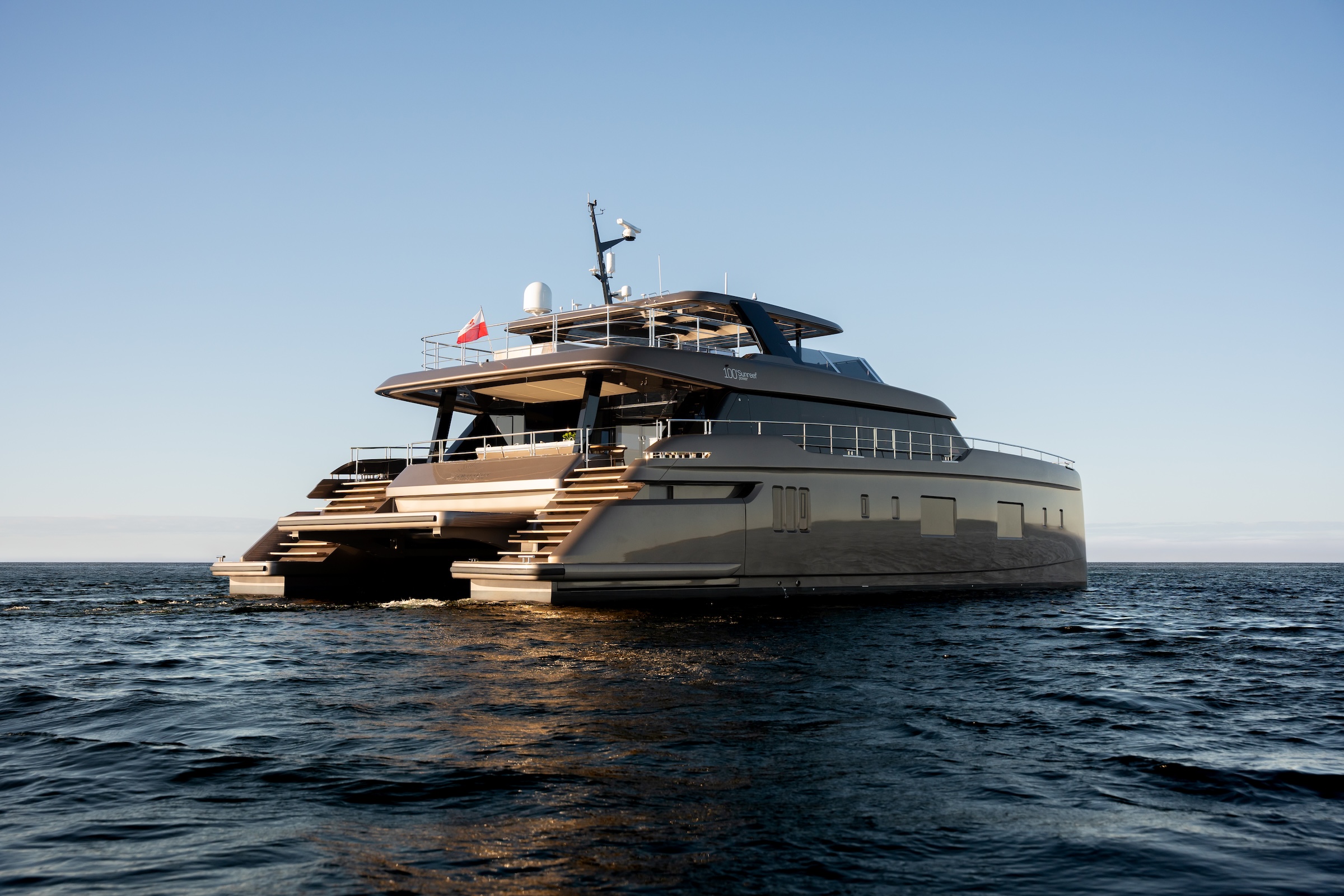 03 · Underway
Cruising profile
03 · Underway
Cruising profile
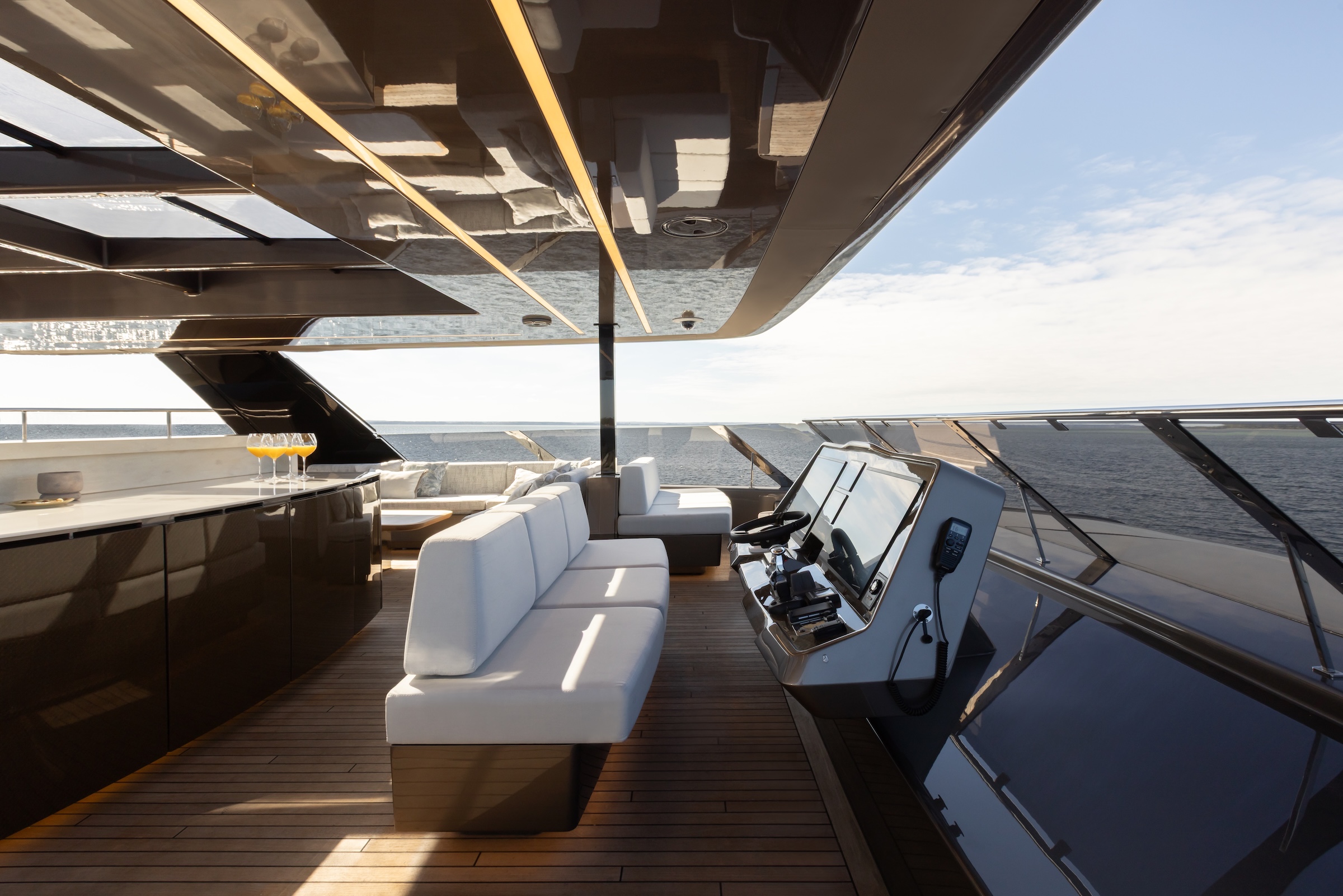 04 · Flybridge
Lounge · Seating
05 · Upper deck
Dining under hardtop
04 · Flybridge
Lounge · Seating
05 · Upper deck
Dining under hardtop
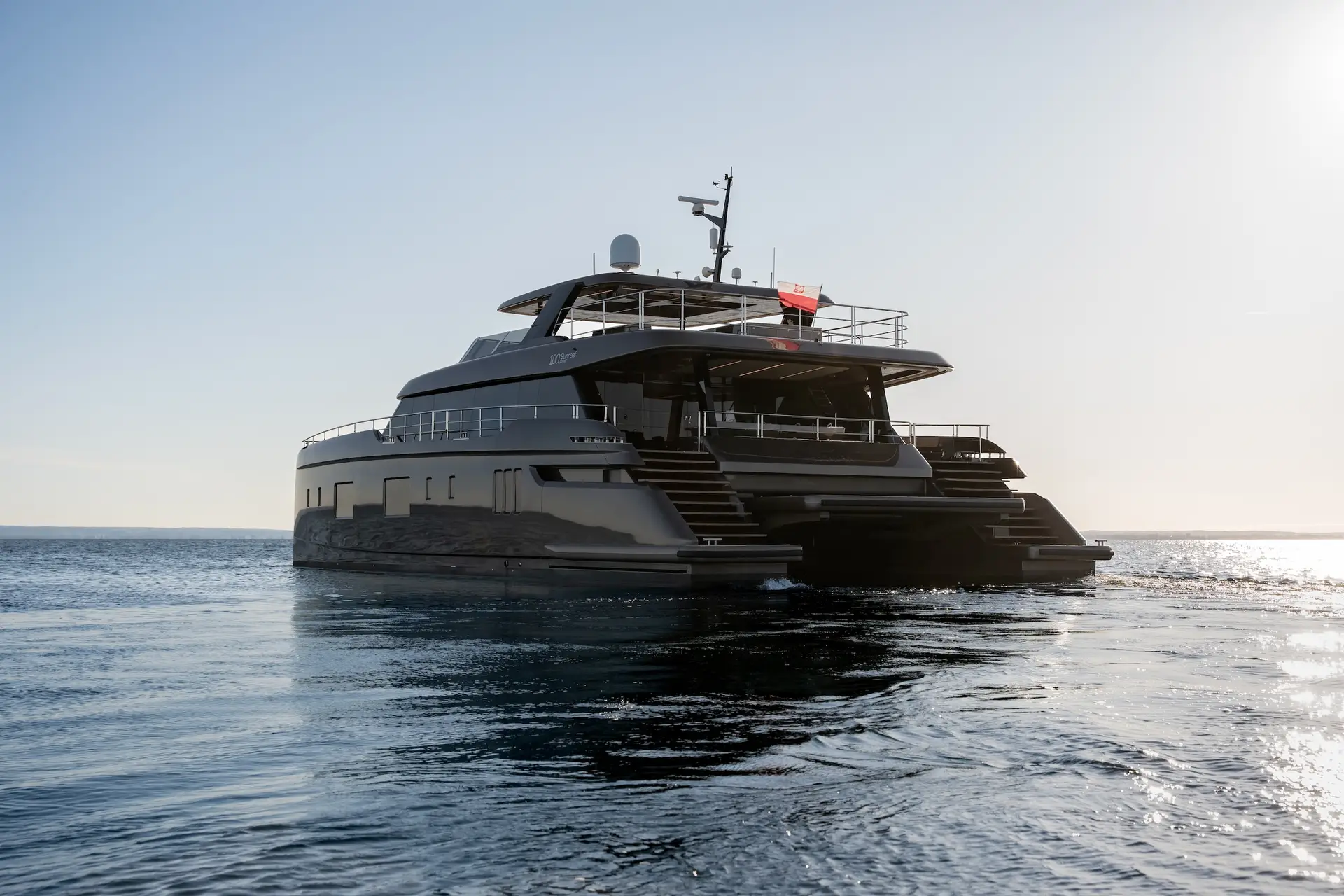 06 · Profile
Calm water
07 · Flybridge
Jacuzzi · Sunpads
06 · Profile
Calm water
07 · Flybridge
Jacuzzi · Sunpads
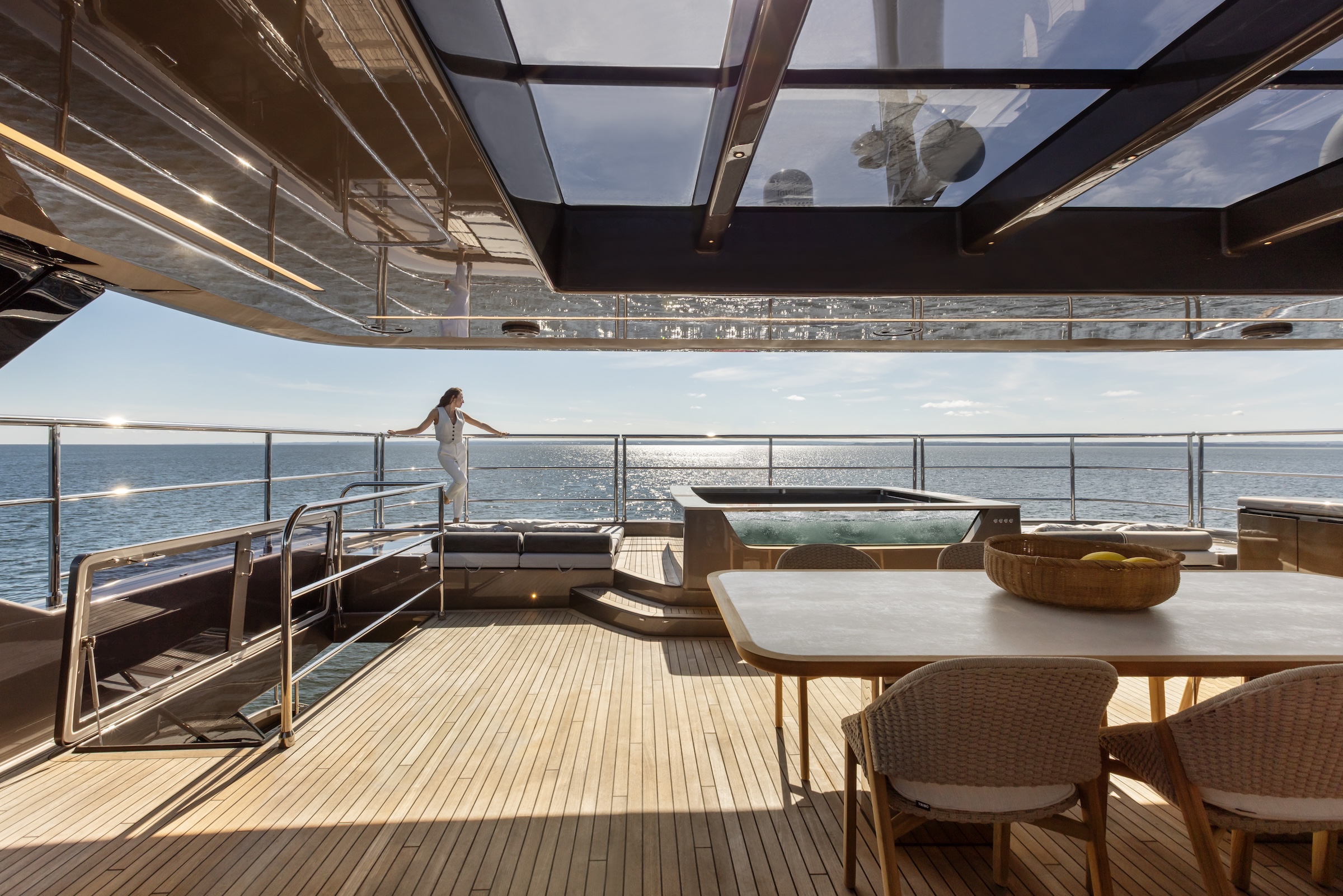 08 · Aerial
Flybridge layout
09 · Aspect
Three-quarter view
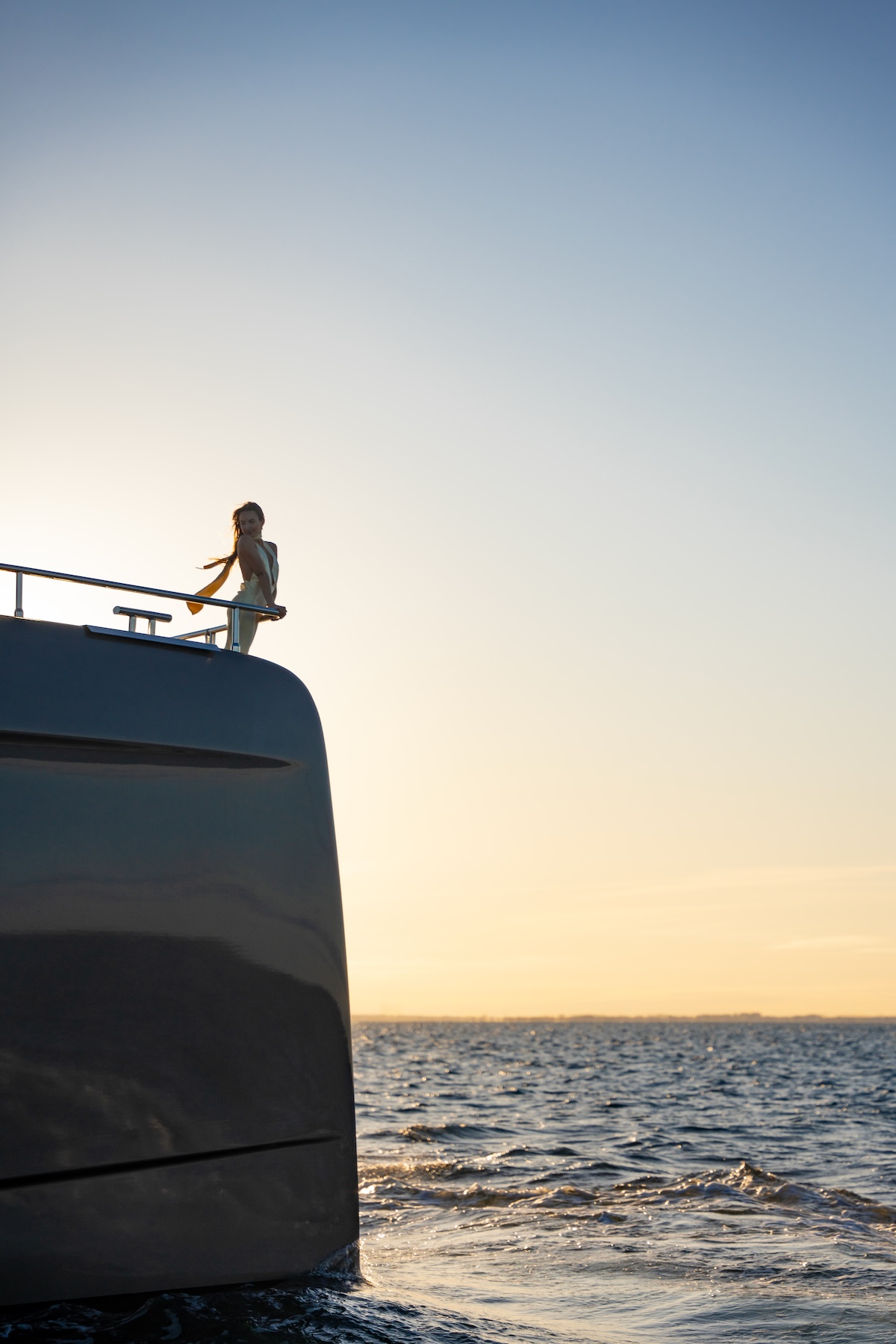
10 · Dusk
Golden hour
11 · Salon
Main-deck living
12 · Galley
Professional kitchen
13 · Master
Suite · Workspace
14 · VIP
VIP cabin
15 · Ensuite
Spa-inspired bath
16 · Guest
Guest suite
17 · Cabin
Sea view · Flax & teak
08 · Aerial
Flybridge layout
09 · Aspect
Three-quarter view
10 · Dusk
Golden hour
11 · Salon
Main-deck living
12 · Galley
Professional kitchen
13 · Master
Suite · Workspace
14 · VIP
VIP cabin
15 · Ensuite
Spa-inspired bath
16 · Guest
Guest suite
17 · Cabin
Sea view · Flax & teak
A 557-square-metre floating villa drawn around a 13.5-metre beam, with plant fibre in its architecture and a transatlantic range beneath its feet — a second chapter written in flax, teak and light.